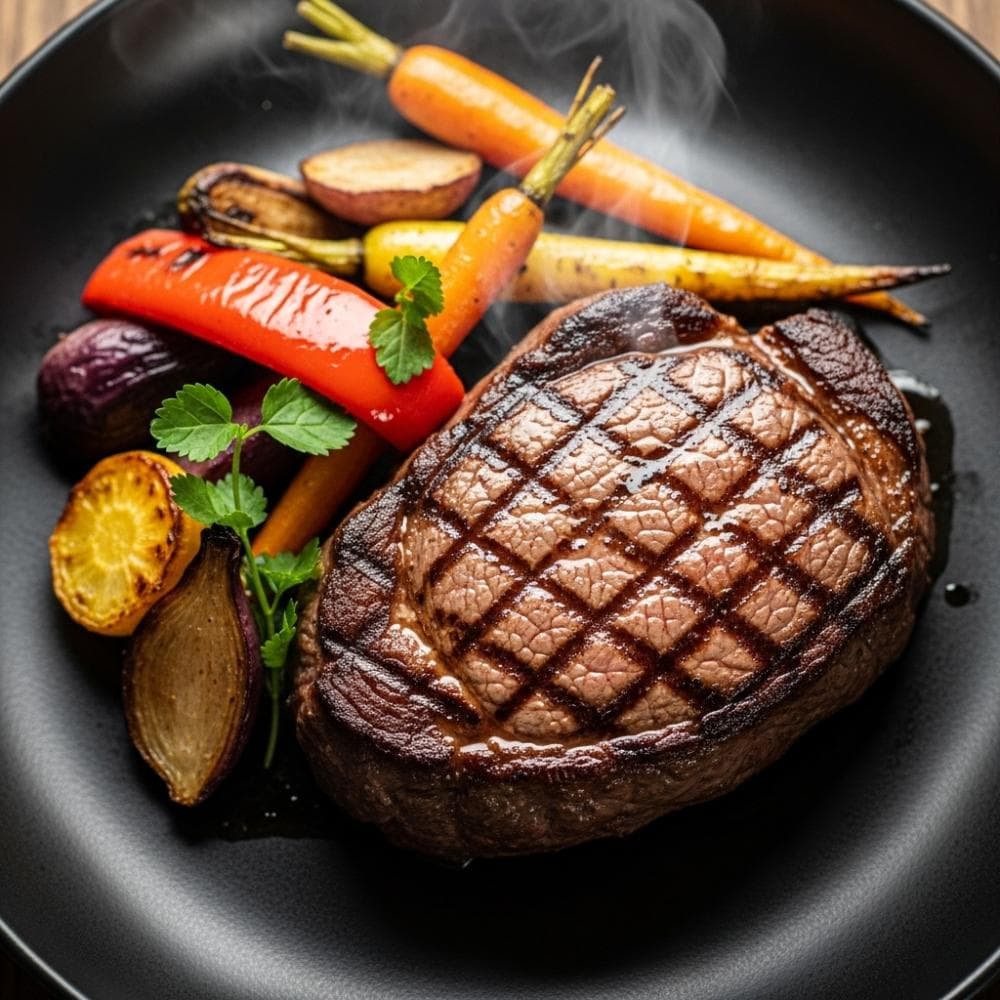
Grilled Steak with Roasted Vegetables
A flavorful grilled steak paired with tender roasted vegetables, seasoned simply with herbs and spices. A hearty and wholesome meal for two.
The Quick Answer
A steak that greys and steams instead of searing was almost always put on grates that dropped below browning temperature, so the surface boils off water before a crust can form. Pat the sirloin or strip bone-dry, let the grate fully reheat, and give it undisturbed contact so the Maillard reaction builds a deep crust.
Why does my steak keep sticking to the grill grates?
Hot metal and meat protein form a temporary bond the instant the steak lands, and the steak only releases once a seared crust develops underneath. Pull too early and you tear that forming crust, leaving it welded to the grate. The fix is patience plus heat: this one-inch sirloin or strip needs the full 4-5 minutes per side before it will lift cleanly, and a grate that has fully recovered its heat sears faster so the bond breaks sooner. Oiling the grate, as the recipe directs, lays a thin barrier of carbonized fat between metal and meat. Brushing oil onto the grates rather than the steak also avoids flare-ups, since fat dripping off the meat is what ignites and chars the surface unevenly.
Why do my roasted vegetables come out soggy instead of caramelized?
Crowding is the usual culprit. Bell pepper, zucchini, red onion, and broccoli are mostly water, and piled together on the sheet they trap escaping steam, so they braise in their own moisture rather than browning. Caramelization needs each surface to hit roasting temperature and dehydrate, which only happens with air around every piece. Spread them in a single layer with gaps, and cut to match cooking speed: the watery zucchini half-moons benefit from going skin-side down, while dense broccoli florets brown fastest where a flat cut face presses the metal. Stir only at the halfway mark so each face gets sustained contact with the hot pan, which conducts heat directly into the cut sides and drives the browning that builds sweet, roasted flavor.
Not sure what to cook next? Let the generator pick your next dish in one click.
Random Recipe GeneratorAbout This Recipe
What is this dish?
Grilled steak with roasted vegetables is a classic, satisfying meal that pairs a perfectly cooked steak with a colorful medley of oven-roasted vegetables. The combination is elegantly simple — seasoned steak cooked over high heat for a charred crust and juicy interior, alongside tender, caramelized vegetables roasted at high temperature until golden. The dish relies entirely on quality ingredients and proper technique rather than elaborate sauces or preparations, making it a timeless weeknight dinner and dinner party main course.
Why you'll love it
This meal is naturally low-carb, high-protein, and loaded with vegetables, making it as nutritious as it is delicious. The simplicity of the preparation lets the quality of the steak shine — a good cut, properly seasoned and properly rested, needs very little else. The roasted vegetables caramelize in the oven with minimal attention, freeing you to focus on the steak. The combination looks impressive and tastes restaurant-quality with straightforward, learnable technique.
When to serve
This dish works beautifully for date nights, dinner parties, special occasions, or simply an elevated weeknight dinner. It scales easily for two or more people and works year-round — use asparagus and cherry tomatoes in spring/summer, root vegetables and Brussels sprouts in fall/winter. For dinner parties, the vegetables can be prepped and roasted while guests arrive, and the steak cooks in under 15 minutes.
Quick tips
Bring the steak to room temperature 30-45 minutes before cooking for even cooking throughout. Dry-brine with salt at least 45 minutes ahead for maximum flavor and the best crust. Never move the steak once it hits the hot grill or pan — let it release naturally. Always rest the steak for 5-10 minutes before cutting. Roast vegetables at 425°F or higher for caramelization.
Ingredient Highlights
Steak (Ribeye or Strip)
The centerpiece of the dish — a well-marbled ribeye or New York strip provides the perfect balance of rich flavor and tender texture. Fat marbling within the muscle melts during cooking, continuously basting the meat from the inside. The crust formed by high-heat searing through the Maillard reaction creates hundreds of complex flavor compounds that make steak deeply satisfying. Season simply — salt, pepper, and heat are all a quality steak needs.
Seasonal Vegetables
The supporting cast that provides color, nutrition, and textural variety alongside the rich steak. The best vegetables for roasting alongside steak are those that caramelize beautifully at high heat: bell peppers, zucchini, asparagus, mushrooms, cherry tomatoes, and onions all work perfectly. Cut them into similar sizes for even cooking and toss generously with olive oil and seasoning so they roast rather than steam.
Olive Oil
Used both for the steak and the vegetables — provides heat transfer, promotes browning, and contributes flavor. Use a neutral high-smoke-point oil (avocado or refined olive oil) for the steak itself if searing in a pan, and extra virgin olive oil for the vegetables where its flavor will come through.
Fresh Herbs
Rosemary, thyme, and garlic are the classic aromatic trio for steak and roasted vegetables. They can be used directly in the roasting pan with the vegetables, crushed and rubbed on the steak before cooking, or incorporated into compound butter for finishing. Fresh herbs add perfumed, resinous notes that complement the savory, charred flavors of the steak.
Substitution Options
Use any steak cut you prefer — ribeye, strip, sirloin, flank, or skirt steak all work. Replace the roasted vegetables with a single vegetable you love, roasted simply — a half sheet of asparagus, for example, or a pan of broccolini. Use ghee or butter instead of olive oil for richer flavor. Add a sauce — chimichurri, béarnaise, red wine pan sauce, or compound butter — for a more elaborate presentation. Replace the grill with a cast iron skillet for an indoor version. For a lighter option, use a sirloin or lean flank steak and serve over a simple green salad dressed with balsamic vinaigrette instead of the roasted vegetables.
You'll likely need to buy
Likely in your pantry
Step-by-Step Instructions
Prepare vegetables for roasting
Preheat your oven to 400°F (200°C). On a large baking sheet, combine the bell pepper pieces, zucchini half-moons, red onion wedges, and broccoli florets. Drizzle with 1 tablespoon olive oil. Sprinkle with 1/2 teaspoon salt, 1/4 teaspoon black pepper, and 1/2 teaspoon garlic powder. Toss the vegetables well to coat them evenly. Roast in the preheated oven for 20-25 minutes, or until tender and lightly browned, stirring halfway through.
Chef's Tips
- ›Cut vegetables into similar sizes so they cook evenly.
- ›Roasting gives vegetables a nice caramelized flavor.
Prepare the steaks
While the vegetables are roasting, pat the steaks very dry with paper towels. Season both sides of each steak generously with the remaining 1/2 teaspoon salt, 1/4 teaspoon black pepper, 1/2 teaspoon garlic powder, and 1 teaspoon dried rosemary or fresh chopped rosemary. This is important for flavor and a good crust.
Chef's Tips
- ›Patting steaks dry helps achieve a better browned crust.
- ›Seasoning right before grilling allows flavors to penetrate.
Grill the steaks
Heat a grill or grill pan to medium-high heat. Once hot, brush the grill grates lightly with 1 tablespoon olive oil. Place the seasoned steaks on the hot grill. For medium-rare doneness (warm red center), grill for 4-5 minutes per side. For medium doneness (pink center), grill for 5-6 minutes per side. Adjust cooking time based on thickness and your desired doneness. Use a meat thermometer to check the internal temperature (130-135°F for medium-rare, 135-140°F for medium).
Chef's Tips
- ›Only flip the steak once for the best grill marks and browned crust.
- ›Do not press on the steak with a spatula, as this squeezes out juices.
Rest and serve
Once cooked to your liking, remove the grilled steaks from the grill and place them on a cutting board or plate. Let them rest for 5-10 minutes. Resting allows the juices to settle back into the meat, keeping it tender and juicy. Serve the rested steaks alongside the roasted vegetables.
Chef's Tips
- ›Resting meat is crucial for tenderness and juiciness.
- ›Slicing the steak against the grain (across the muscle fibers) makes it even more tender.
Chef's Tips
Techniques that separate good from great
Bring steak to room temperature 30-45 minutes before cooking
A cold steak placed directly on a hot grill or pan creates uneven cooking — by the time the center reaches medium-rare, the outside is overcooked. Letting the steak rest at room temperature helps it cook more evenly throughout. Pat the steak completely dry with paper towels before cooking — surface moisture prevents the Maillard reaction (browning) and creates steam instead of sear.
Season aggressively with kosher salt at least 45 minutes ahead
Salt draws moisture to the surface initially (osmosis), but given time — ideally 45 minutes to overnight — that moisture gets reabsorbed into the meat along with the dissolved salt. This is called dry brining and results in steak that is seasoned deeply throughout rather than just on the surface. Season generously: steak can handle much more salt than you think.
Don't touch or move the steak while it's searing
The moment steak hits a hot surface, it sticks. Don't force it. After 2-3 minutes, the steak will release naturally when a proper crust has formed. If you try to move it and it resists, wait another 30 seconds. Moving and pressing the steak not only tears the crust but also presses out the precious juices. Flip only once, or at most twice, for the best crust development.
Always rest steak before cutting — 5-10 minutes minimum
Cutting a steak immediately after cooking releases all the juices onto the cutting board, leaving the meat dry. Resting allows the muscle fibers to relax and reabsorb the juices back into the meat. Cover loosely with foil (not tightly, which traps steam and softens the crust). For thick steaks, rest for half the cooking time. This single step makes more difference than any other technique.
Nutrition Facts
Per serving · Estimated values
* Estimated per serving based on a 2,000 calorie diet.
Equipment Needed
- Large baking sheet
- Grill or grill pan
- Tongs
- Meat thermometer (recommended)
- Knife and cutting board
- Measuring spoons
- Measuring cups
As an Amazon Associate we earn from qualifying purchases — at no extra cost to you.
Quick Tips
- For a garlic butter finish, melt 1 tablespoon butter with 1 clove minced garlic and pour over the rested steaks.
- You can vary the roasted vegetables based on season or preference; potatoes or Brussels sprouts are also good choices.
- Ensure your grill is very hot before adding the steak to achieve a good browned crust quickly.
Recipe Variations
Different ways to make this dish your own
Chimichurri Steak and Vegetables
Prepare a fresh chimichurri sauce (parsley, cilantro, garlic, red wine vinegar, olive oil, chili flakes) and spoon generously over both the sliced rested steak and the roasted vegetables. The bright, herby acidity transforms the dish with Argentine flair.
Steak with Red Wine Pan Sauce
After cooking the steak in a cast iron skillet, deglaze with 1/2 cup red wine, add a shallot and sprig of thyme, reduce by half, whisk in cold butter, and season. This quick pan sauce transforms a simple steak into a restaurant-quality plated dish.
Asian-Glazed Steak and Vegetables
Brush the steak with a glaze of soy sauce, honey, sesame oil, and ginger in the final 2 minutes of cooking. Season the vegetables with the same glaze and serve over steamed jasmine rice with sesame seeds and sliced scallions.
Surf and Turf
Add 4-5 large grilled shrimp (seasoned with garlic butter and lemon) alongside the steak for the classic combination. Grill the shrimp for just 2 minutes per side and arrange around the sliced steak for a visually impressive platter.
What to Serve With
Perfect pairings to complete the meal
Classic Steakhouse Plate with All the Sides
Slice the steak and fan it alongside a generous portion of the roasted vegetables, a ramekin of compound butter (softened butter with garlic, herbs, and lemon zest), and a wedge of lemon. Add creamed spinach or a simple green salad to round it out. This presentation honors the steak as the centerpiece while creating a balanced, satisfying meal.
With Café de Paris Compound Butter
Mix softened butter with minced garlic, fresh herbs (thyme, rosemary, parsley), a dash of Worcestershire sauce, and lemon zest. Roll into a log in plastic wrap and refrigerate. Slice rounds onto the hot resting steak so it melts into the meat. The flavored butter bastes the steak from above as it melts, creating a luxurious, restaurant-quality finish.
Steak and Roasted Vegetable Bowl
Slice the rested steak thinly against the grain and arrange over a bowl of arugula or mixed greens. Add the roasted vegetables, shaved Parmesan, and a simple balsamic-Dijon vinaigrette. This bowl-style serving is lighter than a traditional plated meal and the peppery arugula pairs beautifully with the rich steak and sweet roasted vegetables.
As Steak Frites with Herb Dipping Sauce
Serve the steak alongside oven-baked or air-fried fries for a French brasserie-style meal. Make a quick dipping sauce by mixing Greek yogurt, minced garlic, fresh herbs, and lemon juice, or serve with a classic béarnaise or chimichurri. The fries provide satisfying starch while the roasted vegetables keep the meal balanced.
Storage & Reheating
Keep it fresh and plan ahead
Refrigerator
Store cooked steak and vegetables separately in airtight containers for up to 3-4 days. Keep the steak whole rather than sliced to prevent moisture loss. Cold leftover steak is excellent sliced thin for sandwiches, salads, or breakfast hash.
Freezer
Wrap individual steaks tightly in plastic wrap then foil for up to 3 months. Roasted vegetables freeze less well — they become soft and watery. Thaw steak overnight in the refrigerator rather than at room temperature for food safety and better texture.
Make-Ahead
Season the steak (dry brine) up to 24 hours ahead and refrigerate uncovered on a rack. Prep and cut the vegetables up to 8 hours ahead and store in the refrigerator. Both cook quickly enough that full advance cooking offers little advantage over fresh — leftover reheated steak loses its crust.
Reheating
For the best reheated steak, use the reverse-sear method: warm in a 250°F oven on a rack until the internal temperature reaches 110°F (about 20-25 minutes), then sear for 60 seconds per side in a screaming-hot oiled skillet. This restores the crust without overcooking. Microwaving steak makes it tough and grey — avoid it.
Cooking tonight?
Get a month of dinners like this — done for you
30 chef-tested dinners mapped to the month, plus 5 ready-to-shop grocery lists. One-time $8.99 — 30 dinners planned for you, zero nightly decisions.
See the 30-Day Plan →Got Leftovers?
Turn what you already have in your fridge into delicious meals. Our AI-powered generator creates personalized recipes from your ingredients.
Go Deeper
Master the Culinary Science
Every recipe is a doorway. Our 7 Mastery Guides give you the science, technique, and framework to understand why food works — not just how to follow steps.
AI-Powered
Have Ingredients? Generate a Recipe.
Tell our AI what's in your fridge and get a custom recipe with image in seconds. No waste, no boredom.
Try the AI Recipe Generator →Browse more like this:
You Might Also Like
Discover more delicious recipes similar to what you're cooking