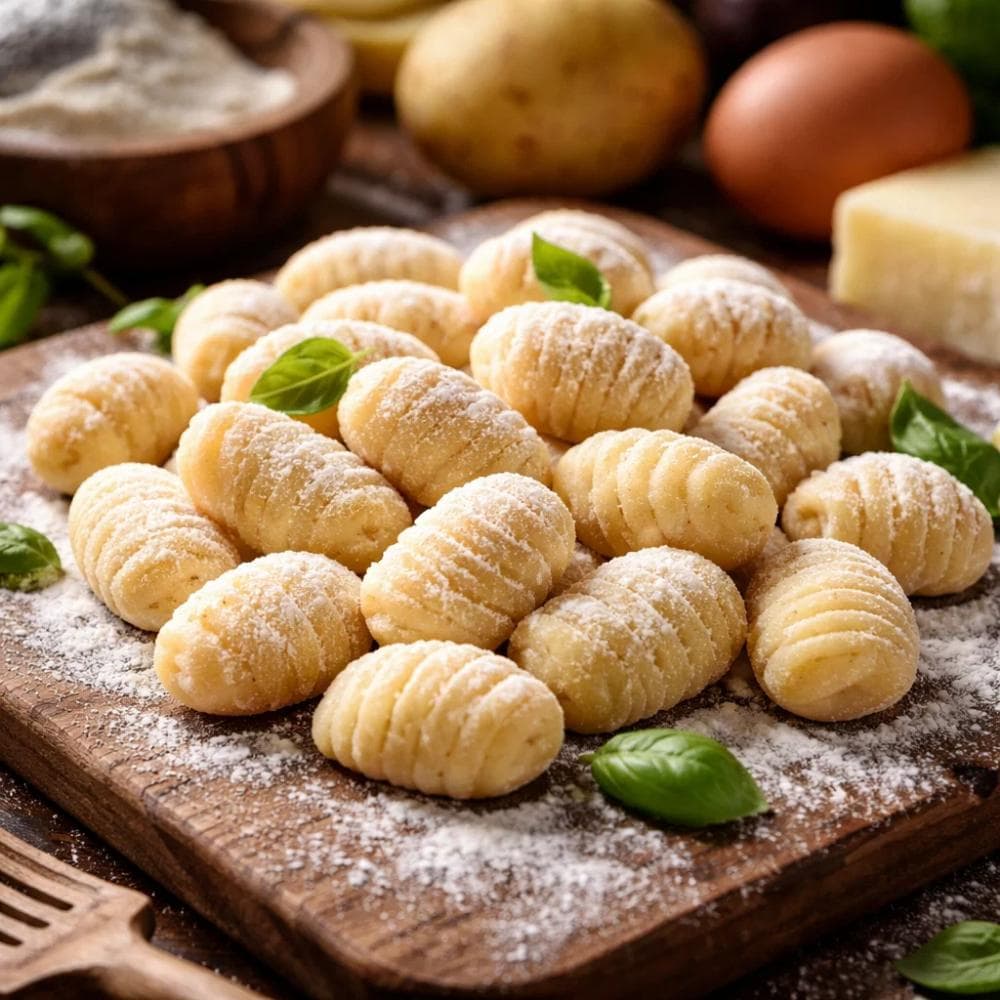
Handmade Potato Gnocchi (Beginner-Friendly Guide)
Pillowy, cloud-like potato gnocchi made by hand — one of the most satisfying things you can cook from scratch. The technique is straightforward but requires a light touch: too much flour produces dense, heavy dumplings; too little and they fall apart. Made right, homemade gnocchi are feather-light and entirely different from the dense, shop-bought variety. Serve with brown butter and sage, or any sauce you love.
The Quick Answer
Gnocchi can dissolve in the boiling water or turn leaden even after you've kept the flour low, and the usual cause is a dough that never bound properly or potatoes ground in a food processor. Rice the hot baked potato so the starch granules stay whole, bind with just enough egg, and slide the gnocchi into water at a gentle, not violent, boil.
Why does my gnocchi dissolve in the boiling water?
Gnocchi disintegrate when the dough has nothing holding it together. The single egg here is the binder: its proteins coagulate as the dumpling heats, setting a network that traps the starch. Skimp on egg, or work the warm potato so long it goes cold and slack, and there's no scaffold to hold the piece intact. A second cause is a furious boil - the rolling agitation knocks soft gnocchi apart. Once your salted water boils, drop the heat so it simmers steadily, add a single uncrowded layer, and lift each one out the moment it floats at 2-3 minutes rather than letting it churn.
Why can't I use a food processor to mash the potato?
A potato cell is a sealed packet of starch granules. When you rice or mash gently, the cells stay mostly whole and the starch stays locked inside. A food processor's blade shears those cells open and smears the released starch, which immediately absorbs free water and swells into a sticky, glue-like paste - the same gummy effect you get from overworking dough, but worse. That gluey potato then demands far more flour to become workable, and you're back to dense gnocchi. A ricer pressed through while the potato is still hot is gentle, fast, and produces the dry, fluffy texture this dough needs.
Not sure what to cook next? Let the generator pick your next dish in one click.
Random Recipe GeneratorAbout This Recipe
What is this dish?
Handmade potato gnocchi are one of Italian cooking's greatest pleasures — small, pillowy dumplings of potato and just enough flour to bind them, cooked in boiling water until they float. The texture of well-made gnocchi is unlike anything shop-bought: feather-light, with a gentle potato flavour and a slight give when you bite through them. They are not difficult to make, but they require an understanding of the principles: dry potatoes, minimum flour, light hands.
Why you'll love it
Making gnocchi from scratch is one of those genuinely satisfying cooking experiences — the process is physical and meditative, and the result is something that you genuinely cannot buy in a supermarket. Once you have made them, the technique becomes intuitive and the idea of going back to shop-bought becomes unthinkable.
When to serve
A special Saturday dinner for 4. Also excellent for batch cooking — freeze a large quantity and have homemade gnocchi on demand for months.
Quick tips
Bake the potatoes, don't boil them. Rice while hot. Add minimum flour. Work with a light touch. Cook one test piece before shaping all.
Ingredient Highlights
Floury Potatoes (Maris Piper or Russet)
The variety of potato is critical. Floury potatoes have a high starch content and low moisture, producing a light, airy gnocchi that requires less flour. Waxy potatoes are too wet and dense — they require much more flour and produce heavy, gluey dumplings. In the UK, Maris Piper is the standard choice. In the US, Russet potatoes are the equivalent.
Minimum Plain Flour
The flour is a binding agent, not a main ingredient. The less you use, the lighter the gnocchi. The exact amount varies with every batch because potato moisture varies with variety, season, and storage conditions. This is why gnocchi recipes give a range rather than an exact quantity — 200–250g is a guide; your hands and the feel of the dough are the real measure.
A Single Egg
The egg acts as a binder, helping hold the dough together without adding flour. Some traditional Italian recipes omit the egg entirely — a very confident approach that produces the lightest possible gnocchi but requires more skill to handle. For beginners, a single egg makes the dough considerably more manageable without significantly affecting the final texture.
Substitution Options
Replace plain flour with 00 pasta flour for a silkier texture. Use gluten-free flour for a coeliac-friendly version — the texture will be slightly different but workable. Replace the egg with an extra tablespoon of flour for an egg-free version. Serve with any sauce: tomato, pesto, cream, or brown butter.
You'll likely need to buy
Likely in your pantry
Step-by-Step Instructions
Bake the potatoes
Preheat the oven to 200°C (400°F / Gas Mark 6). Pierce the potatoes several times with a fork. Place directly on the oven rack (not in a tin — air circulation is important) and bake for 50–60 minutes until a knife slides in with zero resistance. Split immediately and scoop the flesh into a bowl, or use a potato ricer while hot. Do not use a food processor — it makes the potato gluey. Allow the steam to escape for a few minutes before proceeding.
Chef's Tips
- ›Baking rather than boiling is essential — boiled potatoes absorb water and require more flour, producing heavier gnocchi
- ›Rice the potatoes while they are still hot — cold potatoes become dense and sticky when riced
Make the dough
Spread the riced potato on a clean work surface and allow to cool until it stops steaming but is still warm to the touch. Season with salt, pepper, and nutmeg. Make a well in the centre. Add the beaten egg and 150g of flour. Mix together gently with your hands, incorporating the flour gradually. Only add more flour if the dough is sticking — the goal is the softest possible dough that can still be handled. Overworking or too much flour equals heavy gnocchi.
Chef's Tips
- ›The less flour you add, the lighter the gnocchi — add just enough to bring the dough together and no more
- ›Work quickly and with a light touch — overworking develops gluten in the flour and produces chewy, rubbery gnocchi
Shape the gnocchi
Lightly flour the work surface. Divide the dough into 6 equal portions. Roll each portion into a long rope about 1.5–2cm (¾in) thick. Cut the rope into 2cm (1in) pieces with a sharp knife or pastry scraper. To create the classic ridged shape, roll each piece over the back of a fork or a gnocchi board — the ridges help trap the sauce. Place the shaped gnocchi on a lightly floured baking tray.
Chef's Tips
- ›Work in batches and keep the unworked portions covered with a clean tea towel to prevent drying out
- ›The ridging step is optional but is worth doing — the grooves trap sauce and make each gnocchi taste better
Cook the gnocchi
Bring a large pot of generously salted water to a rolling boil. Cook the gnocchi in batches — do not overcrowd the pot. Add a single layer at a time. The gnocchi are ready when they float to the surface — this takes 2–3 minutes. Remove with a slotted spoon and transfer directly to your sauce, or to a bowl with a little butter to prevent sticking. Reserve a cup of the starchy cooking water.
Chef's Tips
- ›Gnocchi are done when they float — do not overcook; they become waterlogged and gluey within seconds of overcooking
- ›Transfer directly to the sauce while still wet — the surface moisture and potato starch help the sauce cling
Finish with brown butter and sage
Melt the butter in a wide skillet over medium heat. Continue cooking, swirling the pan, until the butter turns golden brown and smells of toasted hazelnuts — about 3–4 minutes. Add the sage leaves and fry for 30 seconds until crispy. Add the cooked gnocchi to the pan and toss gently to coat. Serve immediately with a grating of Parmesan.
Chef's Tips
- ›Brown butter takes seconds to go from perfect to burnt — watch it carefully and remove from heat the moment it smells nutty
- ›A spoonful of gnocchi cooking water added to the brown butter creates a light, emulsified sauce rather than a purely buttery coating
Chef's Tips
Techniques that separate good from great
Test one gnocchi before shaping the batch
Before shaping all the gnocchi, cook a test piece in the boiling water. If it holds together, the ratio of flour is correct. If it falls apart, knead in a little more flour and test again. This simple step saves the entire batch from a potential disaster and is worth the two extra minutes it takes.
Pan-fry for crispy gnocchi
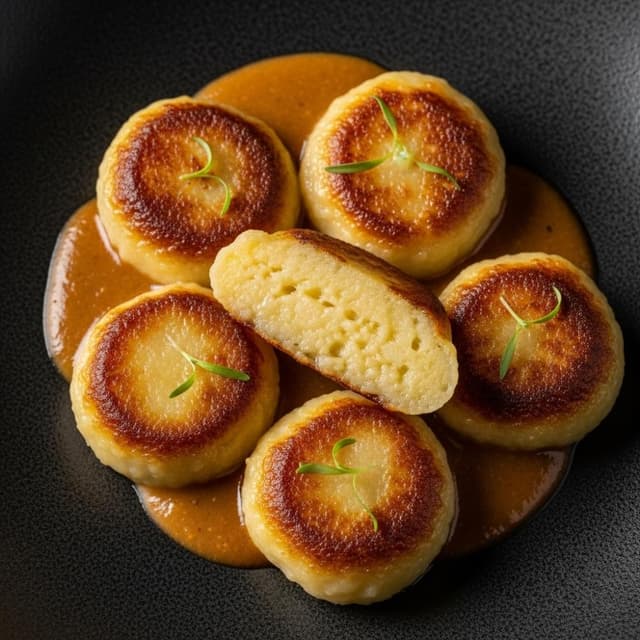
For a textural upgrade, pan-fry the cooked gnocchi in butter over high heat for 2–3 minutes after boiling until the exterior is golden and slightly crispy. The contrast between the crispy exterior and soft, pillowy interior is extraordinary and arguably better than the classic boiled version.
Freeze for later
Freshly shaped gnocchi freezes perfectly. Spread the uncooked, shaped gnocchi on a floured tray and freeze until solid (about 2 hours), then transfer to a freezer bag. Cook straight from frozen in boiling water — they take 3–4 minutes instead of 2–3. Homemade gnocchi in the freezer is one of the best weeknight shortcuts you can prepare.
Nutrition Facts
Per serving · Estimated values
* Estimated per serving based on a 2,000 calorie diet.
Equipment Needed
- Potato ricer or fine grater
- Large pot
- Wide skillet
- Slotted spoon
- Baking tray
- Sharp knife or pastry scraper
As an Amazon Associate we earn from qualifying purchases — at no extra cost to you.
Quick Tips
- Bake rather than boil the potatoes — baking drives off moisture and requires less flour, producing lighter gnocchi
- Add as little flour as possible — the minimum needed to bring the dough together; more flour means heavier gnocchi
- Work the dough with a light touch and do not overknead — developed gluten produces chewy, rubbery gnocchi
Recipe Variations
Different ways to make this dish your own
Ricotta Gnocchi (Gnudi)
Replace the potato entirely with 500g of well-drained ricotta. Mix with flour, egg, salt, nutmeg, and Parmesan to form a soft dough. These are lighter and quicker than potato gnocchi but require equally gentle handling.
Spinach and Potato Gnocchi
Wilt and squeeze dry 200g of spinach, then blend or chop finely and incorporate into the potato dough. The spinach turns the gnocchi a vivid green and adds a subtle earthy flavour. Serve with ricotta and lemon butter.
Pan-Fried Crispy Gnocchi
Cook the gnocchi by boiling as normal, then pan-fry in brown butter over high heat until the exterior is golden and crispy. The contrast between crispy outside and soft interior is outstanding.
Gnocchi alla Sorrentina
Toss the cooked gnocchi in a simple tomato sauce, pour into a baking dish, dot generously with fresh mozzarella, and bake at 200°C for 15 minutes until bubbling and golden. One of the great Italian baked pasta dishes.
What to Serve With
Perfect pairings to complete the meal
Brown Butter and Sage
The simplest and most elegant sauce — butter cooked until golden brown and nutty, with crispy fried sage leaves. The nuttiness of the brown butter and the aromatic sage are the perfect companions to the gentle potato flavour.
Simple Tomato Sauce
A quick, bright tomato sauce (tinned tomatoes, garlic, olive oil, and basil) is the most classic and beloved combination. The acidity of the tomato cuts the richness of the potato dough.
Gorgonzola Cream Sauce
Melt 80g of gorgonzola dolce with 100ml of double cream and a little black pepper. Toss the gnocchi in the sauce. The pungent, salty blue cheese against the neutral, pillowy gnocchi is a combination that converts blue cheese sceptics.
Wild Mushroom Ragù
A simple sauté of mixed wild mushrooms with garlic, thyme, and a splash of white wine makes an earthy, autumnal sauce that showcases the gnocchi without overpowering them.
Storage & Reheating
Keep it fresh and plan ahead
Refrigerator
Shaped, uncooked gnocchi can be kept on a floured tray in the fridge for up to 4 hours. Cooked gnocchi tossed in olive oil keeps for up to 24 hours — reheat in a hot buttered pan rather than boiling again.
Freezer
Freeze shaped, uncooked gnocchi on a floured tray until solid, then bag and freeze for up to 2 months. Cook from frozen in boiling salted water — they take 3–4 minutes.
Make-Ahead
Shape and freeze the gnocchi up to 2 months ahead. Cook directly from frozen. This is the best way to make gnocchi ahead for a dinner party.
Reheating
Reheat cooked gnocchi in a hot skillet with butter over medium heat. Do not reboil — they become waterlogged and lose their texture.
Cooking tonight?
Get a month of dinners like this — done for you
30 chef-tested dinners mapped to the month, plus 5 ready-to-shop grocery lists. One-time $8.99 — 30 dinners planned for you, zero nightly decisions.
See the 30-Day Plan →Be the first to review this recipe!
Got Leftovers?
Turn what you already have in your fridge into delicious meals. Our AI-powered generator creates personalized recipes from your ingredients.
Go Deeper
Master the Culinary Science
Every recipe is a doorway. Our 7 Mastery Guides give you the science, technique, and framework to understand why food works — not just how to follow steps.
AI-Powered
Have Ingredients? Generate a Recipe.
Tell our AI what's in your fridge and get a custom recipe with image in seconds. No waste, no boredom.
Try the AI Recipe Generator →Browse more like this:
You Might Also Like
Discover more delicious recipes similar to what you're cooking