Japanese Curry Rice (Easy Comfort Food at Home)
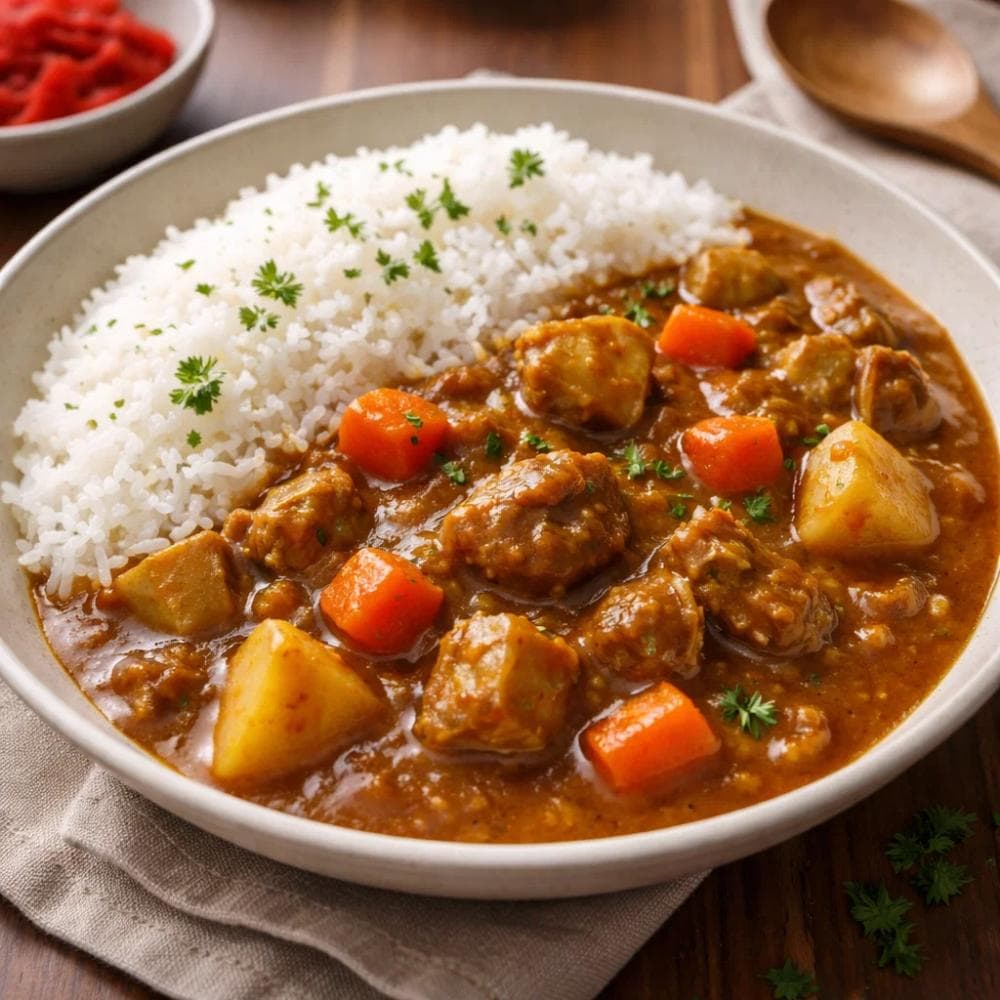
Japanese curry rice is the ultimate comfort food — a mild, glossy, warmly spiced curry sauce loaded with tender chicken or beef, soft vegetables, and served over a mound of sticky short-grain rice. Unlike Indian curries, Japanese curry is sweeter, milder, and thicker, with a distinctive savoury depth. Using shop-bought curry roux blocks makes it achievable on any weeknight without sacrificing an ounce of flavour.
The Quick Answer
The usual disappointments are lumpy roux that won't dissolve and potatoes that collapse into mush before the meat is tender. Drop the heat low and add the roux blocks one at a time, and cut the Maris Piper into large chunks so they survive the simmer that beef chuck demands.
Why does my Japanese curry roux go lumpy instead of smooth?
The roux blocks are a solid mix of toasted flour, fat, and spices held together by hardened fat. Dropped into hot, fast-boiling stock, the surface flour gelatinises instantly and forms a skin around each block, sealing the inside off so it never dissolves - those are your lumps. Lowering the heat first slows that surface gelatinisation, and adding blocks one or two at a time gives each piece room to melt fully before the next goes in. Stir continuously so the fat disperses and the flour hydrates evenly. After the roux is in, the gentle five-minute simmer lets the gelatinised starch swell to its full thickening power, producing the glossy, coating sauce rather than a watery or pasty one.
Why do my potatoes fall apart in Japanese curry?
Maris Piper and Yukon Gold are fairly floury potatoes whose cells are packed with starch granules glued together by pectin. Long simmering breaks down that pectin and the swollen starch granules rupture, so small pieces disintegrate and cloud the sauce. Cutting them into large chunks gives a smaller surface-area-to-volume ratio, so the centres reach doneness while the edges hold. This matters most with beef chuck, which needs an extra 20-30 minutes of simmering to break down its collagen into gelatin - long enough to destroy delicate vegetables. Add the potatoes only when they can finish alongside the meat, and stop simmering the moment a knife meets gentle resistance rather than sliding straight through.
Not sure what to cook next? Let the generator pick your next dish in one click.
Random Recipe GeneratorAbout This Recipe
What is this dish?
Japanese curry rice — kare raisu — is one of Japan's most beloved national dishes, eaten by virtually everyone from schoolchildren to elderly grandparents. It arrived in Japan via the British in the late 19th century and was subsequently transformed into something distinctly Japanese: milder, sweeter, and thicker than any curry you would find in India or Britain. The curry roux block — a pressed mixture of fat, flour, and spices sold in every Japanese supermarket — is the genius shortcut that makes it achievable on a weeknight without compromising the flavour.
Why you'll love it
It is comforting in the most primal sense — thick, glossy sauce, tender meat, soft vegetables, sticky rice. It is also mild enough for the whole family (choose the level of heat that suits), adaptable to whatever protein and vegetables you have, and the leftovers are arguably even better the next day as the flavours continue to develop.
When to serve
A weeknight family dinner that serves 4. Also excellent batch-cooked and reheated. The curry sauce freezes brilliantly.
Quick tips
Brown the meat and onion for flavour. Cut potatoes large. Add roux on low heat one block at a time. Simmer until glossy and thick.
Ingredient Highlights
Japanese Curry Roux Blocks
The essential shortcut. These compressed blocks of fat, flour, and spices dissolve into the simmering stock to create the characteristic thick, glossy Japanese curry sauce. They are reliably good and come in several heat levels. S&B Golden Curry and House Vermont Curry (which contains apple and honey) are the two best-known brands, each with a slightly different flavour profile worth trying.
Chicken Thighs or Beef Chuck
Chicken thighs are the quickest option and become tender in 20–25 minutes of simmering. Beef chuck takes longer (an extra 30–40 minutes at a gentle simmer) but rewards the patience with a richer, more deeply flavoured curry. Both are more flavourful than their leaner counterparts — chicken breast dries out, and lean beef becomes tough.
Short-Grain Japanese Rice
Japanese curry demands Japanese rice. Koshihikari or similar short-grain varieties are slightly sticky and have a gentle sweetness that complements the curry sauce perfectly. Cooking it correctly — rinsed until the water runs clear, then steamed with a 1:1.1 water-to-rice ratio — is worth taking seriously. A rice cooker produces perfect results every time.
Substitution Options
Use any protein — pork belly, lamb, prawns, or tofu. Replace regular potatoes with sweet potato. Swap chicken or beef with an assortment of mushrooms (shiitake, oyster, king oyster) for a vegetarian version. Use long-grain rice if short-grain is unavailable, though the texture will be less authentic.
You'll likely need to buy
Likely in your pantry
Step-by-Step Instructions
Brown the meat and onions
Heat the vegetable oil in a large, heavy-based saucepan or Dutch oven over medium-high heat. Season the chicken or beef pieces with salt and pepper. Add to the pan in a single layer and brown for 2–3 minutes per side without moving. You are not cooking the meat through — just developing colour on the surface. Add the onion wedges and cook for 2 minutes until slightly softened. The browning is optional but adds considerable depth to the final curry.
Chef's Tips
- ›Brown in batches if necessary — crowding the pan causes the meat to steam rather than sear
- ›The caramelisation on both the meat and the onion contributes a rounded, savoury base that the curry roux alone cannot provide
Add the vegetables and stock
Add the carrot and potato chunks to the pot with the browned meat and onion. Pour in the stock. The liquid should just cover the vegetables and meat — add a little more stock or water if needed. Bring to a boil, skimming any foam that rises to the surface. Reduce to a steady simmer.
Chef's Tips
- ›Cut the potatoes larger than you think necessary — they break down during cooking and if cut too small they will dissolve into the sauce
- ›Skim off any grey foam in the first few minutes of simmering — it makes for a cleaner, better-looking curry
Simmer until vegetables are tender
Simmer uncovered for 15–18 minutes until the carrots and potatoes are just tender when pierced with a knife — they should offer gentle resistance, not be falling apart. The meat should be cooked through. If using beef chuck, it may need an additional 20–30 minutes for full tenderness.
Chef's Tips
- ›Test the carrots rather than the potato — carrots take longer and are the best indicator of when the vegetables are done
- ›Keep the simmer gentle — a rolling boil breaks down the potatoes too quickly and clouds the sauce
Add the curry roux
Reduce the heat to low. Break the curry roux blocks into pieces and add them to the pot one or two at a time, stirring continuously after each addition until fully dissolved before adding the next. This prevents lumps. Add the soy sauce and Worcestershire sauce. Once all the roux is dissolved, increase the heat slightly and simmer gently for 5 minutes, stirring frequently, until the sauce thickens to a glossy, coating consistency.
Chef's Tips
- ›Add the roux blocks one at a time and stir vigorously — patience here prevents lumpy curry sauce
- ›The curry will thicken significantly as it simmers — if it becomes too thick, add stock or water a ladleful at a time
Serve with rice
Taste the curry for seasoning — it may need a small amount of salt or a little extra soy sauce depending on the brand of roux used. Serve immediately over the cooked short-grain rice. Japanese curry is traditionally served with the rice and curry side by side on the same plate, not the curry poured over the top — but do as you please.
Chef's Tips
- ›Japanese short-grain rice (such as Koshihikari) is worth using here — its stickiness and slightly sweet flavour are part of what makes the dish feel authentically Japanese
- ›A side of red pickled ginger (beni shoga) is the classic accompaniment and adds a sharp, palate-cleansing contrast to the sweet, rich curry
Chef's Tips
Techniques that separate good from great
Mix two heat levels of roux
Japanese curry roux comes in mild, medium, and hot. Using half mild and half medium — or medium and hot — gives a more nuanced, layered heat than using a single level. The different roux blocks also have slightly different flavour profiles, and combining them produces a more complex curry.
Add a grated apple or honey
Japanese curry traditionally contains apple or honey for sweetness, and many curry roux blocks already include it. If your curry tastes flat or too savoury, stir in a teaspoon of honey or a tablespoon of grated apple during the final simmer. It rounds out the flavour and adds the characteristic mild sweetness of Japanese curry.
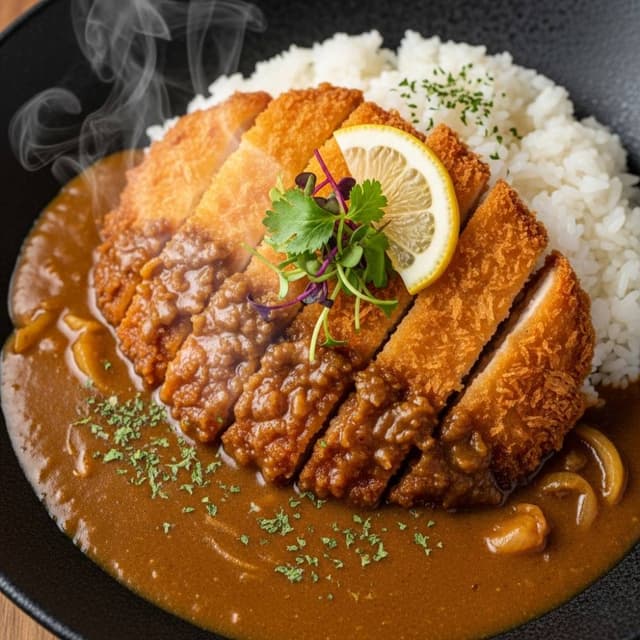
Make katsu curry by adding a breaded cutlet
To turn this into katsu curry — arguably the most popular Japanese curry dish — serve a panko-breaded, pan-fried chicken or pork cutlet on top of the rice alongside the curry sauce. The contrast between the crispy cutlet and the glossy sauce is spectacular.
Nutrition Facts
Per serving · Estimated values
* Estimated per serving based on a 2,000 calorie diet.
Equipment Needed
As an Amazon Associate we earn from qualifying purchases — at no extra cost to you.
Quick Tips
- Brown the meat and onion before adding stock — this step is optional but adds a depth of flavour that the curry roux alone cannot provide
- Add the curry roux blocks one at a time on low heat, stirring after each until fully dissolved — the key to a smooth, lump-free sauce
- Cut potatoes on the larger side to prevent them dissolving into the sauce during the long simmer
Recipe Variations
Different ways to make this dish your own
Katsu Curry
The most famous variation. Serve the curry sauce alongside a panko-breaded, deep- or shallow-fried chicken or pork cutlet on top of the rice. The crispy cutlet and thick curry sauce is one of the great combinations in Japanese cooking.
Japanese Beef Curry
Use beef chuck cut into large chunks and extend the simmering time to 1–1.5 hours until the beef is truly tender and falling apart. The resulting curry is richer and more deeply savoury than the chicken version.
Vegetable Japanese Curry
Omit the meat entirely and increase the variety of vegetables — aubergine, courgette, mushrooms, peppers, and sweet potato all work very well. Use vegetable stock and ensure the roux is vegetarian-certified.
Soup Curry
A variant popular in Hokkaido. Use twice the amount of stock for a thinner, soup-like curry served in a deep bowl with the vegetables and meat sitting in a more liquid, aromatic broth. Use less roux — about half a block — for a lighter consistency.
What to Serve With
Perfect pairings to complete the meal
Red Pickled Ginger (Beni Shoga)
The traditional garnish for Japanese curry. The sharp, vinegary pickle cuts through the rich, sweet curry sauce and cleanses the palate between bites. Widely available in Asian supermarkets.
Tonkatsu Sauce
A small drizzle of tonkatsu sauce (similar to Worcestershire sauce but sweeter and thicker) over the curry adds another layer of savoury sweetness. It is commonly available in Asian supermarkets.
Fukujinzuke
A Japanese mixed pickle — crunchy diced radish, lotus root, and vegetables in a sweet soy brine — served alongside as a traditional condiment. Widely available in Asian supermarkets and adds colour, texture, and a palate-cleansing quality.
Soft-Boiled Marinated Egg
A Japanese ramen-style soft-boiled egg marinated in soy sauce and mirin (halved and placed on top) adds richness and a luxurious quality that elevates the dish considerably.
Storage & Reheating
Keep it fresh and plan ahead
Refrigerator
Store curry (without rice) in an airtight container in the fridge for up to 3 days. The flavour improves overnight as the spices develop.
Freezer
The curry sauce (without potatoes, which become grainy when frozen) freezes well for up to 3 months. Add freshly cooked potatoes when reheating.
Make-Ahead
Japanese curry is an excellent make-ahead dish. Make the full curry a day or two ahead — it genuinely tastes better reheated. Cook rice fresh when ready to serve.
Reheating
Reheat gently in a saucepan over medium-low heat with a splash of water or stock, stirring frequently. The curry thickens considerably in the fridge and needs liquid to loosen it back to a sauce consistency.
Cooking tonight?
Get a month of dinners like this — done for you
30 chef-tested dinners mapped to the month, plus 5 ready-to-shop grocery lists. One-time $8.99 — 30 dinners planned for you, zero nightly decisions.
See the 30-Day Plan →Be the first to review this recipe!
Got Leftovers?
Turn what you already have in your fridge into delicious meals. Our AI-powered generator creates personalized recipes from your ingredients.
Go Deeper
Master the Culinary Science
Every recipe is a doorway. Our 7 Mastery Guides give you the science, technique, and framework to understand why food works — not just how to follow steps.
AI-Powered
Have Ingredients? Generate a Recipe.
Tell our AI what's in your fridge and get a custom recipe with image in seconds. No waste, no boredom.
Try the AI Recipe Generator →Browse more like this:
You Might Also Like
Discover more delicious recipes similar to what you're cooking