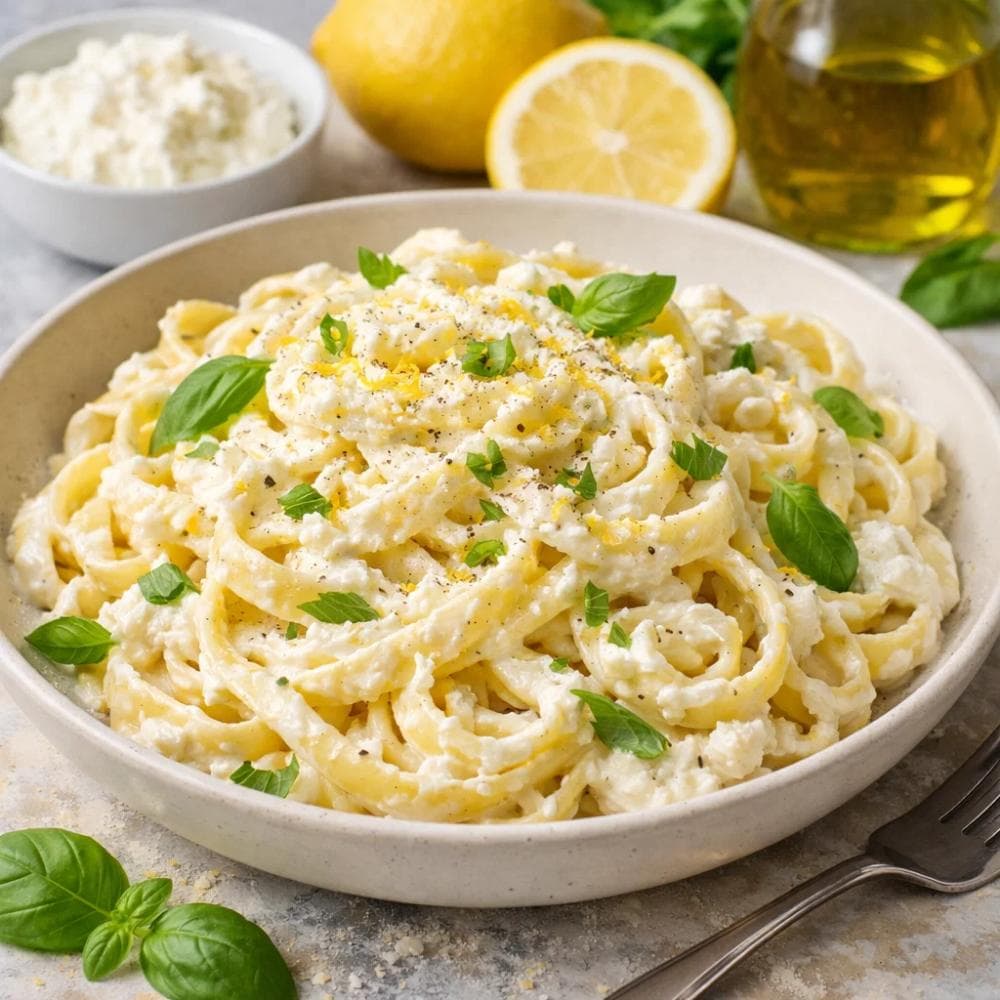
Lemon Ricotta Pasta (Light and Creamy Dinner)
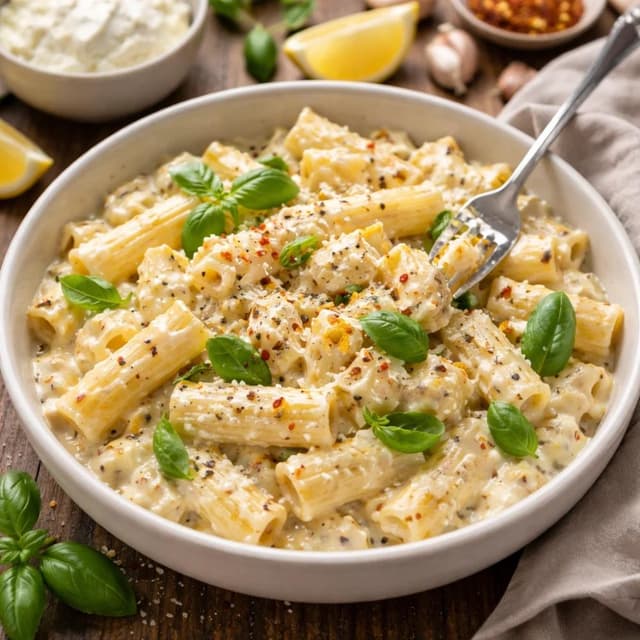
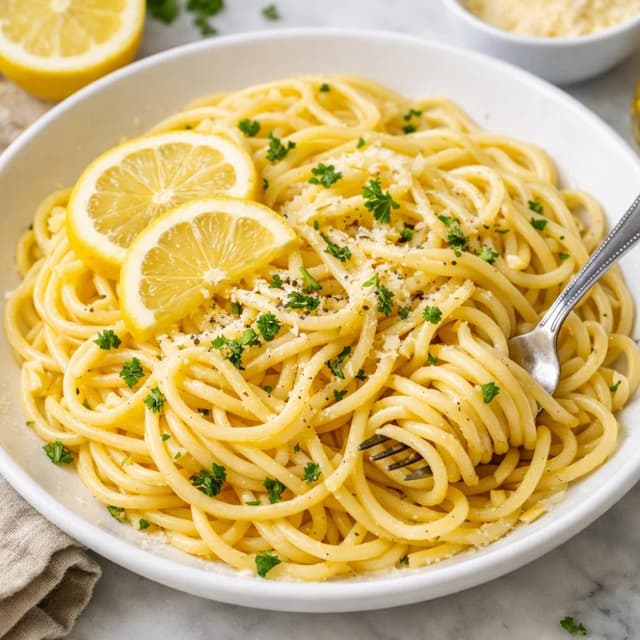
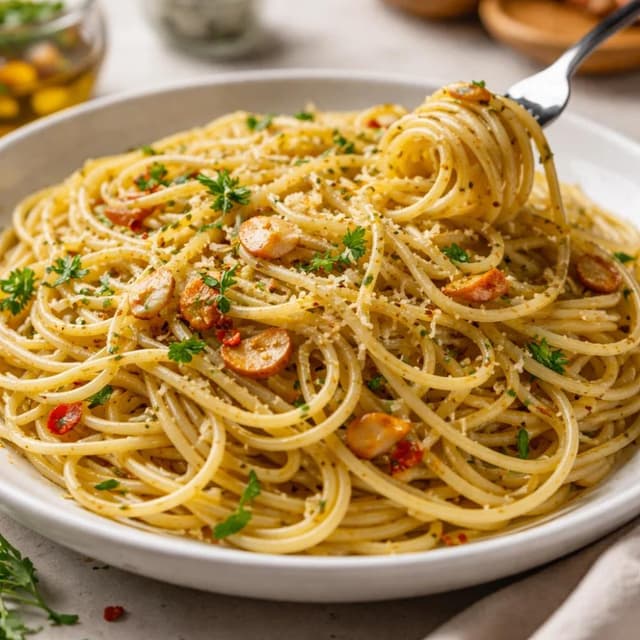
Silky pasta tossed with creamy ricotta, fresh lemon zest and juice, Parmesan, and a handful of fresh basil — a light, elegant Italian-inspired dinner that comes together in 15 minutes. No cooking the sauce, no heavy cream — just the natural creaminess of ricotta transformed by pasta water into a glossy, luxurious coating.
The Quick Answer
Because the sauce is never cooked, two failures dominate: a grainy, clumpy ricotta that won't coat the pasta, and a flat, chalky-tasting dish. Both are fixed by emulsifying the ricotta with hot starchy pasta water and using enough lemon acid and salt to wake the dairy up.
Why is my lemon ricotta sauce clumpy instead of silky?
Ricotta is loose curds of casein suspended in whey, and on its own it sits on the pasta in cold, grainy lumps. It only becomes a glossy sauce when you emulsify it, and the 200ml of reserved pasta water is the tool. That water carries dissolved starch that coats the fat and protein particles, letting them disperse into a smooth, clinging emulsion rather than seizing into clumps. The water must be hot, and the tossing vigorous, because heat softens the curds and mechanical agitation breaks them apart. Add it in stages - 80ml first, then a tablespoon at a time - so you can stop at the point where the sauce turns creamy and coats each strand without becoming watery.
Why does my lemon ricotta pasta taste flat or chalky?
A flat result almost always means too little acid and salt for the volume of dairy. Full-fat ricotta and Parmesan are rich but mild, and without enough brightness they read as bland and faintly chalky on the tongue. The juice of two lemons - around 80ml - cuts through the fat and the zest's aromatic oils add a perfumed lift that juice alone can't. Salt is just as critical: it suppresses the chalky note and amplifies the lemon. Taste the ricotta base before it ever meets the pasta and adjust then, because once the noodles are in you can only add small corrections. The chilli flakes and black pepper add a final savoury edge that stops the dish tasting one-dimensionally creamy.
Not sure what to cook next? Let the generator pick your next dish in one click.
Random Recipe GeneratorAbout This Recipe
What is this dish?
Lemon ricotta pasta is a simple Italian-style pasta dish that relies on the natural creaminess of ricotta and the brightness of fresh lemon to create a sauce without a single drop of cream or butter beyond a drizzle of olive oil. It is the Italian approach to elegance — a handful of excellent ingredients, a simple technique, and a result that is far greater than the sum of its parts. It is sometimes called pasta al limone in its many Italian regional variations.
Why you'll love it
It is ready in 15 minutes, requires almost no cooking skill, uses ingredients available in any supermarket, and produces a pasta that is genuinely light yet deeply satisfying. The lemon is bright and fragrant; the ricotta is creamy and mild; the Parmesan adds salt and depth. Together they create something that feels fresh and special rather than heavy — a weeknight pasta that also works for a dinner party starter.
When to serve
A quick weeknight dinner, a spring or summer pasta, a light but satisfying lunch, or a starter for an Italian-inspired dinner party. Particularly good in warmer months when you want something that feels lighter than a cream sauce.
Quick tips
Reserve plenty of pasta water. Use full-fat ricotta. Taste and season the ricotta before adding pasta. Toss vigorously. Serve in warm bowls immediately.
Ingredient Highlights
Full-Fat Ricotta
Ricotta is a whey cheese made from the liquid byproduct of other cheese production — it is mild, slightly grainy in texture, and extraordinarily creamy when warmed. Full-fat ricotta is essential here: it has the fat content that, when emulsified with pasta water, creates the silky, coating sauce the dish depends on. Low-fat ricotta produces a watery, less creamy result.
Fresh Lemon
Both the zest and juice are essential. The zest contains the volatile aromatic oils that provide the intense, bright lemon fragrance — it should be used from unwaxed lemons if possible and added generously. The juice provides the acidity that cuts through the richness of the ricotta and makes the pasta bright and vibrant. Use fresh lemon — bottled lemon juice lacks the fragrant quality that makes this dish special.
Pasta Water
In this recipe, pasta water is not a supporting player — it is the mechanism by which the sauce is created. The starch it contains emulsifies the fat in the ricotta and olive oil into a smooth, glossy coating that clings to each piece of pasta. Without it, you have seasoned ricotta on top of pasta. With it, tossed vigorously, you have a silky, unified sauce. Reserve generously.
Substitution Options
Replace ricotta with mascarpone for a richer, creamier sauce. Use lime instead of lemon for a different citrus character. Add a teaspoon of lemon preserved in salt for extra intensity. Replace basil with rocket, mint, or tarragon. Use pecorino romano instead of Parmesan for a sharper, saltier flavour. Add roasted garlic instead of raw for a sweeter, mellower garlic flavour.
You'll likely need to buy
Likely in your pantry
Step-by-Step Instructions
Cook the pasta
Bring a large pot of heavily salted water to a rolling boil. Cook the pasta according to packet instructions until al dente. Before draining, scoop out at least 200ml of the starchy pasta cooking water — you will need it to create the sauce. Drain the pasta.
Chef's Tips
- ›The pasta water is the sauce — do not forget to reserve it before draining
- ›Salt the water generously: it should taste pleasantly salty, like light sea water. This seasons the pasta from within.
- ›Al dente pasta retains a slight bite — it will cook very slightly more when tossed in the warm sauce
Prepare the ricotta base
While the pasta cooks, combine the ricotta, lemon zest, lemon juice, Parmesan, minced garlic, olive oil, salt, pepper, and chilli flakes in a large bowl large enough to toss the pasta in. Stir until smooth and completely combined. Taste — it should be bright, lemony, creamy, and well-seasoned.
Chef's Tips
- ›Taste and season the ricotta mixture before adding the pasta — it is much harder to adjust seasoning after the pasta is in
- ›The mixture will look very thick at this stage — the hot pasta water loosens it into a silky sauce
Combine pasta and sauce
Add the drained pasta directly to the bowl of ricotta mixture immediately after draining. Add 80ml of the hot pasta water and toss vigorously for 1–2 minutes — the heat of the pasta and water will warm and loosen the ricotta into a glossy, creamy sauce that coats every strand. Add more pasta water a tablespoon at a time until you reach a silky consistency that clings to the pasta.
Chef's Tips
- ›Toss vigorously and continuously — this is the key technique that emulsifies the sauce and makes it cling rather than pool
- ›Add the pasta water gradually — it is easier to add more than to deal with a watery sauce
- ›The pasta must be very hot when it hits the ricotta — this is what warms and loosens the sauce. Work quickly.
Finish and serve
Scatter the torn basil and parsley over the pasta and toss gently one final time. Divide immediately into warm bowls. Top with extra grated Parmesan, a drizzle of extra virgin olive oil, a few more basil leaves, and a twist of black pepper.
Chef's Tips
Techniques that separate good from great
Use a microplane for the lemon zest
A microplane grater produces fine, aromatic lemon zest that distributes evenly throughout the sauce without any bitter white pith. A box grater produces coarser zest that can be bitter and clumps in the sauce. The microplane is worth using for both the lemon and the Parmesan.
Warm the serving bowl
Lemon ricotta pasta cools quickly because it contains no heavy cream or fat to retain heat. Fill your serving bowls with boiling water for a minute before serving, then dry them and add the pasta. The warm bowl keeps the sauce silky and at the right temperature for the whole meal.
The tossing technique is the secret
This dish has no cooked sauce — the 'sauce' is created entirely by the vigorous tossing of hot pasta with the ricotta mixture and hot pasta water. The motion emulsifies the fat and starch, creating a glossy, cohesive coating. Lazy stirring produces a clumpy result; vigorous tossing produces something genuinely silky.
Nutrition Facts
Per serving · Estimated values
* Estimated per serving based on a 2,000 calorie diet.
Equipment Needed
As an Amazon Associate we earn from qualifying purchases — at no extra cost to you.
Quick Tips
- Use full-fat ricotta — low-fat versions are watery and do not produce the same creamy result
- Reserve far more pasta water than you think you need — you can always not use it, but running out means a stiff, clumpy pasta
- Zest the lemons before juicing — it is much easier and produces more zest from an intact lemon
- Serve in warm bowls — the sauce cools and thickens quickly, so warm bowls keep it silky for longer
Recipe Variations
Different ways to make this dish your own
Lemon Ricotta Pasta with Spinach
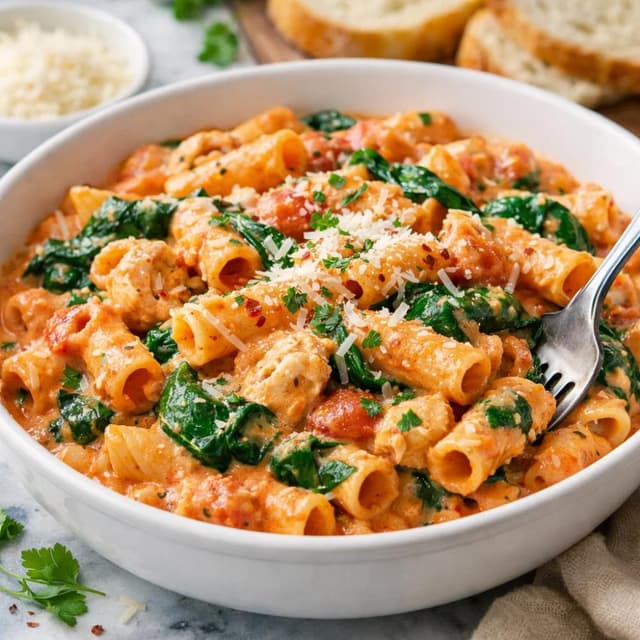
Add two large handfuls of baby spinach directly to the hot drained pasta before tossing with the ricotta. The heat wilts the spinach perfectly. The earthy, slightly bitter spinach is an ideal partner for the bright, lemony sauce.
Lemon Ricotta Pasta with Roasted Tomatoes
Halve 250g of cherry tomatoes, toss with olive oil and salt, and roast at 200°C for 20 minutes until jammy and beginning to caramelise. Serve scattered over the finished lemon ricotta pasta. The sweet, concentrated tomato contrasts beautifully with the bright lemon sauce.
Lemon Ricotta Pasta with Crispy Pancetta
Dice 100g of pancetta and cook in a dry pan until crispy. Drain on kitchen paper and scatter over the finished pasta. The salty, fatty pancetta provides a savoury counterpoint that transforms the dish from light to indulgent.
Lemon Ricotta Stuffed Pasta
Use the ricotta mixture (with extra seasoning) as a filling for fresh pasta sheets, creating ravioli or cannelloni. The lemon ricotta filling is classic in Italian cooking and works beautifully with a simple sage brown butter or a light tomato sauce.
What to Serve With
Perfect pairings to complete the meal
Simple Rocket Salad
A handful of peppery rocket dressed with lemon juice and olive oil alongside provides a sharp, bitter contrast that makes the creamy pasta taste even brighter. No other dressing needed — the lemon echoes the pasta.
Garlic Bread
Warm garlic bread alongside turns this into a more substantial dinner and provides something to wipe the bowl with at the end — a deeply satisfying conclusion to a bowl of lemon ricotta pasta.
Chilled White Wine
A glass of crisp white wine — a light Pinot Grigio, Soave, or Vermentino — is a near-perfect match for lemon ricotta pasta. The acidity and freshness of the wine mirrors the bright lemon character of the dish.
Extra Parmesan and Lemon Wedges
Always serve with a bowl of extra freshly grated Parmesan and wedges of lemon on the table. Many people want to add more sharpness or more cheese — the option to customise makes the dish more interactive and enjoyable.
Storage & Reheating
Keep it fresh and plan ahead
Refrigerator
Keeps for up to 2 days in the fridge, though the pasta absorbs the sauce as it sits and becomes less saucy. Add a splash of milk or water when reheating.
Freezer
Not recommended — ricotta does not freeze well and becomes grainy and separated when defrosted.
Make-Ahead
The ricotta mixture can be made up to 24 hours ahead and refrigerated. Bring to room temperature before using. Cook the pasta fresh for best results.
Reheating
Reheat gently in a pan over low heat with a splash of water or milk, tossing to loosen the sauce. The texture will not be quite as silky as when freshly made. Add extra lemon juice and fresh herbs after reheating to restore brightness.
Cooking tonight?
Get a month of dinners like this — done for you
30 chef-tested dinners mapped to the month, plus 5 ready-to-shop grocery lists. One-time $8.99 — 30 dinners planned for you, zero nightly decisions.
See the 30-Day Plan →Be the first to review this recipe!
Got Leftovers?
Turn what you already have in your fridge into delicious meals. Our AI-powered generator creates personalized recipes from your ingredients.
Go Deeper
Master the Culinary Science
Every recipe is a doorway. Our 7 Mastery Guides give you the science, technique, and framework to understand why food works — not just how to follow steps.
AI-Powered
Have Ingredients? Generate a Recipe.
Tell our AI what's in your fridge and get a custom recipe with image in seconds. No waste, no boredom.
Try the AI Recipe Generator →Browse more like this:
You Might Also Like
Discover more delicious recipes similar to what you're cooking