Lemon Yogurt Cake (Light and Moist Everyday Cake)
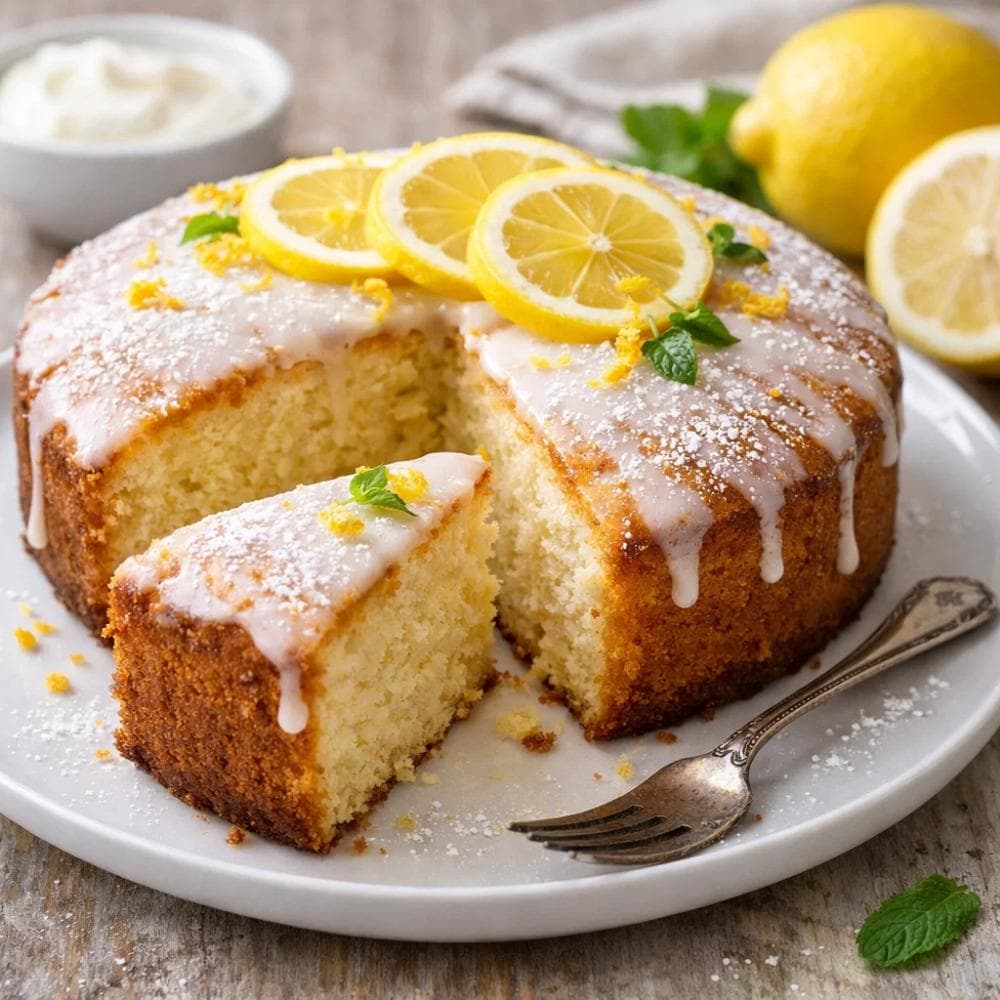
A light, moist, and fragrant everyday cake made with plain yogurt and fresh lemon — the yogurt keeps the crumb tender for days, while a generous amount of lemon zest and juice perfumes every bite with bright citrus. Made in one bowl in under ten minutes, it bakes to a golden, slightly domed loaf with a soft, tight crumb. Finished with a sharp lemon glaze that soaks into the warm cake, it is the kind of reliable, effortless bake that earns a permanent place in your repertoire.
The Quick Answer
This loaf most often disappoints by sinking into a dense seam down the middle or by tasting flatly of cake with no real lemon. The dip comes from leavening that's spent or batter that's overmixed, while the missing zing comes from relying on juice when it's the zest's oils that actually carry lemon flavour.
Why has my lemon yogurt cake sunk in the middle?
A central sink means the crumb rose and then collapsed before it could set. The lift comes from baking powder reacting with the acidic yogurt and lemon juice to release carbon dioxide - if your baking powder is old, that gas never fully forms and the centre falls. Overmixing is the other trigger: beating the batter develops gluten and knocks out the bubbles, so fold only until the flour just disappears. Opening the oven early, before the crumb has set around 45 minutes, drops the temperature and deflates the rise. The crack along the top is normal and desirable - it's the crust setting first while the wetter centre is still expanding upward.
Why doesn't my lemon cake taste of lemon?
Most of lemon's perfume lives in the zest, not the juice. The yellow skin is packed with aromatic oils - chiefly limonene - that survive baking, while the juice is mostly water and citric acid that bakes off as flavour and reads more as faint sourness. Two lemons' worth of zest is doing the real flavour work, so zest only the coloured layer and avoid the bitter white pith. The hot glaze is the second lever: poured over the cake straight from the oven, the lemon-sugar syrup soaks into the warm crumb and leaves a sharp, concentrated citrus crust as it dries, rather than sitting as inert icing on a cooled cake.
Not sure what to cook next? Let the generator pick your next dish in one click.
Random Recipe GeneratorAbout This Recipe
What is this dish?
Lemon yogurt cake is a French home-baking classic — the kind of simple, unfussy cake that French children make after school, using yogurt to measure all the other ingredients (one pot of yogurt, two pots of flour, and so on). The yogurt produces a cake with a remarkably moist, close crumb that keeps well for days. Bright with lemon and finished with a simple glaze, it is the definition of an everyday cake — easy enough for any skill level, good enough to serve to anyone.
Why you'll love it
It is genuinely one-bowl, genuinely foolproof, and genuinely delicious — the kind of recipe that rewards minimal effort with maximum result. The yogurt keeps the cake moist and tender for three or four days, which is unusual for a simple home-baked loaf. It is appropriate at any time of day and is better the day after baking.
When to serve
Breakfast, morning coffee, afternoon tea, or a casual dessert. Serves 8–10 slices from a standard loaf tin.
Quick tips
Fold, don't mix. Glaze while hot. Use the zest of at least 2 lemons. Check at 45 minutes.
Ingredient Highlights
Plain Full-Fat Yogurt
The defining ingredient. Yogurt contributes moisture, tenderness, and a very slight tang that complements the lemon. The acidity of the yogurt also reacts with the baking powder to produce extra lift. Full-fat yogurt provides the fat needed for a rich, moist crumb that stays good for days. It also makes the cake slightly more forgiving of overmixing than an all-butter recipe.
Fresh Lemon Zest
The primary source of lemon flavour in this cake — more so than the juice. The essential oils in fresh zest are concentrated and fragrant, permeating the entire crumb as the cake bakes. Use the zest of at least 2 lemons for a genuinely lemony cake; 3 is better. Always use unwaxed lemons or scrub conventional ones under hot water before zesting.
Neutral Oil
Oil rather than butter produces a more tender, moist crumb that stays fresh longer, because liquid fat does not solidify when the cake cools. Sunflower oil is the standard choice — flavourless and reliable. Light olive oil adds a faint fruitiness. The oil also makes the batter simpler: no creaming required, just mix and fold.
Substitution Options
Replace plain yogurt with Greek yogurt, sour cream, or crème fraîche. Use lime or blood orange instead of lemon. Swap plain flour for a gluten-free blend. Replace oil with melted butter for a richer flavour. Add 2 tbsp poppy seeds for the classic variation. Use honey instead of caster sugar.
You'll likely need to buy
Likely in your pantry
Step-by-Step Instructions
Preheat and prepare
Preheat the oven to 180°C (350°F / Gas Mark 4). Grease a 900g (2lb) loaf tin generously with butter or oil and line with a strip of baking paper that overhangs the long sides — this makes lifting the cake out effortless. Sift the flour, baking powder, and salt into a large bowl and whisk briefly to combine.
Chef's Tips
- ›Lining just the long sides with an overhanging strip of paper, leaving the short ends bare, gives you handles to lift the cake cleanly from the tin
- ›Greasing the short ends before adding the paper prevents any part of the cake sticking
Make the batter
In a large bowl, whisk together the yogurt, caster sugar, eggs, oil, lemon zest, lemon juice, and vanilla extract until smooth and well combined — about 1 minute by hand. Pour this wet mixture into the flour mixture and fold gently with a rubber spatula until just combined. Stop as soon as the dry flour disappears — a few small lumps are fine. Overmixing creates a tough, dense cake.
Chef's Tips
- ›Fold the wet into the dry — not the other way around — to avoid overworking the gluten
- ›The batter will be thick and smooth. Do not beat or stir vigorously.
Bake
Pour the batter into the prepared tin and smooth the top. Bake for 45–55 minutes until a deep golden brown and a skewer inserted into the centre comes out clean. The top will crack along the centre — this is characteristic and desirable. Check at 45 minutes; if the top is browning too quickly, tent loosely with foil.
Chef's Tips
- ›The centre crack is a hallmark of a good loaf cake — do not be alarmed
- ›A clean skewer is the best test — the colour alone can be misleading as the crust darkens before the centre is set
Glaze and cool
While the cake is still hot in the tin, mix the icing sugar with enough lemon juice to make a thin, pourable glaze. Pour it over the hot cake — it will soak into the surface and create a thin, sharp lemon crust as it cools. Allow to cool in the tin for 10 minutes before lifting out onto a wire rack to cool completely.
Chef's Tips
- ›Glazing while hot allows the syrup to penetrate the crust rather than just coating it — the result is a lemon-saturated top that is deeply flavoured
- ›Do not be tempted to add too much lemon juice to the glaze — it should be thick enough to coat the cake, not pour off the sides
Chef's Tips
Techniques that separate good from great
Use the zest of 3 lemons
The amount of lemon zest is what determines how intensely lemony the cake tastes — two lemons is the minimum, but three makes the cake genuinely fragrant and vibrant. The essential oils in fresh zest are concentrated and aromatic in a way that juice alone cannot replicate. Use unwaxed lemons or scrub conventional ones well before zesting.
Add a poppy seed variation
Stirring 2 tablespoons of poppy seeds into the batter just before pouring into the tin is the most popular and arguably the best variation on this cake. The poppy seeds add a gentle nuttiness, a subtle textural contrast, and a visual polka-dot pattern in every slice. The combination of lemon and poppy seed is a classic for good reason.
Use Greek yogurt for a denser, richer crumb
Substituting thick Greek yogurt for plain yogurt produces a slightly denser, more moist cake with a richer texture. The higher fat content of Greek yogurt contributes to a more tender crumb and keeps the cake fresh for longer. It also makes the batter thicker, which can make it harder to fold the flour in evenly — take extra care not to overmix.
Nutrition Facts
Per serving · Estimated values
* Estimated per serving based on a 2,000 calorie diet.
Equipment Needed
As an Amazon Associate we earn from qualifying purchases — at no extra cost to you.
Quick Tips
- Do not overmix the batter — fold until the flour just disappears for a tender crumb
- Glaze the cake while still hot so the icing soaks into the crust
- Check at 45 minutes and tent with foil if the top is browning faster than expected
Recipe Variations
Different ways to make this dish your own
Lemon Poppy Seed Yogurt Cake
Add 2 tablespoons of poppy seeds to the batter before baking. The most popular and arguably best variation — the poppy seeds add texture, a faint nuttiness, and a beautiful polka-dot pattern in every slice.
Lime and Coconut Yogurt Cake
Replace the lemon with lime zest and juice, replace half the plain yogurt with coconut yogurt, and add 30g of desiccated coconut to the batter. Finish with a lime glaze. A tropical variation that is particularly good in summer.
Lemon and Blueberry Yogurt Cake
Fold 150g of fresh blueberries (tossed in 1 tablespoon of flour to prevent sinking) into the batter just before baking. The blueberries burst during baking, creating pockets of sharp, jammy fruit throughout the lemon crumb.
Orange Yogurt Cake
Replace both the lemon zest and juice with orange zest and juice. The orange version is slightly sweeter and less sharp, with a more mellow citrus character. Add a tablespoon of Cointreau to the glaze for an adult version.
What to Serve With
Perfect pairings to complete the meal
Morning Coffee
A classic pairing — the bright lemon and tender crumb alongside a strong coffee is a simple pleasure that does not need elaboration. The slight tang of the yogurt in the cake complements the bitterness of the coffee.
Whipped Cream and Berries
For a more dessert-like presentation, serve a slice with a spoonful of lightly whipped cream and a handful of fresh raspberries or strawberries. The acidity of the berries mirrors the lemon and lifts the whole dish.
Lemon Curd
A teaspoon of good lemon curd alongside doubles down on the lemon character and adds a rich, custard-like element that pairs beautifully with the light crumb of the cake.
Greek Yogurt and Honey
A spoonful of thick Greek yogurt drizzled with honey alongside a warm slice of this cake echoes the yogurt in the cake itself and creates a coherent, simple dessert that feels effortlessly elegant.
Storage & Reheating
Keep it fresh and plan ahead
Refrigerator
Not necessary — keeps at room temperature in an airtight container for up to 4 days. The yogurt makes the crumb stay moist longer than most cakes.
Freezer
Freezes well for up to 2 months, whole or pre-sliced. Wrap tightly and defrost at room temperature for 2 hours.
Make-Ahead
Excellent made ahead — the flavour deepens and the crumb becomes more moist after 24 hours. Make the day before serving for the best result.
Reheating
Best at room temperature. If refrigerated, allow to sit out for 30 minutes. A brief 10 minutes in a low oven refreshes the texture if the cake has dried slightly.
Cooking tonight?
Get a month of dinners like this — done for you
30 chef-tested dinners mapped to the month, plus 5 ready-to-shop grocery lists. One-time $8.99 — 30 dinners planned for you, zero nightly decisions.
See the 30-Day Plan →Be the first to review this recipe!
Got Leftovers?
Turn what you already have in your fridge into delicious meals. Our AI-powered generator creates personalized recipes from your ingredients.
Go Deeper
Master the Culinary Science
Every recipe is a doorway. Our 7 Mastery Guides give you the science, technique, and framework to understand why food works — not just how to follow steps.
AI-Powered
Have Ingredients? Generate a Recipe.
Tell our AI what's in your fridge and get a custom recipe with image in seconds. No waste, no boredom.
Try the AI Recipe Generator →Browse more like this:
You Might Also Like
Discover more delicious recipes similar to what you're cooking