Sesame Noodles (Easy Asian-Inspired Recipe)
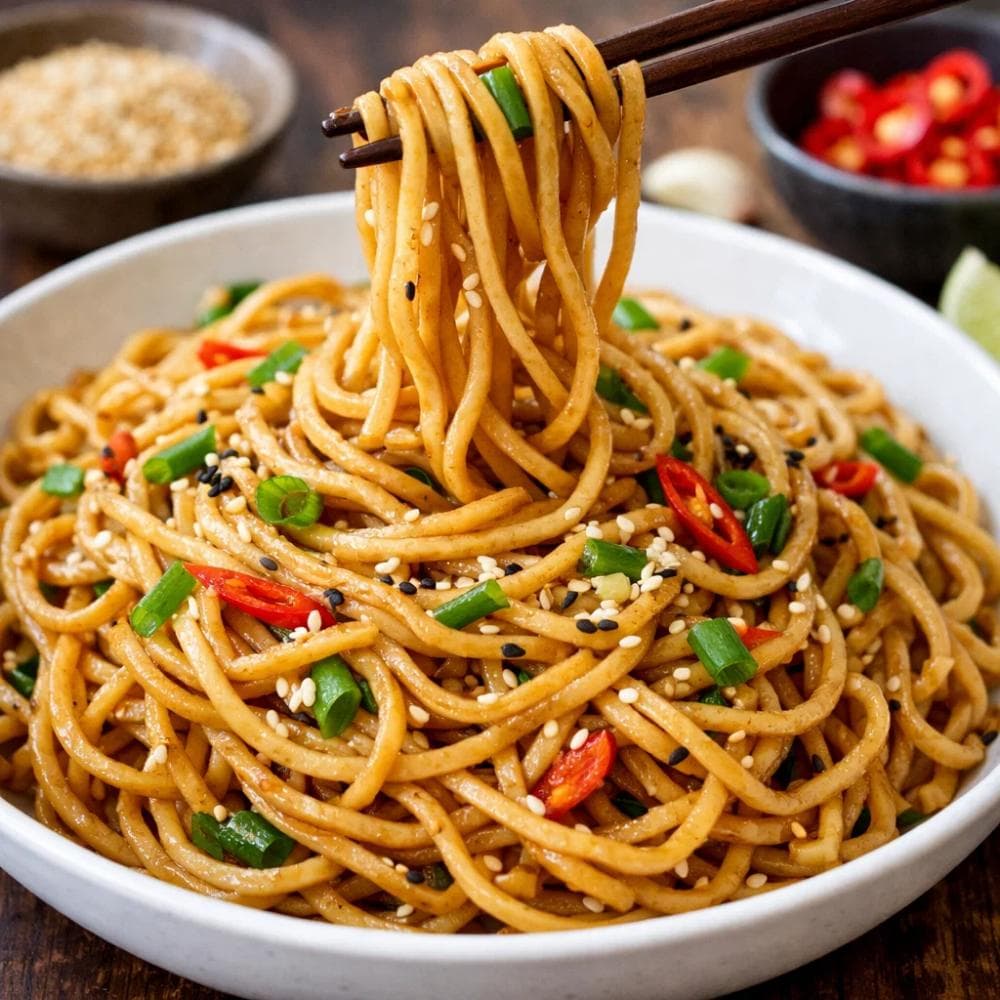
Chewy noodles tossed in a rich, nutty sesame sauce with garlic, ginger, soy sauce, and a touch of rice vinegar. Ready in 15 minutes and served at room temperature, making them ideal for meal prep, packed lunches, or a quick dinner. Topped with cucumber, spring onions, and sesame seeds for freshness and crunch.
The Quick Answer
Sesame noodles fail in two predictable ways: a thick, claggy sauce that won't coat the strands, and noodles that clump into a sticky mass before the sauce ever touches them. Loosen the tahini with warm water gradually, and shock and oil the noodles the moment they drain.
Why does my sesame sauce turn thick and pasty instead of pourable?
Tahini and Chinese sesame paste seize when liquid first hits them - a counterintuitive reaction where the paste tightens into a stiff clump before it loosens. This happens because the small amount of water bonds with the ground sesame solids and fat before there is enough liquid to thin them out. The trick is in the method: add the 2 tablespoons of warm water one tablespoon at a time, whisking through the seizing stage until the sauce suddenly relaxes into a smooth, pourable dressing. Warm water works better than cold because it keeps the sesame fat fluid. The soy sauce and rice vinegar also contribute liquid, so build slowly and stop once it reaches the consistency of a thick salad dressing.
Why do my noodles clump together before I can dress them?
Hot-drained noodles keep cooking and exuding surface starch, which acts like glue and welds the strands into a solid block - especially with soba or udon, which are starchy. Because this dish is served at room temperature, you have time for that starch to set before the sauce goes on. Rinsing under cold water immediately stops the cooking and washes away the loose surface starch that causes sticking, while the small drizzle of sesame oil coats each strand so they stay separate. Skip the rinse and you get clumped, gummy noodles that the sauce can only cling to in patches. The cold rinse also firms the noodles, giving the chewy bite that defines the dish.
Not sure what to cook next? Let the generator pick your next dish in one click.
Random Recipe GeneratorAbout This Recipe
What is this dish?
Sesame noodles are a Chinese-American classic — cold or room-temperature noodles dressed in a rich, nutty sesame sauce that balances salty, sweet, acidic, and umami flavours. They are served everywhere from New York Chinese restaurants to home kitchens across the world. The beauty of the dish is in the sauce: a handful of pantry ingredients whisked together produces something deeply complex and satisfying.
Why you'll love it
Ready in 15 minutes, endlessly customisable, excellent at room temperature, and ideal for meal prep. The sesame sauce is one of the most addictive sauces in the home cook's repertoire — it works on noodles, rice, vegetables, grilled chicken, and everything in between.
When to serve
A quick weeknight dinner, a packed lunch, a summer meal prep staple, or a side dish at a barbecue or gathering. Serve at room temperature — no reheating required.
Quick tips
Rinse noodles in cold water after cooking. Taste the sauce before dressing. Add warm water gradually to loosen tahini. Season confidently — noodles absorb flavour.
Ingredient Highlights
Tahini
Tahini — ground sesame seed paste — is the backbone of the sauce. It provides fat, richness, and intense nuttiness. Chinese sesame paste is darker and more toasted than Middle Eastern tahini, making it more flavourful for this application, but both work well. Always stir tahini before using as the oil separates in the jar.
Rice Vinegar
Rice vinegar provides the essential acidity that stops the sesame sauce from being one-dimensionally rich. It is milder and less sharp than white wine vinegar, making it the ideal choice for Asian-inspired sauces. It brightens the flavour and makes each bite of noodle feel fresh rather than heavy.
Sesame Oil
Toasted sesame oil is one of the most powerfully flavoured oils in the kitchen — a small amount adds an intense, nutty, roasted fragrance that defines the dish. Use sparingly — 1 tablespoon is enough for a full batch. Do not substitute with untoasted sesame oil, which lacks the characteristic fragrance.
Substitution Options
Replace tahini with peanut butter for a peanut noodle sauce. Use tamari instead of soy sauce for gluten-free. Replace honey with maple syrup for vegan. Add edamame, shredded chicken, or crispy tofu. Replace coriander with mint or omit entirely.
You'll likely need to buy
Likely in your pantry
Step-by-Step Instructions
Cook the noodles
Cook the noodles according to packet instructions until just tender. Drain and rinse under cold water to stop cooking and prevent sticking. Toss with a small drizzle of sesame oil to prevent clumping while you prepare the sauce.
Chef's Tips
- ›Rinsing under cold water is important for noodles served at room temperature — it also removes excess starch that makes them gluey
- ›Do not overcook — noodles served at room temperature should have a firm, chewy bite
Make the sesame sauce
Whisk together the tahini, soy sauce, rice vinegar, sesame oil, honey, garlic, and ginger in a large bowl. Add the warm water one tablespoon at a time and whisk until the sauce is smooth and pourable — the consistency of a thick salad dressing. Add chilli oil or sriracha if using. Taste and adjust — more soy for saltiness, more vinegar for brightness, more honey for sweetness.
Chef's Tips
- ›Tahini can seize and become thick when mixed — keep adding warm water and whisking and it will eventually smooth out
- ›Taste before dressing the noodles and season confidently — noodles absorb a lot of flavour
Dress and serve
Add the drained noodles to the bowl with the sesame sauce and toss thoroughly to coat every strand. Divide into bowls and top with julienned cucumber, spring onions, sesame seeds, and fresh coriander. Drizzle with extra chilli oil if desired.
Chef's Tips
Techniques that separate good from great
Balance the four flavours deliberately
A great sesame noodle sauce is balanced across salty (soy), acidic (rice vinegar), sweet (honey), and rich (tahini/sesame). Taste before dressing and adjust each element. The sauce should be slightly more intense than you think — the noodles dilute everything.
Add a tablespoon of peanut butter
A tablespoon of smooth peanut butter added to the sesame sauce alongside the tahini adds body, richness, and a subtle peanut flavour that makes the sauce more complex. This is common in Chinese-American sesame noodle recipes and the result is deeply satisfying.
Nutrition Facts
Per serving · Estimated values
* Estimated per serving based on a 2,000 calorie diet.
Equipment Needed
As an Amazon Associate we earn from qualifying purchases — at no extra cost to you.
Quick Tips
- Use Chinese sesame paste if available — it is darker and more intensely flavoured than Middle Eastern tahini
- The sauce thickens as it sits — add extra warm water and toss again before serving if made ahead
- Toast the sesame seeds in a dry pan for 2 minutes — this doubles their nutty flavour
- Serve at room temperature or slightly chilled — this dish is designed to be eaten cold or at room temperature
Recipe Variations
Different ways to make this dish your own
Peanut Sesame Noodles
Replace half the tahini with smooth peanut butter. The result is richer, with a more prominent peanut flavour — closer to the Chinese-American peanut noodle.
Spicy Sesame Noodles
Add 2 tablespoons of chilli crisp or chilli oil to the sauce. Top with extra chilli crisp and thinly sliced red chilli. A version with genuine heat that is excellent for spice lovers.
Sesame Noodle Salad
Toss the dressed noodles with shredded red cabbage, julienned carrots, sliced snap peas, and edamame. A hearty, colourful salad that makes a complete meal.
What to Serve With
Perfect pairings to complete the meal
Soft-Boiled Eggs
A soft-boiled egg with a jammy yolk on top adds protein and richness. Marinate in soy sauce and mirin for 30 minutes after cooking for extra flavour.
Crispy Tofu
Pan-fried crispy tofu cubes on top add protein and a satisfying texture contrast with the soft noodles.
Edamame
A handful of shelled edamame stirred through the noodles adds protein, colour, and a mild, clean flavour that complements the rich sesame sauce.
Storage & Reheating
Keep it fresh and plan ahead
Refrigerator
Keeps for up to 3 days in a sealed container. The noodles absorb the sauce — add a splash of soy sauce, sesame oil, and water before serving to refresh.
Freezer
Not recommended — the noodle texture suffers significantly after freezing.
Make-Ahead
Excellent for meal prep. Dress the noodles and store without the fresh toppings — add cucumber, spring onions, and herbs at serving time.
Reheating
Serve at room temperature or slightly chilled — no reheating required. If the sauce has thickened in the fridge, toss with a splash of warm water and sesame oil to loosen.
Cooking tonight?
Get a month of dinners like this — done for you
30 chef-tested dinners mapped to the month, plus 5 ready-to-shop grocery lists. One-time $8.99 — 30 dinners planned for you, zero nightly decisions.
See the 30-Day Plan →Be the first to review this recipe!
Got Leftovers?
Turn what you already have in your fridge into delicious meals. Our AI-powered generator creates personalized recipes from your ingredients.
Go Deeper
Master the Culinary Science
Every recipe is a doorway. Our 7 Mastery Guides give you the science, technique, and framework to understand why food works — not just how to follow steps.
AI-Powered
Have Ingredients? Generate a Recipe.
Tell our AI what's in your fridge and get a custom recipe with image in seconds. No waste, no boredom.
Try the AI Recipe Generator →Browse more like this:
You Might Also Like
Discover more delicious recipes similar to what you're cooking