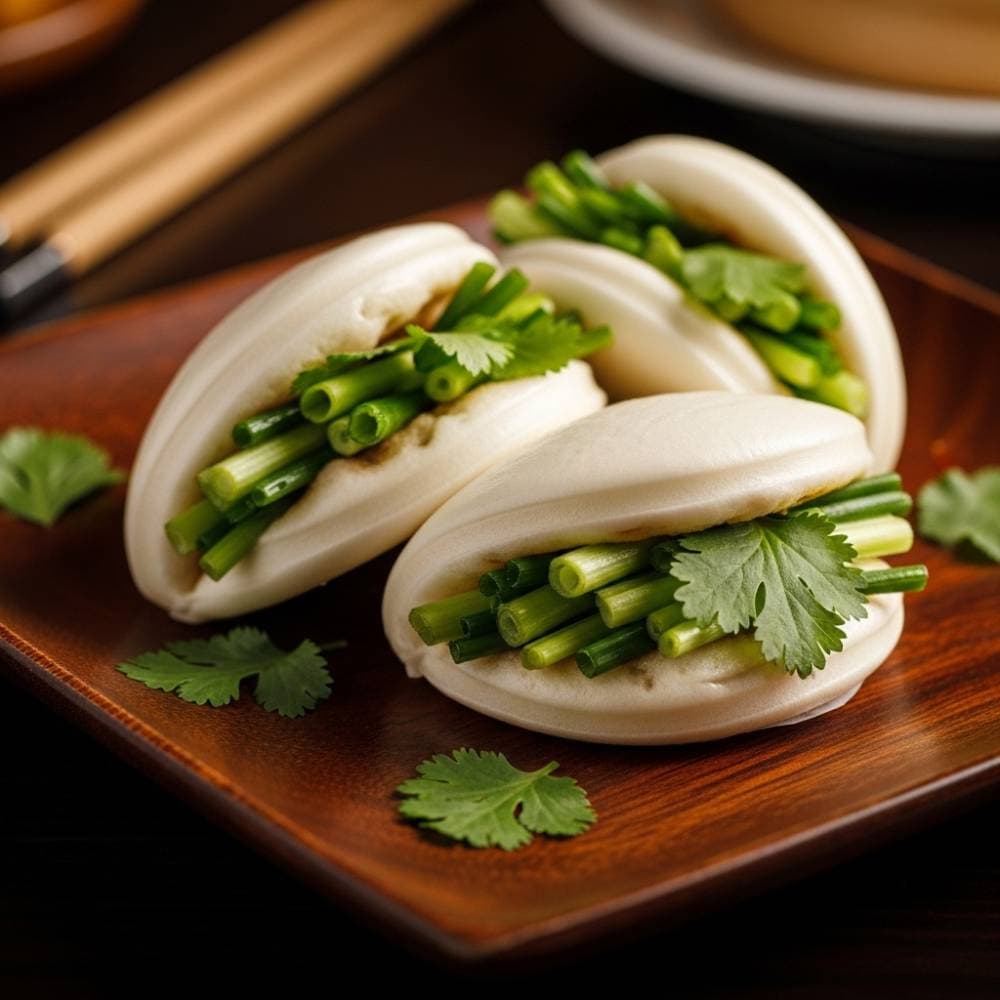
Steamed Scallion Buns (Hua Juan)
Soft, fluffy, and slightly savory Chinese steamed buns, beautifully twisted and layered with fresh green onions and a hint of oil. Perfect as a side dish or snack for two.
The Quick Answer
Hua juan rely on two structures forming at once: a gas-inflated crumb from the yeast and distinct laminated leaves from the oil layer. Understanding what the second proof and the oil film actually do explains why these buns turn out airy and flaky instead of dense slabs.
Why do my steamed scallion buns turn dense and gummy inside?
A dense crumb usually means the gas cells never got large enough before the gluten set. Steam heat cooks the bun fast, so the dough has only a short window to expand before the proteins firm up and trap the structure. If the shaped buns went into the steamer before the second proof inflated them, the yeast cannot generate enough carbon dioxide in time, and you get tight, doughy spirals. The 105 to 115 degree water also matters at the start: too hot and it kills the yeast, leaving little leavening power. A properly proofed bun feels light and jiggly and springs back slowly when pressed, which signals the gas network is ready for the burst of steam expansion.
Why do the scallion layers fuse together instead of peeling apart?
The flower shape depends on the dough sheets staying separate, and the thin film of vegetable and sesame oil spread before rolling is what keeps them apart. Fat coats the dough surface and physically blocks the gluten strands of touching layers from bonding during the proof and steam, so the spirals slide into distinct leaves rather than welding into one mass. Skip the oil or spread it unevenly and the sheets glue shut. The white pepper and salt in that oil mix season the layers but do nothing structural, so the oil is the part you cannot omit. Rolling the log tightly and twisting cleanly also helps the steam separate the coils evenly instead of tearing the scallion seams.
Not sure what to cook next? Let the generator pick your next dish in one click.
Random Recipe GeneratorAbout This Recipe
What is this dish?
Steamed scallion buns (hua juan) are a classic Northern Chinese dim sum and home-cooking staple — soft, pillowy yeasted dough rolls layered with sesame oil, salt, and abundant fresh scallions, then twisted and folded to create their characteristic spiral shape. Unlike baked buns, steamed buns have a uniquely light, cloud-soft texture that cannot be achieved in an oven. They are a beloved comfort food throughout China.
Why you'll love it
These buns deliver an extraordinary textural experience — impossibly soft, almost cloud-like exterior with tender, sesame-and-scallion-flavored layers inside. They are versatile enough to serve with dips, soups, or braises. Making yeasted steamed bread from scratch is a deeply satisfying process with a remarkable payoff.
When to serve
Serve as a dim sum appetizer, alongside braised dishes like red-braised pork or clay pot chicken, as a breakfast bread with congee, or as a side bread for any Chinese-style meal. They are also excellent as a standalone snack.
Quick tips
Don't rush the proofing — the dough must double in size for the buns to be fluffy. Use a steamer lined with parchment or cabbage leaves to prevent sticking. Never open the steamer lid in the first 10 minutes. The 5-minute rest before opening the lid is essential to prevent deflation.
Ingredient Highlights
All-Purpose Flour (or Bao Flour)
Standard all-purpose flour works well for steamed buns, though Chinese bao flour (lower protein content, bleached) produces the characteristic brilliant white color of restaurant-style buns. Cake flour can be mixed with all-purpose in a 1:2 ratio for a softer result.
Instant Yeast
Instant yeast (also called rapid-rise or quick-rise yeast) is ideal for steamed buns — it doesn't require pre-activation in warm water and provides reliable, even leavening. Active dry yeast requires proofing in warm water first. Fresh yeast produces an excellent flavor but requires careful temperature management.
Sesame Oil
Toasted sesame oil brushed between the layers creates the flavor foundation of the scallion spiral. It provides nutty richness and the characteristic aroma of Chinese sesame preparations. Use only a small amount — sesame oil is potent and can overwhelm the delicate bun dough.
Fresh Scallions
The defining aromatic filling. Fresh scallions (green onions) wilt and become fragrant during steaming, releasing their mild onion sweetness between the layers. Use both the green and white parts for different textures. Slice thinly for even distribution throughout the spiral layers.
Substitution Options
Replace scallions with garlic chives (jiucai) for an earthier, more assertive filling. Sesame oil can be supplemented or replaced with chili oil for a spicy version. Add five-spice powder or white pepper to the salt-sesame layer for additional complexity. For a sweet version (tang hua juan), replace scallions with brown sugar and cinnamon between the layers.
You'll likely need to buy
Likely in your pantry
Step-by-Step Instructions
Make the dough
In a large bowl, whisk together 1 1/2 cups all-purpose flour, 1 teaspoon active dry yeast, 1 tablespoon granulated sugar, and 1/2 teaspoon salt. Pour 3/4 cup warm water into the dry ingredients. Mix with a spoon or your hands until a shaggy dough forms. Transfer the dough to a lightly floured surface and knead for 8-10 minutes until it is smooth, soft, and elastic (stretchy). The dough should bounce back when poked. Lightly grease a clean bowl with a little vegetable oil. Place the dough in the bowl and turn it once to coat. Cover the bowl with plastic wrap or a damp cloth and let it rise in a warm place for 1 hour, or until it has doubled in size. Resting allows the dough to relax and rise.
Chef's Tips
- ›Elastic means it is stretchy and returns to its shape.
- ›Doubled in size means it looks about twice as big.
Prepare scallion filling and shape buns
While the dough rises, finely chop 1/4 cup green onions. In a small bowl, combine 2 tablespoons vegetable oil, 1/4 teaspoon salt, 1/8 teaspoon white pepper, and 1/2 teaspoon sesame oil. Mix well. Once the dough has risen, gently punch it down to release the air. Transfer it to a lightly floured surface. Roll the dough into a large rectangle, about 10x12 inches (25x30 cm). Spread the prepared oil and scallion mixture evenly over the entire surface of the dough. From the longer side, tightly roll the dough into a log. Cut the log into 4-6 equal pieces. Take each piece, place it cut-side up, and press down gently with your hand to flatten it slightly. Use a chopstick or knife to press a deep indentation down the center of each piece, almost cutting through. Gently twist the two halves of each piece and coil them into a flower shape (Hua Juan means 'flower roll').
Chef's Tips
- ›Rolling the dough thin ensures many layers in the bun.
- ›Twisting and coiling creates the classic 'flower' shape.
Second rise and steam
Line a bamboo steamer basket or a regular steamer basket with parchment paper or non-stick baking liners. Arrange the shaped scallion buns in the steamer basket, leaving space between them. Cover the steamer and let the buns rise again in a warm place for 15-20 minutes, or until they look puffy. This is the second rise. Fill a pot with about 1-2 inches of water and bring it to a rolling boil. Place the steamer basket over the boiling water. Cover and steam the buns for 10-15 minutes. The buns are cooked when they are puffy, soft, and spring back when lightly pressed.
Chef's Tips
- ›The second rise makes the buns extra fluffy.
- ›Ensuring water does not touch the buns is important for proper steaming.
Serve
Carefully remove the steamed scallion buns from the steamer. Serve immediately while warm. They are delicious on their own or as an accompaniment to stir-fries or soups.
Chef's Tips
- ›Steamed buns are best enjoyed hot and fresh.
- ›You can brush lightly with sesame oil after steaming for extra shine.
Chef's Tips
Techniques that separate good from great
The dough must be tacky but not sticky — adjust with flour 1 tablespoon at a time
Properly hydrated dough for steamed buns should pull away from the bowl sides cleanly but feel slightly tacky to the touch. If the dough sticks to your hand when you pull it away, add flour 1 tablespoon at a time. Under-hydrated dough produces dense, dry buns; over-hydrated dough is unworkable.
Let shaped buns proof for a second time before steaming — this is not optional
The second proof (after shaping) is essential for the buns' final lightness. Place shaped buns in the steamer, cover, and rest for 15-20 minutes before heating. They should puff visibly. Steaming without second-proofing produces dense, bready buns that lack the characteristic cloud-soft texture.
Start the buns in cold water and bring to a boil — never put them into already-boiling water
Placing buns into already-boiling water causes the outside to set immediately from the steam burst, preventing the buns from expanding further. Starting in cold water and bringing to a boil allows a gentle, even steaming that lets the buns continue expanding as they cook.
Wait 5 minutes before opening the steamer lid at the end — condensation collapse prevention
The sudden temperature and pressure change from immediately removing the lid causes condensed steam to drip onto the hot buns and causes them to deflate and wrinkle. Turn off the heat and let the buns sit covered for 5 full minutes before carefully lifting the lid slightly from the side (away from you) to let steam escape gradually.
Nutrition Facts
Per serving · Estimated values
* Estimated per serving based on a 2,000 calorie diet.
Equipment Needed
- Large mixing bowl
- Small bowl (for yeast)
- Rolling pin
- Steamer basket
- Pot (for steaming water)
- Whisk
- Measuring cups
- Measuring spoons
- Knife and cutting board
As an Amazon Associate we earn from qualifying purchases — at no extra cost to you.
Quick Tips
- Ensure your warm water is the correct temperature for yeast activation; too hot will kill it, too cold will not activate it.
- For extra flavor, you can add a pinch of five-spice powder to the dough mixture.
- Leftover steamed buns can be stored in an airtight container and reheated by steaming for a few minutes until soft again.
Recipe Variations
Different ways to make this dish your own
Garlic and Herb Steamed Buns
Replace scallion and sesame filling with a mixture of minced garlic, fresh Chinese chives, and a pinch of white pepper. The garlic caramelizes slightly during steaming and becomes sweet and aromatic.
Pan-Fried Scallion Buns (Sheng Jian Bao Style)
After the first proof, pan-fry the shaped buns bottom-down in oil until golden, then add water, cover, and steam until cooked through for buns with a crispy bottom and soft top — a popular Shanghai street food.
Lotus Leaf Steamed Buns (He Ye Bing)
Shape the dough into small oval buns, fold with a chopstick in the center (not twisting), and steam. These plain fold-over buns are the classic accompaniment to Peking duck — pulled apart and stuffed with duck and hoisin sauce.
Red Bean Paste Buns
Fill the dough with sweetened red bean paste (anko or dou sha) instead of scallions and roll into round buns (not spiral) for a sweet, dessert-style steamed bun.
What to Serve With
Perfect pairings to complete the meal
With Red-Braised Pork (Hong Shao Rou)
The classic pairing. Tear a warm steamed bun open and stuff with a piece of meltingly tender braised pork belly for an intensely satisfying combination — soft bread soaking up the soy-and-spice braising liquid.
With Congee (Rice Porridge)
Serve steamed scallion buns alongside a bowl of plain or flavored congee for a classic Chinese breakfast. The soft buns contrast with the warm, silky porridge beautifully.
With Dipping Sauce
Serve with a small dish of soy sauce, black vinegar, and sliced fresh ginger for dipping, or with chili crisp oil for those who enjoy heat. The simple dipping sauce highlights the sesame-scallion flavor of the bun.
As Dim Sum Table Bread
Arrange warm steamed scallion buns on a serving plate and place at the center of a dim sum spread alongside dumplings, spring rolls, and other dishes. They serve as the bread basket equivalent at a Chinese dim sum table.
Storage & Reheating
Keep it fresh and plan ahead
Refrigerator
Steamed buns keep refrigerated for up to 4 days in an airtight container. They firm up considerably when cold and benefit from resteaming.
Freezer
Steam and cool completely, then freeze in a single layer before transferring to freezer bags. Freeze for up to 2 months. Steam from frozen for 8-10 minutes.
Make-Ahead
The dough can be made through the first proof, punched down, and refrigerated overnight. Shape and steam fresh. Alternatively, steam completely, cool, and freeze.
Reheating
Always reheat steamed buns by steaming (3-5 minutes) or microwave wrapped in a damp paper towel for 20-30 seconds. The oven dries them out completely — avoid it.
Cooking tonight?
Get a month of dinners like this — done for you
30 chef-tested dinners mapped to the month, plus 5 ready-to-shop grocery lists. One-time $8.99 — 30 dinners planned for you, zero nightly decisions.
See the 30-Day Plan →Got Leftovers?
Turn what you already have in your fridge into delicious meals. Our AI-powered generator creates personalized recipes from your ingredients.
Go Deeper
Master the Culinary Science
Every recipe is a doorway. Our 7 Mastery Guides give you the science, technique, and framework to understand why food works — not just how to follow steps.
AI-Powered
Have Ingredients? Generate a Recipe.
Tell our AI what's in your fridge and get a custom recipe with image in seconds. No waste, no boredom.
Try the AI Recipe Generator →You Might Also Like
Discover more delicious recipes similar to what you're cooking