Thai Green Chicken Curry (Easy 30-Minute Recipe)
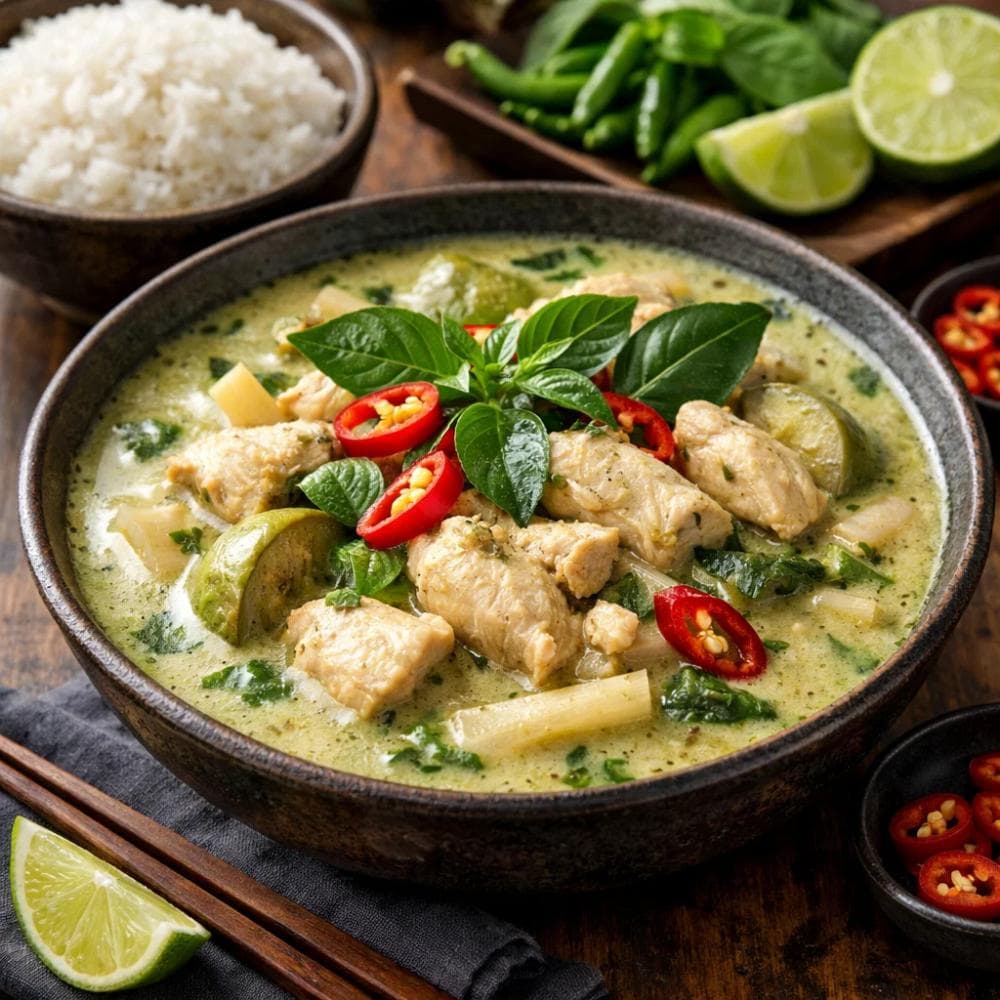
Coconut milk, green curry paste, tender chicken, and fragrant Thai basil — a vibrant, aromatic curry that rivals any restaurant in 30 minutes.
The Quick Answer
A flat, pale Thai green curry usually means the paste was never properly fried, so its aromatics stayed raw and muted. Fry the green curry paste in oil for one to two minutes until it darkens and the oil separates, and balance the finished sauce across fish-sauce salt, palm-sugar sweet and lime acid so no single note dominates.
Why is my green curry bland and watery?
Green curry paste is packed with fat-soluble aromatic compounds from lemongrass, galangal, chillies and shrimp paste, and these only release their flavour when fried in hot oil, a step that also blooms them and cooks off the raw, grassy edge. Skip it and the curry tastes thin and harsh. Frying until the oil splits and the paste darkens unlocks that depth. Wateriness is the second issue: light coconut milk and a quick simmer leave the sauce loose, so use full-fat tins and let the curry reduce while the chicken cooks. The thick cream at the top of the tin, fried with the paste first, gives the richest, most clinging base.
Why did my Thai basil turn black and bitter?
Thai basil leaves are thin and full of volatile oils that read as anise and pepper, but those oils are driven off by sustained heat and the chlorophyll oxidises to a dull blackish grey within minutes of hard simmering. That is why the leaves go in at the very end and the pan comes straight off the heat: residual warmth is enough to wilt them while preserving their colour and perfume. The same logic applies to the lime juice, whose bright acidity is volatile and dulls if boiled. Stir both in last so the curry keeps its fresh, fragrant lift rather than tasting cooked-out and muddy.
Not sure what to cook next? Let the generator pick your next dish in one click.
Random Recipe GeneratorAbout This Recipe
What is this dish?
Thai Green Curry is a coconut milk-based curry fragrant with green chillies, lemongrass, galangal, kaffir lime, and Thai basil. It is one of the cornerstone dishes of Thai cuisine — simultaneously rich, aromatic, and fresh.
Why you'll love it
It is one of the fastest restaurant-quality curries you can make at home. Using a good-quality shop-bought paste, the entire dish takes 30 minutes. The balance of creamy coconut, fragrant aromatics, and the brightness of lime and basil is outstanding.
When to serve
A weeknight dinner, a dinner party main course, or a warming meal in any season. It is also excellent reheated the next day.
Quick tips
Fry the paste first — this is the most important step. Use full-fat coconut milk. Add vegetables in the last 3 minutes. Squeeze lime and add basil just before serving.
Ingredient Highlights
Thai Green Curry Paste
The foundation of the dish. A good paste contains green chillies, lemongrass, galangal, kaffir lime, coriander root, and shrimp paste. Frying it in fat before adding liquid activates all the aromatics.
Full-Fat Coconut Milk
Essential for a rich, creamy curry. Light coconut milk produces a thin sauce. The fat in full-fat coconut milk also acts as the cooking medium for the paste.
Kaffir Lime Leaves
The highly aromatic double-lobed leaves that give Thai cooking its distinctive citrus fragrance. Not substitutable — lime zest is a distant approximation.
Substitution Options
Replace chicken with king prawns (add in the last 4 minutes), tofu (add with the vegetables), or mixed vegetables. Use red curry paste for a Thai Red Curry variation. Replace fish sauce with soy sauce and skip the shrimp paste version of the curry paste for a vegetarian version.
You'll likely need to buy
Likely in your pantry
Step-by-Step Instructions
Fry the curry paste
Heat the oil in a wok or large saucepan over medium-high heat. Add the green curry paste and fry for 1–2 minutes, stirring constantly, until it becomes fragrant and the oil separates slightly. This step blooms the spices and aromatics in the paste.
Chef's Tips
- ›Frying the paste before adding liquid is the most important step — it activates the aromatics and intensifies the flavour of the curry.
- ›Don't rush it — if you add the coconut milk too quickly, the paste will taste raw.
Add coconut milk and aromatics
Pour in one tin of coconut milk (shake well first). Stir and let it come to a simmer. Add the lemongrass and kaffir lime leaves. Pour in the second tin of coconut milk and the chicken stock. Bring to a gentle simmer.
Chef's Tips
- ›Adding the first tin before the chicken allows the curry base to cook and develop flavour before the protein goes in.
- ›Bruising the lemongrass by pressing firmly with the back of a knife releases more aromatic oils.
Add the chicken
Add the chicken pieces to the simmering curry. Cook for 12–15 minutes over medium heat until the chicken is cooked through and the sauce has reduced slightly.
Chef's Tips
- ›Chicken thighs are much more forgiving in a curry than breast — they stay tender even if slightly overcooked.
- ›Avoid boiling rapidly — a gentle simmer keeps the coconut milk creamy rather than separating.
Season and add vegetables
Add the fish sauce and sugar. Taste — the curry should be balanced between salt (fish sauce), sweet (sugar), and aromatic. Add the courgette and sugar snap peas. Cook for 2–3 minutes until just tender but still with a slight bite.
Chef's Tips
- ›Thai cooking is about balance — taste repeatedly and adjust fish sauce (salt/umami), sugar (sweet), and lime (sour).
- ›Add the vegetables late so they retain their colour and crunch.
Finish and serve
Remove the lemongrass stalks. Squeeze in the lime juice. Stir in the Thai basil leaves and remove from heat immediately — basil wilts and darkens quickly. Serve over steamed jasmine rice, garnished with sliced red chilli and more fresh basil.
Chef's Tips
- ›Add basil at the very last moment — once it hits the hot curry it wilts within 30 seconds.
- ›A squeeze of fresh lime at serving lifts all the flavours.
Chef's Tips
Techniques that separate good from great
Use the thick coconut cream at the top of the tin to fry the paste
When you open a tin of full-fat coconut milk, the thick cream floats to the top. Scoop this out and use it (instead of oil) to fry the curry paste. The coconut cream 'cracks' — the fat separates — which is how you know the paste is properly bloomed. Then add the remaining coconut liquid.
Make your own green curry paste for the best flavour
Blend together 4 green chillies, 2 stalks lemongrass (tender part), 3 shallots, 4 garlic cloves, 2cm fresh galangal or ginger, 1 tablespoon coriander root, 1 teaspoon cumin seeds, 1 teaspoon coriander seeds (toasted), kaffir lime zest, and 2 tablespoons fish sauce. Fresh paste has a vibrancy that no jar can match.
Nutrition Facts
Per serving · Estimated values
* Estimated per serving based on a 2,000 calorie diet.
Equipment Needed
As an Amazon Associate we earn from qualifying purchases — at no extra cost to you.
Quick Tips
- Fry the curry paste in oil for at least 1–2 minutes before adding any liquid — this is what separates a great curry from a mediocre one.
- Use full-fat coconut milk — light coconut milk produces a thin, less creamy sauce that doesn't have the same richness.
- Add vegetables in the final 3 minutes — they should retain colour and crunch, not become soft and grey.
Recipe Variations
Different ways to make this dish your own
Thai Red Chicken Curry
Replace the green curry paste with 2–3 tablespoons of Thai red curry paste. The method is identical. Red curry is generally slightly spicier and earthier than green.
Thai Green Prawn Curry
Replace the chicken with 400g of raw, shell-off king prawns. Add them in the last 3–4 minutes — they cook very quickly and toughen if overcooked.
Thai Green Vegetable Curry
Replace chicken with 400g of mixed vegetables: aubergine chunks, baby corn, courgette, and spinach. Use vegetable stock and omit fish sauce (use soy instead).
Thai Green Curry with Jasmine Rice Noodles
Serve over thin rice noodles instead of rice for a lighter, more broth-like version. Add a little extra stock to loosen the curry to a soupy consistency.
What to Serve With
Perfect pairings to complete the meal
Steamed Jasmine Rice
The only truly authentic accompaniment. The fragrant, slightly sticky rice absorbs the coconut curry sauce.
Roti or Flatbread
Thai roti (a flakier, slightly oilier flatbread) is served with curry in Thailand and is excellent for scooping up the sauce.
Thai Cucumber Salad
A simple salad of sliced cucumber, shallots, chilli, sugar, and vinegar provides a cooling, sharp contrast to the rich curry.
Prawn Crackers
Add crunch and provide a light, neutral counterpoint to the fragrant curry.
Storage & Reheating
Keep it fresh and plan ahead
Refrigerator
Store in an airtight container for up to 3 days. The coconut milk may solidify slightly — this is normal, it will re-liquify when reheated.
Freezer
Freezes well for up to 2 months, though the vegetables soften on thawing. Freeze in portions without the basil — add fresh basil when reheating.
Make-Ahead
The curry is excellent made ahead — the flavours develop overnight. Make the day before and reheat gently.
Reheating
Reheat over low-medium heat, stirring gently. Add a splash of coconut milk or stock to loosen if the sauce has thickened too much.
Cooking tonight?
Get a month of dinners like this — done for you
30 chef-tested dinners mapped to the month, plus 5 ready-to-shop grocery lists. One-time $8.99 — 30 dinners planned for you, zero nightly decisions.
See the 30-Day Plan →Got Leftovers?
Turn what you already have in your fridge into delicious meals. Our AI-powered generator creates personalized recipes from your ingredients.
Go Deeper
Master the Culinary Science
Every recipe is a doorway. Our 7 Mastery Guides give you the science, technique, and framework to understand why food works — not just how to follow steps.
AI-Powered
Have Ingredients? Generate a Recipe.
Tell our AI what's in your fridge and get a custom recipe with image in seconds. No waste, no boredom.
Try the AI Recipe Generator →Browse more like this:
You Might Also Like
Discover more delicious recipes similar to what you're cooking