Turkish Simit Recipe (Sesame Bread Rings at Home)
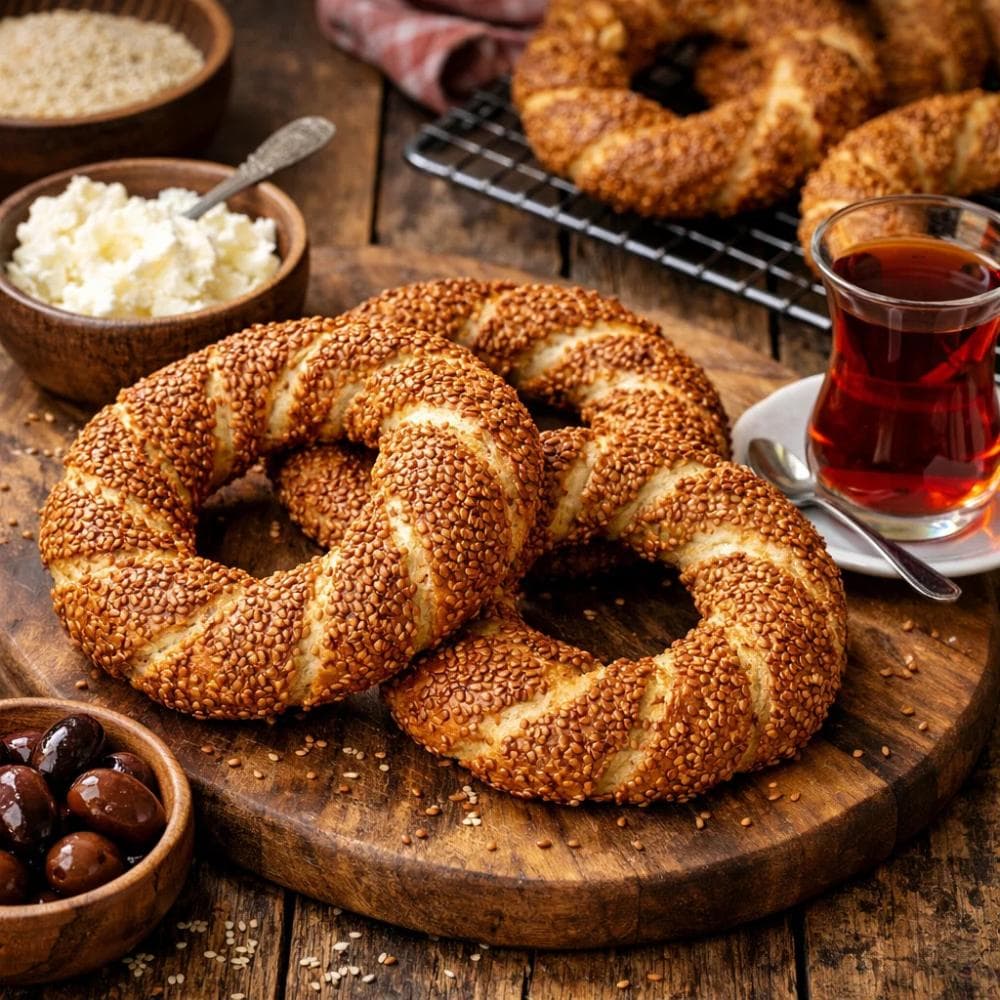
Crispy, sesame-coated bread rings with a chewy crumb — the iconic Turkish street bread. Dipped in grape molasses and rolled in sesame seeds before baking for the authentic crust and flavour.
You'll likely need to buy
Likely in your pantry
Planning the week? Start with a free 7-day dinner plan
Seven tested weeknight dinners from our kitchen, with one combined shopping list. Free, and no sign-up needed to see it.
Step-by-Step Instructions
Make the dough
Combine the flour, yeast, sugar, and salt in a large bowl. Add the warm water and olive oil. Mix until a rough dough forms, then turn out onto a lightly floured surface. Knead for 8–10 minutes until smooth, elastic, and slightly tacky but not sticky. Place in a lightly oiled bowl, cover with a damp cloth, and rest for 1 hour until doubled in size.
Chef's Tips
- ›Warm water should be approximately 38°C — warm to the touch but not hot, which would kill the yeast.
- ›The dough should be smooth and spring back slowly when pressed after kneading.
Prepare the sesame coating
Mix the grape molasses with 3 tablespoons of warm water in a shallow bowl. Spread the sesame seeds on a large plate or tray. Set both aside ready for shaping. Preheat the oven to 220°C (200°C fan / 425°F / Gas Mark 7) and line two baking trays with parchment paper.
Chef's Tips
- ›Grape molasses (pekmez) is the traditional coating liquid — it gives simit its characteristic slightly sweet, dark crust. Pomegranate molasses works as a substitute.
- ›Toast the sesame seeds lightly in a dry pan for 2 minutes for a nuttier flavour.
Shape the simit rings
Punch down the risen dough and divide into 8 equal portions. Roll each portion into a rope about 60cm long. Fold the rope in half and twist the two strands around each other 4–5 times. Bring the ends together and pinch firmly to form a ring. Repeat with all portions.
Chef's Tips
- ›Keep the ropes even in thickness for consistent baking.
- ›Pinch the join firmly — poorly sealed rings open during baking.
Dip and coat
Working one at a time, dip each ring into the molasses mixture, turning to coat all sides. Let excess drip off, then press each side firmly into the sesame seeds so they adhere all over. Place on the lined baking trays with space between each ring.
Chef's Tips
- ›Press the sesame seeds on firmly — a light press results in seeds that fall off during baking.
- ›Work quickly — the molasses coating sets and becomes less tacky as it dries.
Bake until golden
Bake at 220°C for 20–25 minutes until deep golden brown and the sesame seeds are toasted. The rings should sound hollow when tapped on the base. Transfer to a wire rack. Simit is best eaten the day it's baked while the crust is at its crispiest.
Chef's Tips
- ›A high oven temperature is important for developing the characteristic crispy exterior.
- ›Rotate the trays halfway through if your oven has hot spots.
Made it? Rate it
One tap. It helps other cooks pick a dinner.
About This Recipe
What is this dish?
Simit is Turkey's iconic street bread — a circular ring of yeasted dough dipped in grape molasses and rolled in sesame seeds, then baked at high heat until the exterior is crackingly crispy and the sesame seeds are golden and toasted. Inside, the crumb is chewy and light, similar to a bagel but lighter and more delicate.
Why you'll love it
It's one of the most satisfying breads you can bake at home — the contrast between the crispy sesame crust and the chewy interior is excellent, and the grape molasses gives a subtly fruity note that makes it unlike any other bread. Traditionally eaten with white cheese (beyaz peynir), olives, tomato, and cucumber alongside strong tea.
When to serve
A Turkish breakfast staple — serve with feta or white cheese, sliced tomato, cucumber, olives, and strong black tea for the authentic experience. Also excellent as a snack or alongside soup.
Quick tips
Use strong bread flour. Dilute the molasses with water. Press sesame seeds on firmly. Bake at high heat. Eat the same day.
Ingredient Highlights
Strong Bread Flour
Higher gluten content than plain flour gives simit its characteristically chewy, elastic crumb. Plain flour produces a softer, less authentic result.
Grape Molasses
The traditional coating liquid that gives simit its dark, slightly sweet exterior and helps the sesame seeds adhere. The defining ingredient that makes simit taste distinctly Turkish.
Sesame Seeds
The unmistakable exterior coating. They toast during baking, becoming nutty and golden. The generous coating is not decorative — it's structural and flavour-defining.
Substitution Options
Replace grape molasses with pomegranate molasses or diluted dark treacle. Add a tablespoon of honey to the dough for a slightly sweeter crumb. Mix half sesame, half nigella seeds for a variation. Use wholemeal bread flour for half of the flour quantity for a nuttier, darker simit.
Chef's Tips
Techniques that separate good from great
Use grape molasses for authenticity
Grape molasses (üzüm pekmezi or pekmez) is the traditional Turkish coating for simit. It gives a subtly fruity sweetness and a dark, glossy colour that pomegranate molasses and other substitutes don't quite match. It's available in Turkish or Middle Eastern grocery stores and online.
Toast the sesame seeds first
Lightly toasting the sesame seeds in a dry pan for 2–3 minutes before coating adds a significantly nuttier flavour and deeper colour. The seeds toast further in the oven but starting with a light pre-toast makes a noticeable difference.
Eat the day of baking
Simit is at its absolute best within hours of coming out of the oven — the contrast between the crispy sesame crust and the chewy interior is at its most pronounced. By day two the crust softens considerably. In Istanbul, simit sellers sell them fresh throughout the day for exactly this reason.
Nutrition Facts
Per serving · Estimated values
* Estimated per serving based on a 2,000 calorie diet.
Equipment Needed
- Large mixing bowl
- 2 baking trays
- Parchment paper
- Shallow bowl for dipping
- Large plate for sesame seeds
- Wire rack
Quick Tips
- Use strong bread flour, not plain flour — the higher gluten content gives simit its characteristic chewy bite.
- The molasses coating must be diluted with water — undiluted molasses is too thick and the sesame seeds won't adhere evenly.
- Bake at high temperature — 220°C is not too hot for simit. The high heat creates the crispy exterior.
Recipe Variations
Different ways to make this dish your own
Nigella Seed Simit
Replace half the sesame seeds with nigella seeds (çörek otu). Nigella adds a slightly bitter, onion-like flavour that is very popular in Turkish baking.
Wholemeal Simit
Replace 150g of the white bread flour with wholemeal bread flour. The result is slightly denser with a nuttier flavour.
Cheese-Stuffed Simit
Before shaping into rings, flatten each dough portion and place a tablespoon of crumbled feta in the centre. Roll up and proceed with shaping — the cheese melts inside during baking.
Mini Simit
Divide the dough into 16 portions instead of 8 for smaller, snack-sized rings. Reduce baking time to 15–18 minutes.
What to Serve With
Perfect pairings to complete the meal
White Cheese (Beyaz Peynir) and Olives
The traditional Turkish breakfast accompaniment — salty white cheese and briny olives are the ideal flavour contrast to the sweet sesame crust.
Sliced Tomato and Cucumber
Fresh vegetables alongside simit are a staple of the Turkish breakfast table. Their freshness and acidity cut through the richness of the cheese.
Strong Black Tea
Turkish çay served in tulip glasses is the non-negotiable accompaniment. The bitterness of the tea balances the sweetness of the molasses.
Hummus
For a non-traditional but excellent pairing, tear pieces of simit and dip into hummus — the sesame echoes the tahini in the hummus.
Storage & Reheating
Keep it fresh and plan ahead
Refrigerator
Store in a paper bag at room temperature for up to 1 day. The crust softens noticeably by day two.
Freezer
Freeze cooled simit in a sealed freezer bag for up to 1 month. Reheat from frozen at 200°C for 8–10 minutes.
Make-Ahead
The dough can be made and refrigerated overnight after the first rise. Shape, dip, and bake in the morning — the cold retard actually improves flavour slightly.
Reheating
Reheat in a 200°C oven for 5 minutes to partially restore the crispiness. Avoid the microwave.
Kitchen tools for this recipe
The equipment this recipe is cooked with.
As an Amazon Associate we earn from qualifying purchases.
Cooking tonight?
Get a month of dinners like this — done for you
30 chef-tested dinners mapped to the month, plus 5 ready-to-shop grocery lists. One-time $8.99 — 30 dinners planned for you, zero nightly decisions.
See the 30-Day Plan →The Quick Answer
Two things sink homemade simit: a slack twist that unravels into a flat blob in the oven, and a crumb that ends up bready rather than crisp-shelled and chewy. Twist the strands tightly and pinch the join hard so the ring holds its shape, and bake hot enough that the pekmez-coated surface sets into a thin, crackling crust.
Why does my simit lose its twisted shape and flatten in the oven?
A simit's signature look comes from two dough ropes twisted around each other, and that shape has to survive the oven spring. If the strands are twisted loosely or the joined ends are not pinched firmly, the dough relaxes and puffs as the yeast gives a final burst of gas in the heat, and the ring slumps into a flat oval with the twist erased. Roll each rope long and even - about 60cm - so you can wrap the two strands tightly 4-5 times, and press the seam hard to fuse it. A well-proofed but not over-proofed dough holds its definition better; dough left to over-rise has weakened gluten and collapses more readily once it hits 220C.
What does the grape molasses dip actually do besides sticking the sesame on?
The pekmez dip is doing real chemistry, not just gluing seeds. It is a concentrated sugar syrup, and those sugars coat the dough surface and caramelise rapidly at 220C, giving simit its dark reddish-brown, glossy, faintly bittersweet crust that plain water-washed dough never achieves. The sugars also accelerate Maillard browning with the dough's surface proteins, deepening colour and flavour in the same window the sesame seeds toast and release their oils. Diluting the molasses with the 3 tablespoons of warm water is what lets it spread into a thin, even film - undiluted it sits in thick patches that scorch in spots and leave others pale, giving a blotchy rather than uniformly burnished ring.
Not sure what to cook next? Let the generator pick your next dish in one click.
Random Recipe GeneratorGot Leftovers?
Turn what you already have in your fridge into delicious meals. Our AI-powered generator creates personalized recipes from your ingredients.
Go Deeper
Master the Culinary Science
Every recipe is a doorway. Our 7 Mastery Guides give you the science, technique, and framework to understand why food works — not just how to follow steps.
AI-Powered
Have Ingredients? Generate a Recipe.
Tell our AI what's in your fridge and get a custom recipe with image in seconds. No waste, no boredom.
Try the AI Recipe Generator →Find this recipe in these collections
You Might Also Like
Discover more delicious recipes similar to what you're cooking