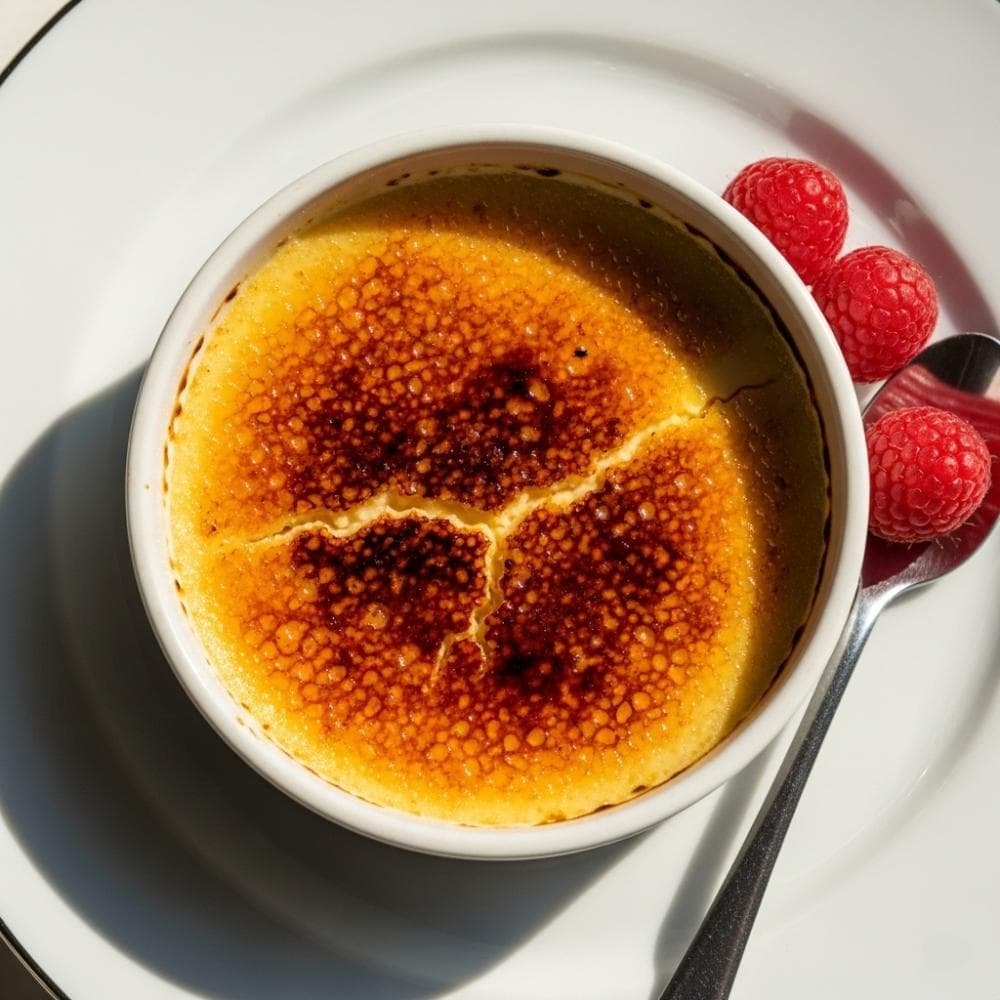
Classic Crème Brûlée
A luxurious French dessert featuring a smooth, rich vanilla custard baked until just set, then topped with a layer of granulated sugar that's caramelized to a crisp, golden shell right before serving.
The Quick Answer
Crème brûlée most often fails as a grainy, curdled custard because the egg-yolk proteins coagulate too fast and too hot. Bake gently in the water bath and pull it while the center still jiggles, since the yolks set around 170-180°F and overshooting bonds the proteins into weeping clumps.
Why is my creme brulee grainy or scrambled instead of silky?
The custard is a suspension of egg-yolk proteins that unfold and link into a delicate gel as they heat, forming cleanly around 170-180°F. Push past that and the proteins bond too tightly, squeeze out water, and turn the texture grainy and weepy (syneresis). The water bath buffers this: water cannot exceed 212°F and surrounds the ramekins evenly, so the custard climbs slowly and the edges do not race ahead of the center. The fat in the all-heavy-cream base also helps, coating the proteins and raising their coagulation point, which is exactly why this recipe uses cream rather than milk. Straining catches any yolk strands that did over-set, but it cannot rescue a custard baked too hot.
Why does my caramelized sugar topping turn out bitter, or never harden?
The crackly top is sucrose undergoing caramelization, melting near 320°F and browning into hundreds of new flavor compounds. Stop short and the sugar only slumps into a tacky syrup that stays sticky and never sets; carry it past about 350°F and it scorches into acrid, burnt notes, which is why a torch beats the broiler here, you can chase hot spots instead of cooking the whole surface blind. Granulated sugar works better than powdered for this, since powdered sugar contains cornstarch that can scorch and cloud the glass. Let the molten top cool a minute or two after torching: it only hardens into the signature glassy shell once it drops below its setting point.
Not sure what to cook next? Let the generator pick your next dish in one click.
Random Recipe GeneratorAbout This Recipe
What is this dish?
Classic Crème Brûlée is the quintessential French dessert that translates to 'burnt cream,' featuring an ultra-smooth, rich vanilla custard made from egg yolks, heavy cream, and sugar, baked in individual ramekins until just set, then topped with a thin layer of sugar that is caramelized with a kitchen torch or broiler to create a crisp, glassy shell. This elegant dessert has graced French bistro menus since the 17th century and represents the pinnacle of simple ingredients elevated through proper technique. The magic lies in the textural contrast between the cold, silky custard and the warm, crackling caramel top that shatters with each spoonful. Despite its sophisticated reputation, crème brûlée requires just five basic ingredients and straightforward technique.
Why you'll love it
This recipe delivers restaurant-quality crème brûlée at home with that satisfying crack when you tap your spoon through the caramelized sugar top. The custard is impossibly smooth, rich, and creamy without being heavy, with pure vanilla flavor that does not need any embellishment. The water bath baking method ensures even, gentle cooking that produces silky texture rather than grainy or curdled custard. The dessert can be made up to 2 days ahead, making it perfect for stress-free entertaining — simply caramelize the sugar tops just before serving. The dramatic presentation and interactive element of cracking through the sugar shell makes every guest feel special.
When to serve
Crème brûlée is perfect for special occasions, dinner parties, and romantic dinners when you want an impressive dessert that showcases culinary skill. Serve it as the elegant finale to French-inspired dinners or upscale meals when you want something sophisticated. The individual portions make it ideal for intimate gatherings of two to four people. Make it for Valentine's Day, anniversaries, or any time you want to create a memorable dessert experience. The make-ahead nature makes it excellent for holiday entertaining when you need desserts prepared in advance.
Quick tips
Use only egg yolks, not whole eggs, for the smoothest, richest custard — the whites create a less silky texture. Strain the custard through a fine-mesh sieve before pouring into ramekins to remove any cooked egg bits or air bubbles for perfectly smooth results. Bake in a water bath with enough hot water to come halfway up the sides of the ramekins for even, gentle cooking that prevents curdling. The custard is done when the edges are set but the center still jiggles slightly when gently shaken — it will firm up as it cools. Chill the custard completely (at least 2 hours) before adding sugar and torching so the cold custard does not melt when you caramelize the top.
Ingredient Highlights
Egg Yolks
The foundation of the custard that provides rich color, luxurious texture, and the ability to set into a smooth, creamy dessert. Egg yolks contain lecithin which acts as an emulsifier, creating the silky mouthfeel. Using only yolks rather than whole eggs produces the smoothest, most refined custard. They are also rich in vitamins A, D, and E.
Heavy Cream
Creates the ultra-rich, velvety texture that defines crème brûlée. Heavy cream contains enough fat to produce a stable custard that is smooth and luxurious without being dense. The high fat content ensures the custard sets properly and delivers that signature creamy mouthfeel. Do not substitute with milk or half-and-half as they do not contain enough fat.
Vanilla Extract or Vanilla Bean
Provides the signature aromatic flavor that makes crème brûlée so beloved. Pure vanilla extract or vanilla bean paste delivers complex, sweet floral notes that complement the rich cream. Using real vanilla rather than imitation makes a noticeable difference in the final flavor. Vanilla bean pods with their seeds scraped out create the most authentic presentation with visible specks.
Granulated Sugar
Sweetens the custard and creates the signature caramelized shell that gives crème brûlée its name. A thin, even layer of sugar caramelized with a torch or broiler transforms into crisp, glassy caramel that contrasts beautifully with the cold custard. Regular white granulated sugar works best for even caramelization.
Substitution Options
Replace heavy cream with a combination of half-and-half and whole milk for a lighter version, though texture will be less rich. Use vanilla bean paste (1 teaspoon) or the seeds from half a vanilla bean instead of extract for more intense flavor and visual appeal. Swap granulated white sugar with superfine sugar for even easier caramelization, or use light brown sugar for deeper caramel flavor. Add flavor variations by infusing the cream with citrus zest, espresso, lavender, or cinnamon before straining it. For chocolate crème brûlée, add 2 ounces melted dark chocolate to the warm custard mixture. If you do not have a kitchen torch, use your oven broiler set to high and watch carefully. Use coconut cream for a dairy-free version, though flavor and texture will differ. Turbinado sugar creates a thicker, crunchier caramel top if you prefer more crackle.
You'll likely need to buy
Likely in your pantry
Step-by-Step Instructions
Infuse the cream
In a medium saucepan, combine 1 1/2 cups heavy cream, the scraped seeds from 1/2 a vanilla bean (and the pod itself if using), and 1 pinch salt. Heat over medium-low heat until the cream just begins to simmer (small bubbles form around the edges). Do not let it boil. Take the pan off the heat. If using a vanilla bean, remove the pod and let the cream cool for 10 minutes to infuse the flavor. If using vanilla extract, you will add it later.
Chef's Tips
- ›Simmer means to cook gently just below boiling, with small bubbles.
- ›Infusing the vanilla slowly gives the custard a richer flavor.
Prepare the egg yolk mixture
In a medium bowl, whisk together 4 large egg yolks and 1/4 cup granulated sugar until the mixture is pale yellow and smooth. It should be slightly thicker.
Chef's Tips
- ›Whisking until pale ensures the sugar fully dissolves, leading to a smoother custard.
- ›Do not over-whisk, as you do not want to create too much foam.
Combine and strain the custard
Slowly pour the warm (but not hot) vanilla-infused cream into the egg yolk mixture, whisking constantly. This is called tempering and helps prevent the eggs from cooking too fast. If using vanilla extract, stir in 1 teaspoon now. Strain the custard mixture through a fine-mesh sieve into a clean bowl or a liquid measuring cup. This step removes any cooked egg bits or vanilla bean particles, ensuring a silky-smooth custard.
Chef's Tips
- ›Temper means to slowly bring two liquids to the same temperature to prevent shocking one of them (in this case, the egg yolks).
- ›Straining is key for a truly smooth texture.
Bake the custard
Preheat your oven to 325°F (160°C). Place two 4-6 ounce ramekins (small oven-safe dishes) into a larger baking dish. Carefully pour the strained custard mixture evenly into the ramekins. Fill the larger baking dish with hot water until it reaches about halfway up the sides of the ramekins. This is called a water bath (bain-marie) and helps the custard cook gently and evenly.
Chef's Tips
- ›A water bath prevents the custard from cracking and ensures even cooking.
- ›Use hot water to minimize baking time.
Bake and chill
Carefully transfer the baking dish with the ramekins to the oven. Bake for 35-40 minutes, or until the edges of the custard are set but the center still jiggles slightly when gently shaken. Take the baking dish out of the oven and carefully remove the ramekins from the water bath. Let them cool completely on a wire rack. Once cooled, cover them with plastic wrap and chill in the refrigerator for at least 2 hours, or until thoroughly cold and firm.
Chef's Tips
- ›The jiggle in the center indicates perfect doneness; it will set more as it chills.
- ›Thorough chilling is crucial for the custard to firm up and for the sugar to caramelize properly later.
Caramelize the sugar topping
Just before serving, uncover the chilled custards. Sprinkle about 1 tablespoon of granulated sugar evenly over the top of each custard. Use a kitchen torch to melt and caramelize the sugar until it turns a deep amber color and forms a hard, crisp crust. Alternatively, you can place them under a hot broiler (the top heating element in your oven) for 1-2 minutes, watching constantly, until the sugar is caramelized. Let the caramelized sugar harden for 1-2 minutes before serving.
Chef's Tips
- ›A kitchen torch offers the best control for caramelization.
- ›If using a broiler, watch very closely as sugar burns quickly.
Serve
Serve the Crème Brûlée immediately after caramelizing the sugar. Enjoy the satisfying crack of the top!
Chef's Tips
- ›The contrast of cold custard and warm, crisp sugar is what makes this dessert special.
- ›Best eaten right after caramelizing.
Chef's Tips
Techniques that separate good from great
Temper the eggs — never skip it
Pouring hot cream directly into the egg yolks scrambles them instantly. Instead, pour the hot cream in a slow, thin stream while whisking constantly, raising the yolk temperature gradually. This creates a smooth, homogeneous custard base rather than streaky, partially cooked eggs.
Strain through a fine-mesh sieve
Even with careful tempering, small cooked egg bits and air bubbles form in the custard. Pouring it through a fine-mesh sieve just before filling the ramekins removes every imperfection, producing the glassy, perfectly smooth custard surface that makes crème brûlée look and feel luxurious.
Use a water bath — every time
The water bath keeps oven temperature surrounding the ramekins at a maximum of 212°F (the boiling point of water), preventing the outside of the custard from overcooking before the center sets. Without it, the edges curdle and the center stays liquid. The ramekins should sit in the hot water before going into the oven.
Sugar in two thin layers for the cleanest crack
Add a thin layer of sugar, torch until caramelized and golden, let it cool for 30 seconds, then add a second thin layer and torch again. This technique produces a thicker, more even caramel shell that cracks cleanly and dramatically with a spoon rather than shattering into shards.
Nutrition Facts
Per serving · Estimated values
* Estimated per serving based on a 2,000 calorie diet.
Equipment Needed
- Medium saucepan
- Medium bowl
- Whisk
- Fine-mesh sieve
- 2 (4-6 ounce) ramekins
- Larger baking dish (for water bath)
- Kitchen torch or oven with broiler function
- Wire rack
- Measuring cups
- Measuring spoons
As an Amazon Associate we earn from qualifying purchases — at no extra cost to you.
Quick Tips
- For best results, use fresh, high-quality eggs and pure vanilla extract or a vanilla bean.
- Ensure the custard is completely cold before caramelizing the sugar to prevent melting the custard.
- If you prefer a different flavor, you can infuse the cream with citrus zest, coffee beans, or spices like cinnamon sticks.
Recipe Variations
Different ways to make this dish your own
Chocolate Crème Brûlée
Melt 2 oz of bittersweet chocolate into the warm cream before tempering with the egg yolks. The result is an intensely rich chocolate custard with the same signature caramelized crust — reduce the sugar in the custard slightly to compensate.
Lavender Crème Brûlée
Steep 1 teaspoon of culinary lavender in the warm cream for 15 minutes, then strain before continuing. The floral, slightly herbaceous notes give the custard a Provençal character that feels luxurious and unexpected.
Espresso Crème Brûlée
Dissolve 1 tablespoon of finely ground espresso or instant espresso powder in the warm cream before straining and tempering the eggs. The coffee flavor pairs beautifully with the caramelized sugar top.
Citrus Crème Brûlée
Add 1 tablespoon of finely grated lemon, orange, or bergamot zest to the cream while heating. The citrus oils infuse into the custard for a bright, aromatic variation that feels lighter than the classic vanilla version.
What to Serve With
Perfect pairings to complete the meal
With Fresh Raspberries
Place a few fresh raspberries or strawberries on top of the caramelized sugar just before serving — the tart, bright fruit cuts through the rich custard and adds color that makes an already beautiful dessert even more elegant.
At the End of a French Dinner
Serve as the finale to a French-inspired meal (French onion soup, coq au vin, or a simple roasted chicken) — the classic dessert rounds out a Parisian bistro experience at home without requiring any last-minute preparation since it's made ahead.
With a Dessert Wine
Pair with a glass of Sauternes, late-harvest Riesling, or Muscat de Beaumes-de-Venise — the honeyed sweetness and acidity of dessert wine complements the vanilla custard and caramel in ways that elevate both.
As a Dinner Party Make-Ahead
Bake up to 2 days ahead, refrigerate covered, and caramelize the sugar tops with a torch tableside just before serving — the theatrical cracking moment impresses guests and requires zero last-minute kitchen stress.
Storage & Reheating
Keep it fresh and plan ahead
Refrigerator
Store baked, uncovered custards in the refrigerator for up to 3 days before adding sugar and torching. Once the sugar is caramelized, serve within 2-3 hours — the caramel absorbs moisture and softens over time.
Freezer
Not recommended — the custard texture changes significantly after freezing and thawing.
Make-Ahead
The custard is ideal for making 1-2 days ahead. Bake, cool completely, cover loosely with plastic wrap (do not press against the surface), and refrigerate. Add sugar and torch just before serving.
Reheating
Crème brûlée is served cold with a warm caramelized top — it is never reheated. If the custard has been sitting out too long, return it to the refrigerator for 30 minutes before torching.
Cooking tonight?
Get a month of dinners like this — done for you
30 chef-tested dinners mapped to the month, plus 5 ready-to-shop grocery lists. One-time $8.99 — 30 dinners planned for you, zero nightly decisions.
See the 30-Day Plan →Got Leftovers?
Turn what you already have in your fridge into delicious meals. Our AI-powered generator creates personalized recipes from your ingredients.
Go Deeper
Master the Culinary Science
Every recipe is a doorway. Our 7 Mastery Guides give you the science, technique, and framework to understand why food works — not just how to follow steps.
AI-Powered
Have Ingredients? Generate a Recipe.
Tell our AI what's in your fridge and get a custom recipe with image in seconds. No waste, no boredom.
Try the AI Recipe Generator →Browse more like this:
You Might Also Like
Discover more delicious recipes similar to what you're cooking