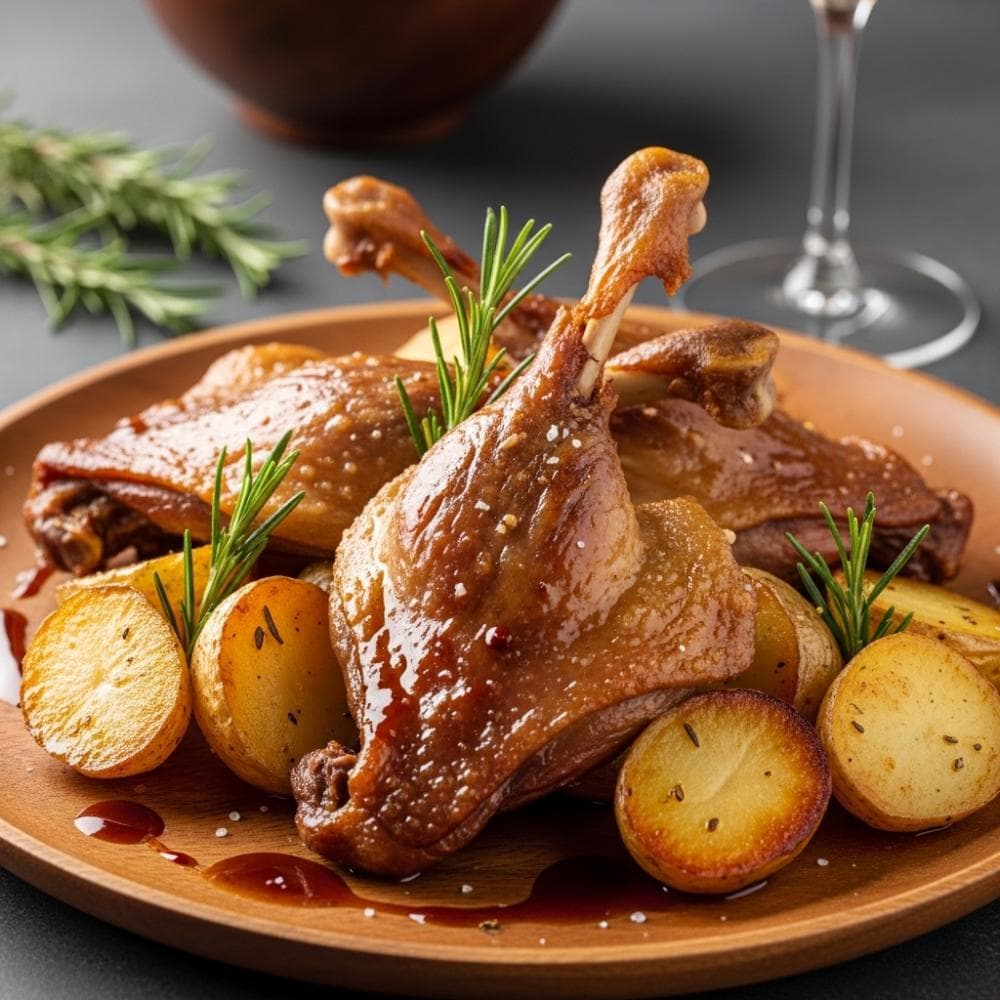
Classic Duck Confit
Succulent duck legs cured with aromatic herbs and garlic, then slowly cooked in their own rendered fat until impossibly tender. Finished with a crispy skin, it's a rich and elegant French classic, scaled for two servings.
The Quick Answer
Confit goes wrong in two opposite ways: legs that come out stringy and dry, or ones that taste harshly salty all the way through. The first is a heat problem during the long cook, the second a cure-and-rinse problem, and both come down to controlling water movement in the muscle.
Why is my duck confit stringy and dry even though it cooked submerged in fat?
Fat is a heat-transfer and oxygen-excluding medium here, not a source of moisture, so submersion alone guarantees nothing. The actual goal is to dissolve the tough collagen in the duck thigh and drumstick into gelatin, which happens slowly and is what makes the meat feel silky. If the fat creeps much past 90C, the muscle fibers themselves contract hard and wring out their own water faster than collagen converts, leaving stringy, dry meat sitting in oil. At 275F in a snug pot the fat should barely shimmer with no steady bubbling. Patience over 2.5-3 hours, not higher heat, is what turns connective tissue to gelatin while the fibers stay intact.
Why is my duck confit too salty, and can rinsing fix it?
The salt cure is osmotic and one-directional in effect: salt first pulls water from the duck, then that concentrated brine carries salt plus the thyme, garlic and bay flavors back into the muscle. Whatever salt has diffused inward over 12-24 hours stays there permanently, so rinsing after curing only removes the loose surface crust, not the internal seasoning. That is why thorough rinsing prevents harsh saltiness without leaving the meat bland. Over-curing, by quantity or time, drives too much salt inward and cannot be undone, which is why this recipe fixes a 2-tablespoon ratio and a defined window. The same diffused salt also denatures surface proteins and suppresses spoilage during weeks of fat storage.
Not sure what to cook next? Let the generator pick your next dish in one click.
Random Recipe GeneratorAbout This Recipe
What is this dish?
Classic Duck Confit is one of the most luxurious and iconic preparations in French cuisine, featuring duck legs that are salt-cured with aromatics, then slowly cooked submerged in their own rendered fat at low temperature for 2-3 hours until impossibly tender. This ancient preservation technique from southwestern France transforms tough duck legs into succulent, fall-off-the-bone meat with crispy golden skin when finished. The name 'confit' comes from the French verb 'confire,' meaning to preserve, and the duck can be stored in its fat for weeks or months, developing even deeper flavor over time.
Why you'll love it
This recipe delivers restaurant-quality duck confit at home with meat so tender it practically melts in your mouth and skin that crisps to crackling perfection. The slow cooking in fat keeps the duck incredibly moist and infuses it with rich, savory flavor that cannot be achieved through any other cooking method. While the process takes time, most of it is completely hands-off — the curing happens overnight and the cooking requires no attention once it goes in the oven. The rendered duck fat is culinary gold that can be saved and used for roasting potatoes, cooking eggs, or making future batches of confit, making this an economical splurge for special occasions.
When to serve
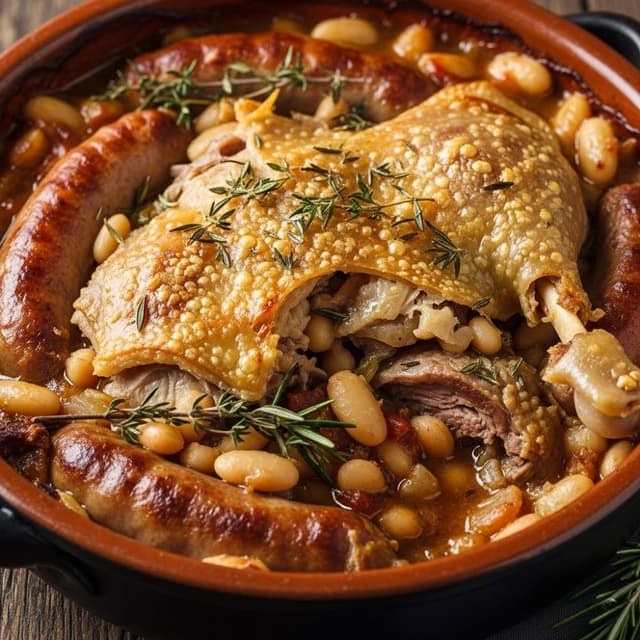
Duck confit is perfect for elegant dinner parties and special occasions when you want to serve something impressive that can be prepared mostly in advance. It works beautifully as a main course alongside roasted potatoes cooked in the duck fat, French lentils, or a crisp frisée salad with a tangy vinaigrette to balance the richness. The confit is also traditional in cassoulet, the hearty French bean stew. Since the confit can be made days or even weeks ahead and stored in the refrigerator, it is ideal for holiday entertaining when you need make-ahead dishes that only require a final crisping before serving.
Quick tips
Pat the duck legs completely dry before applying the salt cure and again after rinsing — excess moisture causes dangerous splattering when the duck hits the hot fat. Rinse the cured duck very thoroughly under cold running water to remove all the salt, or the final dish will be inedibly salty. Make sure the duck legs are completely submerged in fat during the slow cooking — add more rendered duck fat or neutral oil if needed. For the crispiest skin, finish the confit in a screaming hot skillet or under the broiler, pressing down gently to ensure maximum contact with the heat. Save and strain the rendered duck fat after cooking — it keeps for months in the refrigerator and makes the most incredible roasted potatoes.
Ingredient Highlights
Duck Legs
The perfect cut for confit — the legs and thighs have enough fat and connective tissue to stay incredibly moist and tender during the long, slow cooking process. Duck meat is rich in protein, iron, and B vitamins, with a deeper, more complex flavor than chicken. Look for large, meaty duck legs from a butcher or specialty market for the best results.
Rendered Duck Fat
The essential cooking medium that makes confit what it is — the duck slowly poaches in pure fat at low temperature, creating unmatched tenderness and rich flavor. Duck fat has a relatively high smoke point and imparts a distinctively delicious, savory taste. The fat can be saved and reused multiple times, making it a worthwhile investment that improves roasted vegetables, fried eggs, and countless other dishes.
Fresh Rosemary
The classic herb pairing for duck, providing aromatic, pine-like notes that complement the rich meat beautifully. Fresh rosemary releases its essential oils during the curing process, infusing the duck with herbaceous flavor. Rosemary also has natural antimicrobial properties that aid in the preservation aspect of confit.
Coarse Sea Salt
The key curing ingredient that draws out moisture from the duck, concentrates flavors, and begins the preservation process. Coarse salt provides the right texture for rubbing into the meat and ensures even coverage. The salt cure also seasons the duck deeply, eliminating the need for additional salt after cooking.
Fresh Garlic
Adds pungent, savory depth that balances the richness of the duck fat and complements the rosemary. The garlic mellows during the long, slow cooking process, becoming sweet and aromatic rather than harsh. It infuses both the duck meat and the surrounding fat with flavor.
Substitution Options
Replace rendered duck fat with a combination of olive oil and butter, though the flavor will be less authentic and rich — you need enough fat to completely submerge the duck legs. Use chicken thighs as a more affordable alternative to duck legs, following the same confit technique. Swap fresh rosemary with fresh thyme, sage, or a combination of herbs for different aromatic profiles. Replace coarse sea salt with kosher salt for curing — avoid table salt which is too fine and can over-salt the meat. If you do not have an oven-safe pot, cure and store the duck in one container, then transfer to a deep baking dish and cover tightly with foil for the slow cooking. For faster preparation, skip the overnight cure and season generously just before cooking, though traditional curing develops better flavor.
You'll likely need to buy
Likely in your pantry
Step-by-Step Instructions
Cure the duck legs
Pat **duck legs** thoroughly dry with paper towels. In a small bowl, combine **coarse salt**, **black pepper**, **chopped thyme**, **crumbled bay leaf**, and **minced garlic**. Rub this mixture generously all over both duck legs, making sure to cover them well. Place the duck legs in a non-reactive dish (one that won't react with the salt, like glass or ceramic) or a large zip-top bag, cover, and put them in the refrigerator for **12 to 24 hours**. This curing process pulls out moisture and adds flavor.
Chef's Tips
- ›Make sure the duck is very dry before putting on the cure for the best results.
- ›Don't leave it curing for too long, or the duck can become too salty.
Prepare for cooking
After curing, take the **duck legs** out of the refrigerator. Rinse them very thoroughly under cold running water to remove all the curing mixture. This is very important to stop the duck from being too salty. Pat them extremely dry again with paper towels. Any extra moisture will cause the fat to splash when cooking.
Chef's Tips
- ›Rinsing very well is key; you can taste a tiny piece of the skin if you're not sure.
- ›The dryer the duck, the less splashing when it cooks.
Slow cook the confit
Preheat your oven to **275°F (135°C)**. In an oven-safe pot or Dutch oven (a heavy pot with a lid, just big enough to fit the two duck legs snugly), melt the **rendered duck fat** over low heat on the stovetop. Once the fat is melted, add the rinsed and dried **duck legs**, making sure they are completely covered by the fat. If they are not fully covered, add more duck fat. Cover the pot and move it to the preheated oven. Cook for **2.5 to 3 hours**, or until the duck meat is incredibly tender and easily pulls away from the bone.
Chef's Tips
- ›Cooking at a low temperature makes the duck very tender without frying it hard.
- ›Use a heavy pot that holds heat well.
Cool and store (optional)
Carefully take the pot out of the oven. Let the **duck legs** cool completely in the fat. Once cooled, you can store the confit. Transfer the duck legs and fat to an airtight container, making sure the duck is fully covered by the fat. Store in the refrigerator for up to **2-3 weeks**, or freeze for several months.
Chef's Tips
- ›Duck confit gets more flavorful as it sits in the fat.
- ›Making sure the duck is fully covered in fat stops it from spoiling.
Crisp the duck confit for serving
When you are ready to serve, preheat your oven to **400°F (200°C)** or heat a heavy-bottomed skillet over medium-high heat. Take the **duck legs** out of the fat (scrape off any extra fat). Place them skin-side down in the hot skillet or on a baking sheet. Cook in the skillet for **8-12 minutes**, pressing down sometimes, until the skin is deeply golden and very crispy. If roasting, cook in the oven for **15-20 minutes**, or until the skin is crispy and the meat is heated through.
Chef's Tips
- ›A very hot pan or oven is essential for getting crispy skin.
- ›Avoid poking the skin too much; let it cook and get crispy.
Serve
Serve the crispy **duck confit** right away with roasted potatoes, a simple green salad, or cooked lentils. The rendered duck fat can be strained (passed through a fine sieve) and used again for future confit or for cooking other dishes.
Chef's Tips
- ›Duck fat is like 'liquid gold'; strain it through a fine-mesh sieve and save it!
- ›Pair with something a little sour, like a salad with vinaigrette, to balance the richness.
Chef's Tips
Techniques that separate good from great
Cure for at least 24 hours, ideally 48
The salt cure is not just about seasoning — it draws moisture from the duck leg and then redistributes it, fundamentally changing the texture of the meat. A 24-hour cure produces noticeably more tender, deeply flavored results than a quick 4-hour cure. 48 hours is the sweet spot for maximum flavor without oversalting.
The fat must never bubble — keep it between 80–90°C
True confit is not frying. The fat should be barely trembling with just the occasional lazy bubble rising to the surface. Bubbling fat means the temperature is too high, which toughens the meat proteins instead of slowly melting the collagen. Use a thermometer the first few times you make this.
Keep the duck completely submerged under fat during cooking
Any part of the duck leg exposed to air will dry out and toughen. Use a small heat-safe weight or press the legs down with a second pot if needed. The fat acts as a protective barrier — preserving, basting, and flavoring simultaneously as the collagen slowly breaks down over hours.
Stored confit improves significantly with time
Duck confit stored submerged in its fat in the refrigerator continues developing deeper flavor for up to two weeks. The French traditionally made confit in autumn and ate it through winter for exactly this reason. Make a large batch and let it age — the difference between day one and day seven is genuinely remarkable.
Nutrition Facts
Per serving · Estimated values
* Estimated per serving based on a 2,000 calorie diet.
Equipment Needed
- Non-reactive dish or large zip-top bag (for curing)
- Paper towels
- Small bowl (for cure mix)
- Oven-safe pot or Dutch oven (snugly fits 2 duck legs)
- Heavy-bottomed skillet or baking sheet (for crisping)
- Tongs
- Measuring spoons
As an Amazon Associate we earn from qualifying purchases — at no extra cost to you.
Quick Tips
- Try to find good quality duck legs; local butchers often have them or can order them for you.
- Making your own rendered duck fat from duck skin (if you're not buying it already melted) is a good way to save money.
- The cured and cooked confit can be stored in the refrigerator submerged in its fat for several weeks, or frozen for months.
- Be patient with the crisping step; truly crispy skin is worth the wait.
Recipe Variations
Different ways to make this dish your own
Spiced Duck Confit
Add star anise, cinnamon, juniper berries, and orange zest to the cure for a warm, aromatic Alsatian-style variation.
Duck Confit Cassoulet
Shred the confit meat and add it to white beans, Toulouse sausage, and tomatoes for the famous slow-baked French cassoulet.
Duck Confit Salad
Serve shredded warm confit over bitter frisée or endive with a warm bacon and shallot vinaigrette for a classic French bistro salad.
Duck Confit Tacos
Shred the confit meat and serve in small corn tortillas with pickled red cabbage, avocado, and crema for a French-Mexican fusion.
What to Serve With
Perfect pairings to complete the meal
Lentilles du Puy
French green lentils cooked with bacon and shallots are the classic bistro accompaniment that pairs magnificently with rich duck.
Pommes Sarladaises
Potatoes slow-cooked in duck fat with garlic and parsley — the ultimate indulgent French side that uses the very fat from the confit.
Bitter Green Salad
Frisée or rocket dressed in a sharp red wine vinaigrette cuts through the duck's richness and cleanses the palate between bites.
Roasted Root Vegetables
Carrots, parsnips, and celeriac roasted until caramelised provide natural sweetness that complements the savoury, fatty duck perfectly.
Storage & Reheating
Keep it fresh and plan ahead
Refrigerator
Store duck legs submerged in their cooking fat in a sealed container for up to 2 weeks — the fat acts as a natural preservative.
Freezer
Freeze duck legs submerged in fat for up to 6 months. Duck confit is one of the few dishes that stores better kept in its fat.
Make-Ahead
Duck confit is designed to be made days or weeks ahead. The flavour actually improves significantly after a few days of resting in the fat in the fridge.
Reheating
Remove duck from fat and crisp skin-side down in a dry skillet over medium-high heat for 5–7 minutes, then finish in a 200°C/400°F oven for 10 minutes.
Cooking tonight?
Get a month of dinners like this — done for you
30 chef-tested dinners mapped to the month, plus 5 ready-to-shop grocery lists. One-time $8.99 — 30 dinners planned for you, zero nightly decisions.
See the 30-Day Plan →Got Leftovers?
Turn what you already have in your fridge into delicious meals. Our AI-powered generator creates personalized recipes from your ingredients.
Go Deeper
Master the Culinary Science
Every recipe is a doorway. Our 7 Mastery Guides give you the science, technique, and framework to understand why food works — not just how to follow steps.
AI-Powered
Have Ingredients? Generate a Recipe.
Tell our AI what's in your fridge and get a custom recipe with image in seconds. No waste, no boredom.
Try the AI Recipe Generator →Browse more like this:
You Might Also Like
Discover more delicious recipes similar to what you're cooking