Classic Quiche Lorraine
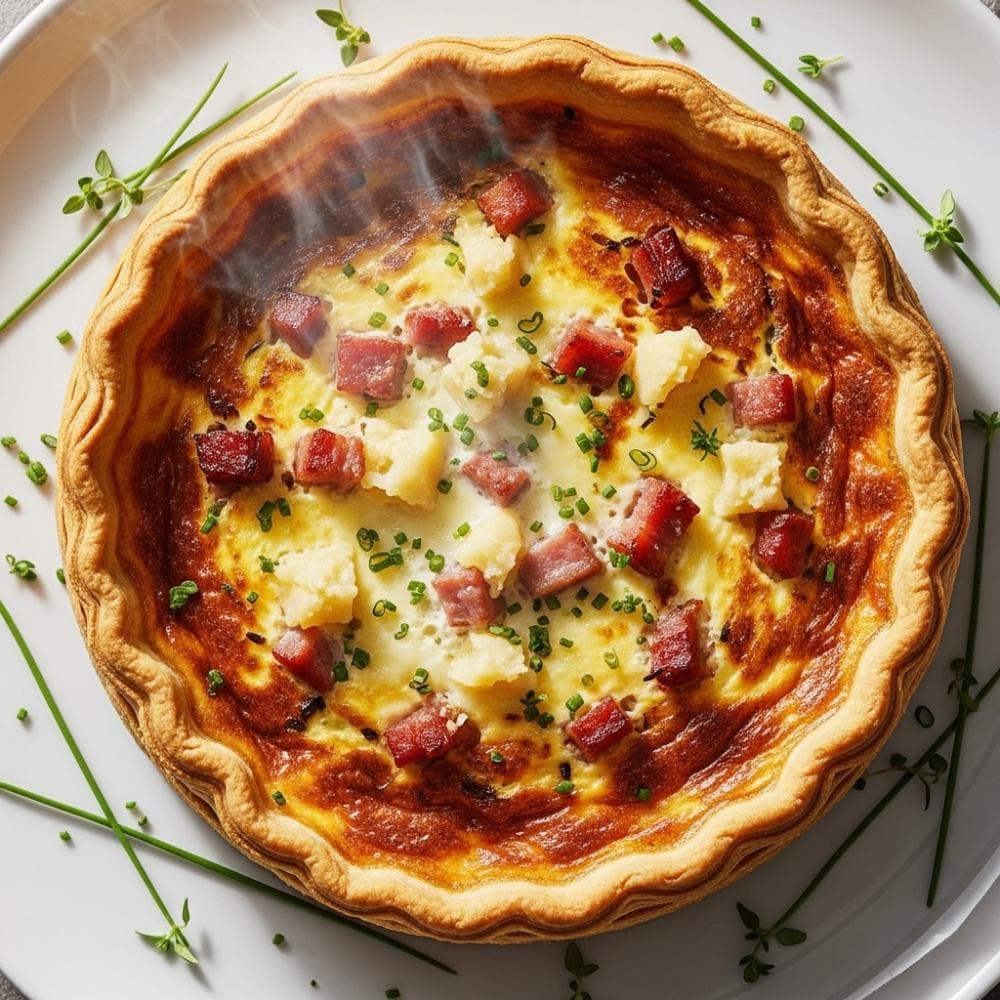
A savory French tart with a rich, creamy custard filling, smoked bacon, and nutty Gruyère cheese baked in a flaky pastry crust. Perfect for brunch, lunch, or a light dinner for two.
The Quick Answer
A silky Quiche Lorraine depends on the egg-to-cream ratio and the order in which Gruyère, bacon and custard meet far more than on baking time alone. Getting the custard to set into a sliceable but tender gel is a matter of dilution and fat, not just oven temperature.
What egg-to-cream ratio keeps a quiche tender instead of rubbery?
This recipe sets two large eggs against a full cup of heavy cream, and that high ratio of liquid to egg is deliberate: egg proteins are what firm up, and the more cream surrounds them the more spread out and gentle the final gel is, giving a custard that slices clean yet wobbles. Skew it with more eggs or swap the cream for milk and the protein network tightens into something closer to a baked omelette, dense and bouncy. The cream's fat also coats the proteins and raises the temperature at which they seize, widening your margin. The pinch of nutmeg is traditional but functional too, its aroma masking the faint sulfurous note baked egg can carry.
Why does Gruyère specifically work so well in quiche?
Gruyère is an aged Alpine cheese, and aging breaks some of its proteins down so it melts into the custard smoothly rather than turning oily or stringy the way a young cheese like fresh mozzarella would. Its low moisture means it adds savory, nutty flavor without thinning the custard or weeping water that could make the set weep too. Scattered on the crust base before the custard, the melting cheese also forms a thin fat-rich layer that slows liquid soaking into the pastry. Aged cheeses like Gruyère are additionally rich in glutamates, natural savory compounds that give the filling its depth, which is why a bland melting cheese leaves Quiche Lorraine tasting flat.
Not sure what to cook next? Let the generator pick your next dish in one click.
Random Recipe GeneratorAbout This Recipe
What is this dish?
Classic Quiche Lorraine is an elegant French savory tart that originated in the Lorraine region of northeastern France, featuring a rich custard filling made from eggs and heavy cream studded with crispy bacon and nutty Gruyère cheese, all baked in a flaky butter pastry crust. This iconic dish represents French bistro cuisine at its finest, combining simple ingredients into something sophisticated and deeply satisfying. While variations abound today, authentic Quiche Lorraine traditionally contains only eggs, cream, bacon, and sometimes Gruyère cheese — no vegetables like spinach or mushrooms. It is served warm or at room temperature and is perfect for brunch, lunch, or a light dinner.
Why you'll love it
This recipe delivers a restaurant-quality French classic at home with a silky, creamy custard that is rich without being heavy and a perfectly flaky crust that provides textural contrast. The smoky bacon and nutty Gruyère cheese create savory depth in every bite, while the egg custard remains light and almost soufflé-like in texture. Quiche Lorraine is incredibly versatile — it works for breakfast, brunch, lunch, or dinner, and tastes delicious warm, at room temperature, or even cold. The dish can be made ahead and reheated, making it perfect for entertaining or meal prep. Despite its impressive appearance, it comes together with relatively simple techniques and ingredients you likely already have on hand.
When to serve
Quiche Lorraine is perfect for elegant weekend brunches when you want to serve something special yet not spend all morning in the kitchen. Serve it as the centerpiece of a French-inspired brunch alongside a simple green salad, fresh fruit, and coffee or mimosas. The quiche works beautifully for lunch parties, baby showers, and spring gatherings where you need something that can be made ahead and served at room temperature. It is also excellent for using up leftover pie crust and turns simple breakfast ingredients into something company-worthy. Pack slices for upscale picnics or serve as a light dinner with soup and salad.
Quick tips
Blind bake the pie crust for 10-15 minutes before adding the filling to prevent a soggy bottom — line with parchment and fill with pie weights, dried beans, or rice. Cook the bacon until very crispy and drain well on paper towels so excess grease does not make the custard oily. Whisk the eggs and cream together thoroughly but do not overbeat, which can create too many air bubbles and a puffy, uneven texture. Let the quiche cool for at least 10-15 minutes before slicing so the custard sets completely — cutting too soon results in runny filling. For the best texture, bake until the center is just set with a slight jiggle — overbaking makes the custard rubbery and dry.
Ingredient Highlights
Gruyère Cheese
A traditional Swiss cheese with a nutty, slightly sweet flavor that melts beautifully and is essential for authentic Quiche Lorraine. Gruyère has a smooth, creamy texture and complex flavor that elevates the dish beyond ordinary cheese. It provides calcium, protein, and rich flavor without being too sharp or overpowering the delicate custard.
Bacon
Provides smoky, salty, savory depth that contrasts perfectly with the rich custard. Traditional Quiche Lorraine uses lardons (thick-cut bacon strips), though regular bacon works perfectly when cooked until crispy. The bacon adds textural contrast and meaty substance that makes the quiche more satisfying.
Heavy Cream and Eggs
Form the silky custard base that defines quiche — the eggs provide structure while the cream adds luxurious richness and smooth texture. This combination creates a custard that is creamy without being dense, light without being fluffy. Using heavy cream rather than milk produces the most authentic, restaurant-quality results.
Pie Crust
Provides the flaky, buttery foundation that holds the custard and adds textural contrast. A well-made butter crust is tender yet sturdy enough to support the liquid filling without becoming soggy. Blind baking the crust before filling is essential for the best texture.
Substitution Options
Replace Gruyère with Swiss cheese, Emmental, or sharp white Cheddar for similar melting qualities and flavor. Use ham, pancetta, or prosciutto instead of bacon for different savory notes. Swap heavy cream with half-and-half for a lighter version, though the custard will be less rich. For a vegetarian quiche, omit bacon and add sautéed mushrooms, caramelized onions, or roasted vegetables. Make it crustless by pouring the filling directly into a greased pie dish for a low-carb option. Use a store-bought pie crust to save time, or make your own from scratch for the best flavor and texture. Add fresh herbs like chives, thyme, or parsley for extra flavor. For individual servings, bake in muffin tins lined with small pastry circles.
You'll likely need to buy
Likely in your pantry
Step-by-Step Instructions
Prepare crust and cook bacon
Preheat your oven to 375°F (190°C). If using a pre-made pie crust, place it in a 9-inch pie plate. Prick the bottom lightly with a fork. In a skillet, cook the 4 slices diced bacon over medium heat until crispy. Take the crispy bacon out of the skillet and place it on a paper towel-lined plate to drain any extra fat. Discard the bacon fat from the skillet.
Chef's Tips
- ›Pricking the crust helps prevent it from puffing up during baking.
- ›Cooking bacon until very crisp adds great texture and flavor.
Layer cheese and bacon in crust
Spread the 1/2 cup grated Gruyère cheese evenly over the bottom of the pie crust. Sprinkle the cooked, crispy bacon over the cheese.
Chef's Tips
- ›Layering ensures every bite has cheese and bacon.
- ›Grating your own cheese often melts better.
Make the custard filling
In a medium bowl, whisk together the 2 large eggs, 1 cup heavy cream, 1/4 teaspoon salt, 1/8 teaspoon black pepper, and 1 pinch ground nutmeg until well combined and smooth.
Chef's Tips
- ›Whisking until smooth ensures a consistent custard texture.
- ›Nutmeg is a classic, subtle flavor in Quiche Lorraine.
Pour and bake the quiche
Carefully pour the custard mixture over the cheese and bacon in the pie crust. Place the pie plate on a baking sheet (to catch any potential spills). Bake for 35-40 minutes, or until the custard is set (meaning it doesn't jiggle much in the center when gently shaken) and the top is golden brown. A knife inserted into the center should come out mostly clean.
Chef's Tips
- ›A baking sheet helps prevent spills in your oven.
- ›Do not overbake, or the custard can become rubbery.
Cool and serve
Once baked, carefully take the quiche out of the oven. Let it cool on a wire rack for at least 10-15 minutes before slicing and serving. This allows the custard to fully set. Serve warm.
Chef's Tips
- ›Cooling time is important for the quiche to hold its shape when sliced.
- ›Quiche is delicious warm or at room temperature.
Chef's Tips
Techniques that separate good from great
Blind bake the crust — no shortcuts
The single most important step to prevent a soggy bottom is blind baking: line the raw crust with parchment, fill with pie weights or dried beans, and bake at 375°F for 10-15 minutes before adding the filling. The pre-baked crust forms a moisture barrier so the liquid custard doesn't saturate the pastry.
Cook bacon until very crispy, drain thoroughly
Soft, barely-cooked bacon releases excess fat into the custard as the quiche bakes, making it greasy and heavy. Cook until genuinely crispy, then drain on paper towels and blot again before adding to the crust. Well-drained crispy bacon stays distinct in the custard rather than dissolving into it.
Bake to a jiggle — not until set solid
The quiche is done when the outer 2 inches are set but the center still has a slow, even jiggle (not a sloshy wave). It will continue to cook from carryover heat for 10-15 minutes as it rests. A fully set custard in the oven will be overcooked and rubbery by the time you serve it.
Rest for 15 minutes minimum before slicing
Cutting into a freshly pulled quiche releases liquid custard that hasn't fully set. Resting allows the proteins to complete their set and the custard to firm up into clean, sliceable wedges that hold their shape on the plate rather than collapsing.
Nutrition Facts
Per serving · Estimated values
* Estimated per serving based on a 2,000 calorie diet.
Equipment Needed
- 9-inch pie plate
- Large skillet
- Medium bowl
- Whisk
- Paper towel-lined plate
- Baking sheet
- Knife and cutting board
- Measuring cups
- Measuring spoons
As an Amazon Associate we earn from qualifying purchases — at no extra cost to you.
Quick Tips
- For a truly dairy-free option, you would need to find dairy-free cheese and heavy cream alternatives, and a dairy-free pie crust.
- You can make this vegetarian by simply leaving out the bacon. You can replace it with sautéed mushrooms or caramelized onions for extra flavor.
- Leftover quiche can be stored in the refrigerator for up to 3 days and reheated gently in the oven or microwave.
Recipe Variations
Different ways to make this dish your own
Caramelized Onion and Gruyère Quiche
Replace the bacon with 2 large onions slowly caramelized in butter for 40 minutes until deeply golden. The sweet, jammy onions with nutty Gruyère create a deeply savory, sophisticated quiche with no meat required.
Spinach and Mushroom Quiche
Substitute the bacon with sautéed cremini mushrooms and wilted fresh spinach (squeezed dry). Add a pinch of nutmeg to the custard for a classic vegetarian quiche Florentine-style variation.
Smoked Salmon Quiche
Skip the bacon and fold thin slices of smoked salmon into the custard along with fresh dill, capers, and thinly sliced red onion for an elegant, brunch-worthy quiche with a distinctly Nordic character.
Crustless Quiche (Low-Carb)
Skip the pie crust entirely and pour the custard filling directly into a well-buttered pie dish or individual ramekins. Bake as directed — the result is a creamy egg and cheese casserole that works perfectly for low-carb diets.
What to Serve With
Perfect pairings to complete the meal
With a Simple Green Salad
Serve alongside a lightly dressed salad of mixed greens, shaved radish, and a simple lemon vinaigrette — the bright acidity and crunch provide the perfect counterpoint to the rich, creamy custard.
At Room Temperature for Brunch
Quiche is at its best served warm or at room temperature — it slices cleanly, the flavors are more pronounced, and the custard has a silkier texture than when hot from the oven. Ideal for relaxed brunch settings where it can sit out.
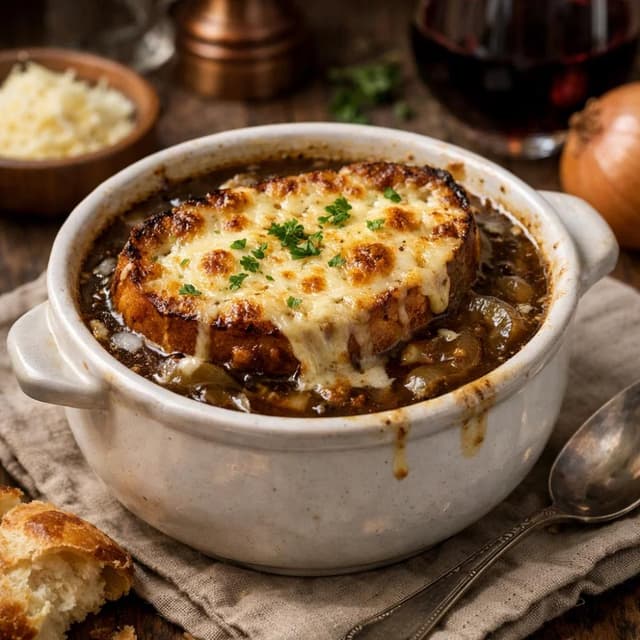
With a Cup of French Onion Soup
Pair with a small bowl of simple French onion soup for a bistro-inspired lunch that feels elegant without requiring much additional work — both dishes benefit from make-ahead preparation.
As Part of a Brunch Spread
Slice into thin wedges and arrange on a large board alongside fresh fruit, a charcuterie selection, and small pastries for an effortless brunch spread that looks abundant and impressive with minimal last-minute effort.
Storage & Reheating
Keep it fresh and plan ahead
Refrigerator
Store covered or in an airtight container for up to 3 days. The crust softens slightly but the flavor improves — quiche is excellent cold, at room temperature, or reheated.
Freezer
Freeze baked quiche (fully cooled) wrapped tightly in plastic then foil for up to 2 months. Thaw overnight in the refrigerator. Reheat in a 325°F oven until warmed through.
Make-Ahead
Bake up to 2 days ahead, cool completely, and refrigerate covered. This is one of the best make-ahead dishes — the flavors meld and it's easier to slice cleanly when cold and re-warmed.
Reheating
Reheat slices or the whole quiche in a 325°F (165°C) oven for 15-20 minutes until just warmed through. Cover loosely with foil to prevent over-browning the crust. Avoid the microwave, which makes the custard rubbery.
Cooking tonight?
Get a month of dinners like this — done for you
30 chef-tested dinners mapped to the month, plus 5 ready-to-shop grocery lists. One-time $8.99 — 30 dinners planned for you, zero nightly decisions.
See the 30-Day Plan →Got Leftovers?
Turn what you already have in your fridge into delicious meals. Our AI-powered generator creates personalized recipes from your ingredients.
Go Deeper
Master the Culinary Science
Every recipe is a doorway. Our 7 Mastery Guides give you the science, technique, and framework to understand why food works — not just how to follow steps.
AI-Powered
Have Ingredients? Generate a Recipe.
Tell our AI what's in your fridge and get a custom recipe with image in seconds. No waste, no boredom.
Try the AI Recipe Generator →Browse more like this:
You Might Also Like
Discover more delicious recipes similar to what you're cooking