Algos on a Budget: How a Cheap Dinner Generator Lowers Your Grocery Bill
Your grocery bill is a cost-per-serving optimisation problem. Here is how a cheap dinner generator anchors meals on pennies-per-portion staples and kills impulse takeout.
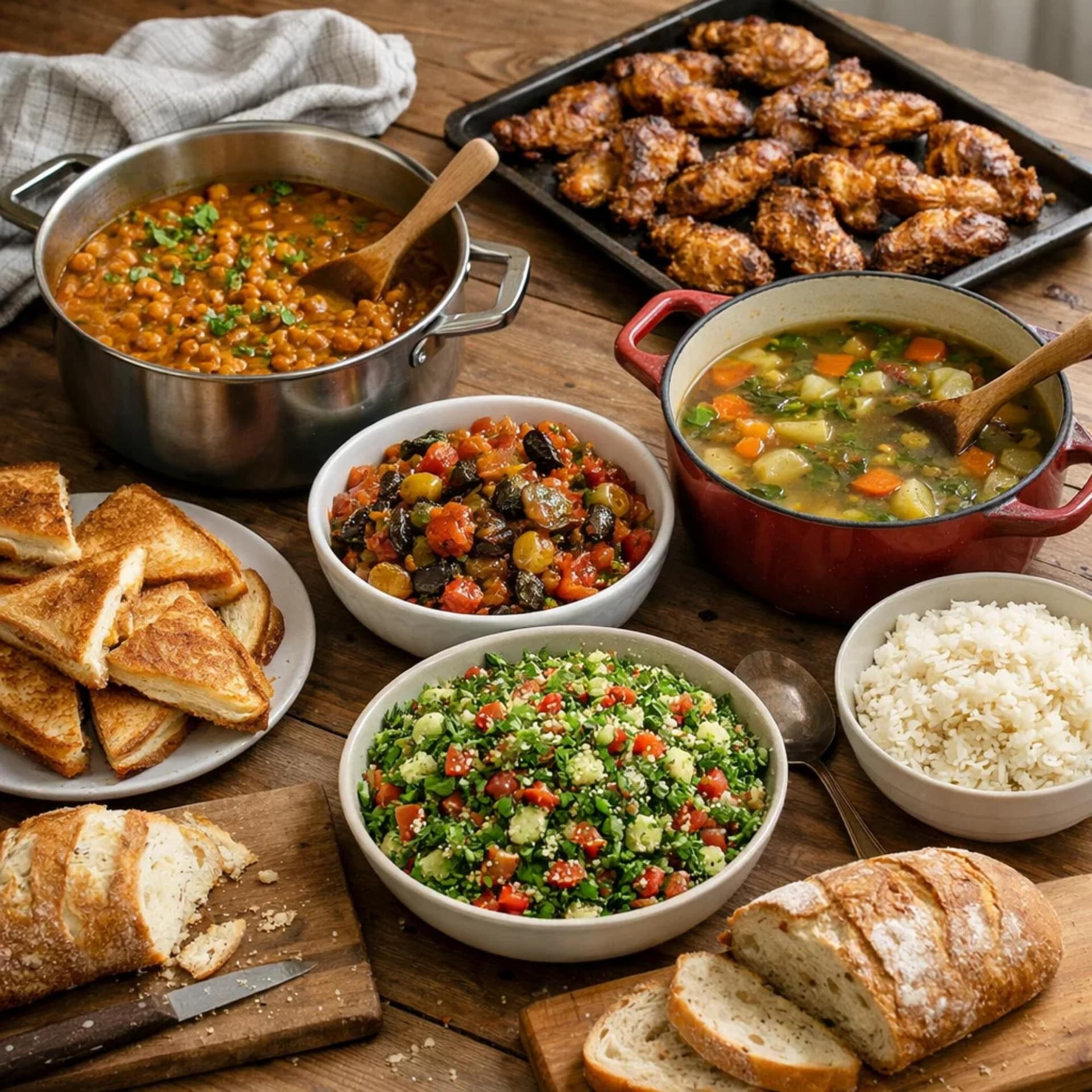
The Quick Answer
A cheap dinner generator builds meals optimised for cost per serving, anchoring dishes on inexpensive, calorie-dense staples like rice, dried legumes, and eggs, rounded out with seasonal vegetables, instead of premium proteins. By generating a concrete, affordable plan on demand, it also kills one of the biggest hidden lines in a lot of food budgets: the last-minute takeout you order when you cannot face deciding what to cook.
The unit that matters for a food budget is not the price of a recipe but its cost per serving, and the two are easy to confuse. A dish with a long ingredient list can be cheap per plate if it stretches across six servings, while a 'simple' meal built on premium protein can be expensive per plate even with few components. Optimising a grocery bill is therefore a mapping problem: for a given nutritional floor - enough calories, enough protein - find the combination of ingredients that hits it for the lowest cost per serving. Repeated across a week, small per-serving savings compound into a materially smaller bill.
Cost per serving is driven overwhelmingly by a few levers: the protein source, the degree of processing, and how far a dish stretches. Dried legumes and grains deliver the most calories and protein per unit of money, eggs and tinned fish sit close behind on protein value, and pre-prepared or single-portion items sit far above. A generator optimises these levers automatically. It anchors meals on the cheapest adequate staples, scales portions to reduce per-plate cost, and routes around the expensive convenience items you would otherwise default to.
How do you programmatically design a meal for under five dollars?
Can't decide what to make? Let our generator pick for you instantly.
Generate a Random Recipe →Designing a sub-five-dollar meal is a constraint-satisfaction problem with a clear structure. Start from a cheap, filling base - rice, pasta, potatoes, or dried lentils, all of which cost pennies per portion - then add the lowest-cost protein that meets your target, such as eggs, beans, or tinned fish, and finish with seasonal vegetables and pantry seasonings that cost little but do the flavour work. Hold total cost under the ceiling by treating expensive ingredients as accents, not anchors.
A generator runs this same logic at speed and at scale. It knows which bases and proteins carry the best cost-per-calorie and cost-per-gram-of-protein, sizes the recipe to spread fixed ingredients across more plates, and swaps any component that breaks the budget for a cheaper equivalent. What takes you careful arithmetic at the shelf, it does instantly - and it does it without quietly sacrificing the protein or calories that make a cheap meal actually filling.
The cheap-meal cost stack
- Base first: rice, pasta, potatoes, or dried lentils cost pennies per serving and provide the bulk.
- Cheapest adequate protein: eggs, dried or tinned beans, and tinned fish beat fresh meat on cost per gram of protein.
- Stretch the portions: scaling a dish across more servings lowers the cost of every fixed ingredient.
- Accent, don't anchor: use small amounts of pricier items for flavour, never as the base of the meal.
Why a cheap dinner generator prevents expensive last-minute takeout orders
For a lot of households the biggest leak is not overspending at the supermarket, it is the takeout ordered when a home-cooked plan never materialised. That order is expensive twice over: you pay restaurant prices for the delivery, and the groceries you already bought for that night edge closer to the bin. The trigger is almost never a lack of food in the house - it is the decision gap at 6pm, when you are tired, hungry, and cannot commit to what to cook.
A generator closes that gap before it becomes an order. One click converts 'I don't know, let's just order' into a specific, affordable meal you already have the ingredients for, which is the exact moment the takeout impulse is defeated. Because the barrier was indecision rather than money, removing the decision removes the spend. Over a month, intercepting even a couple of those orders a week saves more than most people trim by switching brands at the shop.
Maximizing cheap kitchen staples using intelligent flavor pairing
Cheap staples are boring only if you season them like they are cheap. Rice, beans, lentils, eggs, potatoes, and pasta are near-blank canvases, and their appeal is decided almost entirely by the flavour layer you add - which is where a generator's pairing logic earns its keep. The costliest thing in a good budget meal is usually a small quantity of high-impact seasoning: a spice blend, a hit of acid, a sharp cheese, a browned aromatic base. Pennies of the right flavouring transform cents of staple.
Intelligent pairing means matching those cheap bases to complementary, low-cost flavour systems: lentils with cumin and lemon, rice with soy and ginger, potatoes with paprika and onion, pasta with garlic, chilli, and oil. A generator can rotate a small pantry of staples through many different flavour profiles, so the same three or four base ingredients never taste the same twice. That is how you eat cheaply without eating repetitively - the cost stays low while the variety stays high.
Professional Chef Note
Spend your money on flavour, not on protein. A jar of good spices, a bottle of soy or fish sauce, and a wedge of hard cheese cost little spread across many meals and do more for a cheap dinner than an expensive cut ever would. Budget cooking fails when it is bland, so put the few pennies you do spend where they change the most - the seasoning, not the centre of the plate.
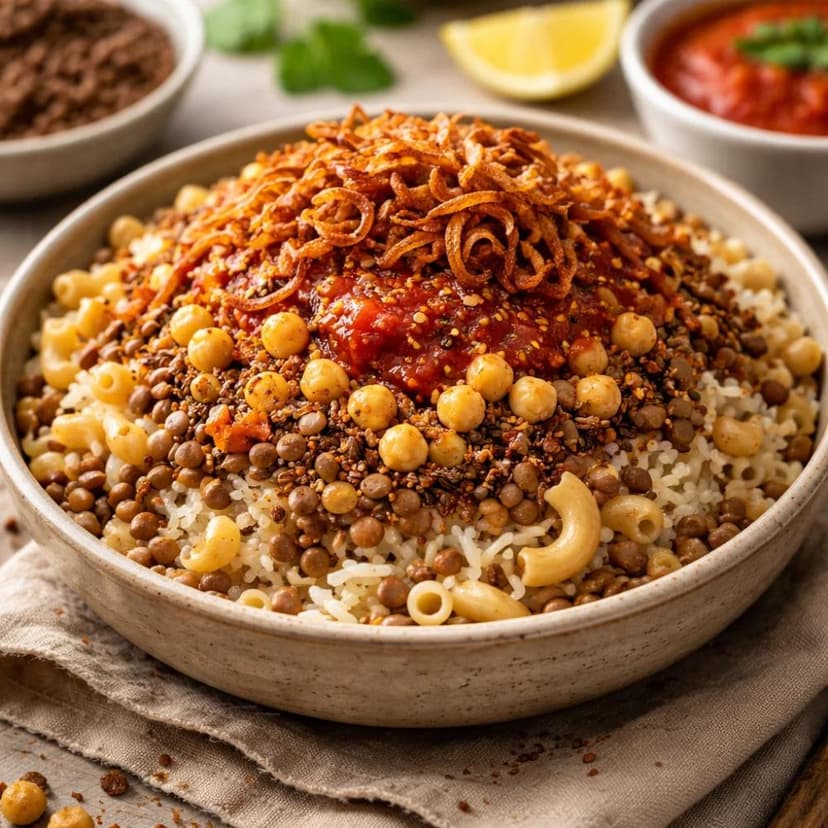
Egyptian Koshari (Lentils, Rice, and Pasta Bowl)
Egypt's beloved street food and unofficial national dish — a layered bowl of rice, brown lentils, and macaroni topped with a spiced tomato sauce, caramelised onions, and a punchy vinegar-cumin dressing. Koshari is a deeply satisfying plant-based meal that is greater than the sum of its parts — every component is simple, but together they create something complex, textured, and extraordinarily flavourful.
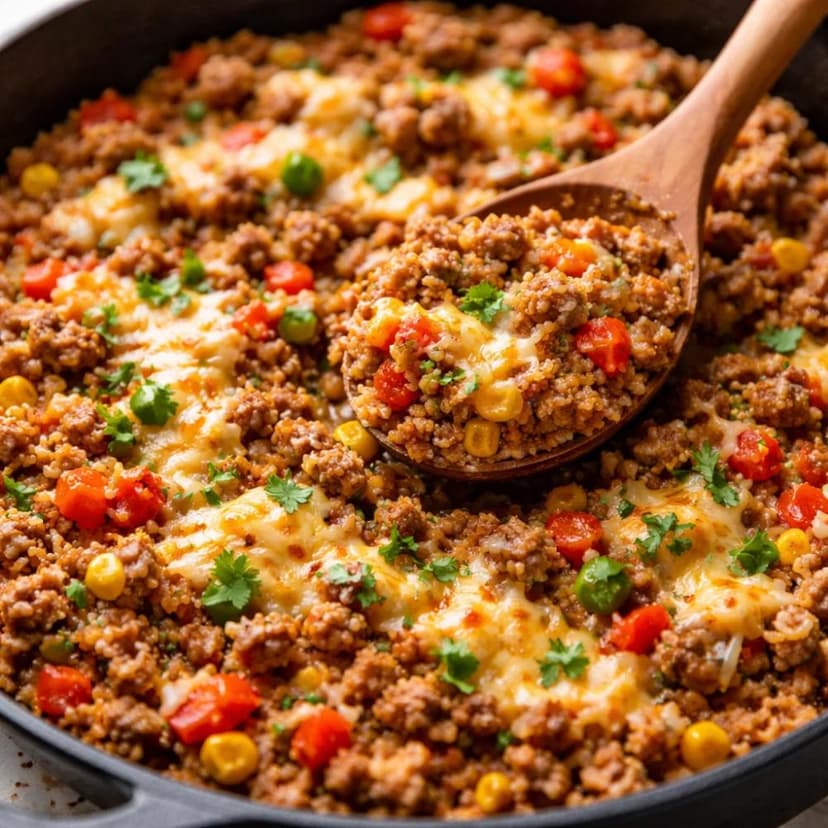
Ground Beef and Rice Skillet (Budget-Friendly Dinner)
A hearty, one-pan dinner of seasoned ground beef and rice cooked together in a well-spiced tomato broth until the rice is fluffy and has absorbed all the savoury beef juices. Economical, filling, and deeply satisfying, this is weeknight cooking at its most practical — everything goes into a single pan, requires no pre-cooking of the rice, and produces a complete meal in under 35 minutes. A reliable, budget-friendly recipe that feeds a family generously from affordable ingredients.
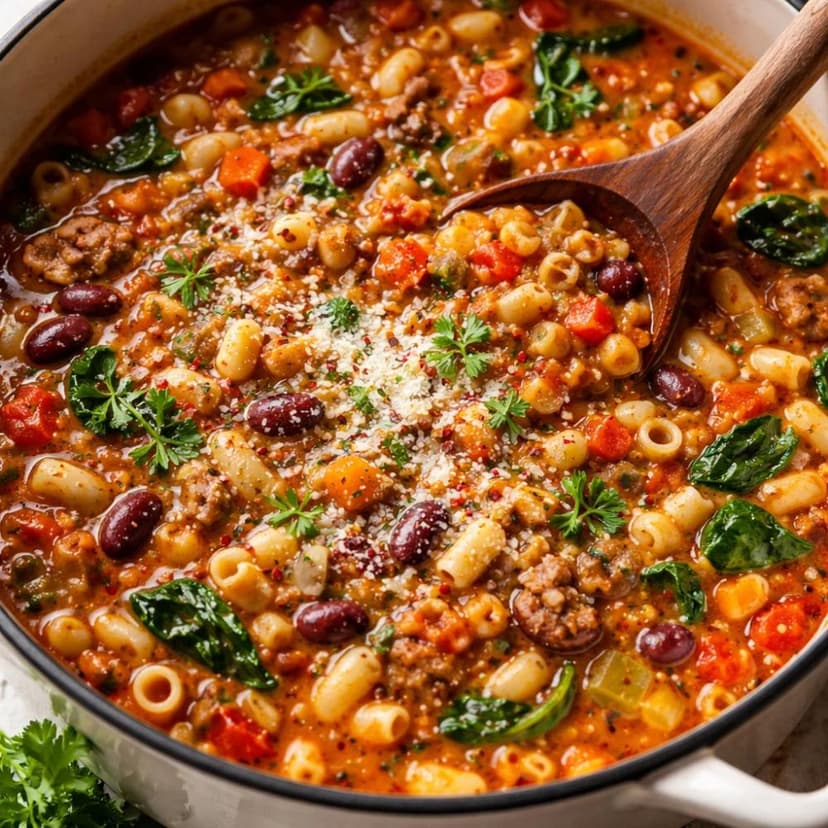
One Pot Pasta e Fagioli (Italian Bean and Pasta Soup)
A hearty, rustic Italian soup of creamy cannellini beans, tender pasta, and a rich tomato-rosemary broth. Everything cooks in one pot in under 40 minutes — cheap, filling, and deeply satisfying.
These are budget cooking in three forms: koshari layers lentils, rice, and pasta into one of the cheapest filling meals on earth; a ground beef and rice skillet stretches a small amount of meat across a full pan with rice and aromatics; and pasta e fagioli turns tinned beans and a handful of pasta into a hearty bowl. Cheap bases, big portions, real flavour.
Payday still a week away? Get a filling dinner built around cheap staples, not a takeout menu.
Random Recipe GeneratorFrequently Asked Questions
It is a tool that builds meals optimised for cost per serving, anchoring dishes on inexpensive staples like rice, dried legumes, and eggs rather than premium proteins. It generates an affordable plan on demand, which also heads off the pricey last-minute takeout you order when you cannot decide what to cook.
Start with a cheap, filling base - rice, pasta, potatoes, or lentils - add the lowest-cost protein that meets your needs, such as eggs, beans, or tinned fish, and use seasonal vegetables and pantry seasonings for flavour. Keep pricier ingredients as small accents rather than the anchor of the meal.
By cost per calorie and cost per gram of protein, dried legumes and grains lead, with eggs and tinned fish close behind. Building meals on these bases and treating meat and convenience items as occasional accents is the single biggest lever on a grocery bill.
Two moves cover most of it: anchor meals on cheap staples instead of premium proteins, and eliminate impulse takeout by always having a plan for what to cook. A generator does both - it designs low-cost meals and gives you an instant answer at the moment you would otherwise order in.
Can't decide what to make? Let our generator pick for you instantly.
Generate a Random Recipe →Tags:
Ready to Try These Recipes?
Browse our complete recipe collection for more cooking inspiration!