Cottage Cheese Scrambled Eggs
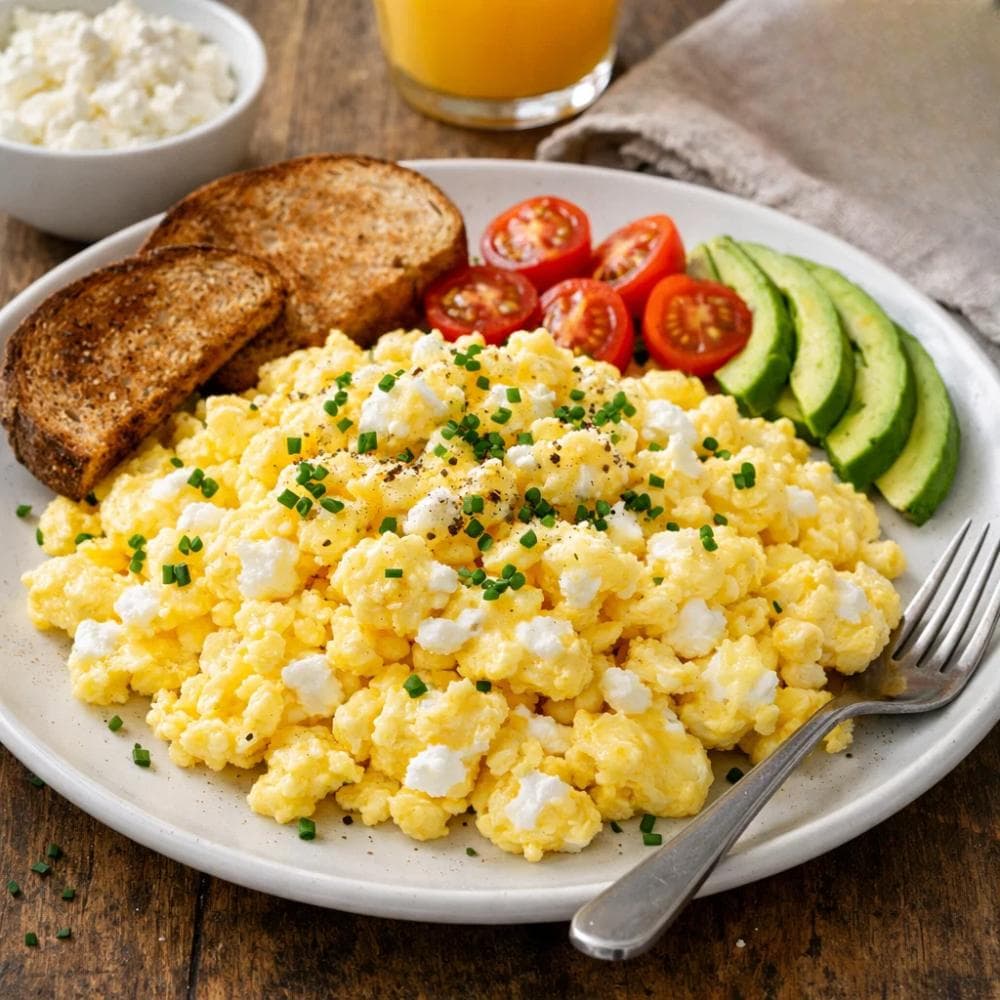
Eggs whisked with cottage cheese and cooked low and slow deliver the creamiest, most protein-dense scrambled eggs you have ever tasted — about 35g of protein per serving.
You'll likely need to buy
Likely in your pantry
Planning the week? Start with a free 7-day dinner plan
Seven tested weeknight dinners from our kitchen, with one combined shopping list. Free, and no sign-up needed to see it.
Step-by-Step Instructions
Whisk the Egg Mixture
Crack the eggs into a bowl and add the cottage cheese, salt, and pepper. Whisk vigorously for 30–45 seconds until the cottage cheese is mostly incorporated — small curds remaining is fine and will disappear during cooking. For a completely smooth result, briefly blend the mixture with an immersion blender or in a regular blender for 10 seconds. The blended version produces the silkiest possible scramble.
Chef's Tips
- ›Don't skip the thorough whisking — it ensures even protein distribution.
- ›Blending takes 10 seconds and produces noticeably smoother eggs.
Heat the Pan Low
Place a non-stick pan over the lowest heat your hob will produce. Add the butter and let it melt slowly — it should foam gently but not sizzle aggressively. Low heat is the single most important factor for creamy scrambled eggs. High heat toughens the protein strands and produces rubbery, dry results.
Chef's Tips
- ›If the butter browns immediately, your heat is too high.
- ›A cold non-stick pan starting on low heat is the safest approach.
Cook Low and Slow
Pour the egg mixture into the pan. Using a rubber spatula, gently push and fold the eggs from the edges toward the centre in slow, deliberate strokes. Do not stir constantly — allow the eggs to set slightly between movements. The entire process should take 4–6 minutes. Pull the pan off the heat while the eggs still look slightly underdone — residual heat will finish them perfectly.
Chef's Tips
- ›Remove from heat just before they look fully done — they keep cooking.
- ›If the eggs are setting too fast, lift the pan off the heat briefly between folds.
Finish and Serve
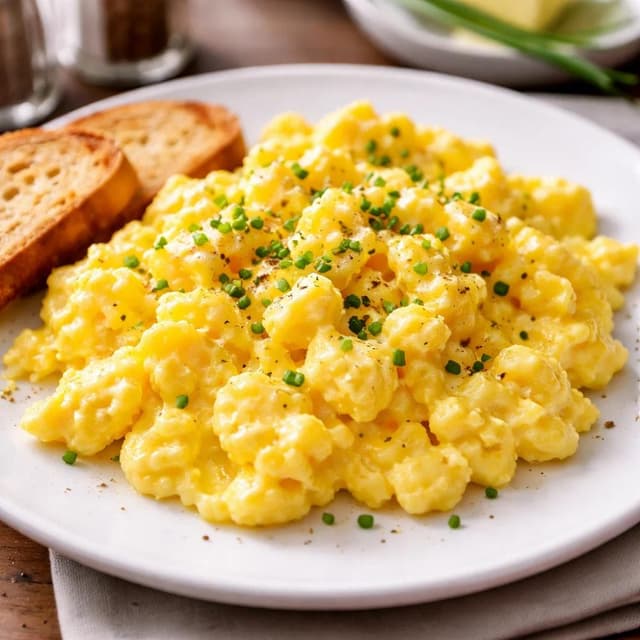
Once the eggs are softly set in large, glossy curds, remove the pan from the heat immediately. Taste for seasoning and add a final pinch of salt if needed. Plate immediately and garnish with chives, a crack of black pepper, and hot sauce if desired. Serve on toasted sourdough, with avocado, or alongside roasted tomatoes.
Chef's Tips
- ›These eggs wait for no one — serve the moment they leave the pan.
- ›A few drops of truffle oil elevate this to a restaurant-quality dish.
About This Recipe
What is this dish?
Cottage cheese scrambled eggs are a high-protein twist on classic scrambled eggs where cottage cheese is whisked directly into the egg mixture before cooking. The cottage cheese melts invisibly into the eggs as they cook, adding extra creaminess and roughly doubling the protein content compared to eggs alone.
Why you'll love it
This recipe requires almost no extra effort but delivers a dramatically richer, creamier scramble with around 35g of protein per serving. It is a practical, satisfying breakfast that keeps you full for hours — without protein powder, supplements, or complicated prep.
When to serve
Serve as a high-protein weekday breakfast on toast, alongside avocado, or with a simple green salad for a light lunch. It also works well as a post-workout meal given the exceptional protein density.
Quick tips
Whisk cottage cheese thoroughly into eggs, use low heat, cook slowly, and pull off the heat just before the eggs look fully set.
Ingredient Highlights
Cottage Cheese
The secret ingredient — cottage cheese is roughly 11–12% protein by weight and blends seamlessly into scrambled eggs when cooked at low temperature. It adds body, creaminess, and a significant protein boost without altering the flavour of the finished dish.
Butter
Cooking in butter rather than oil adds richness that complements the dairy in the cottage cheese. It also has a lower smoke point than oil, which reinforces the low-heat discipline essential for creamy eggs.
Fresh Chives
The mild onion flavour of chives cuts through the richness of the eggs and adds a fresh green note that brightens the dish. Spring onions, dill, or flat-leaf parsley are equally good alternatives.
Substitution Options
Cottage cheese can be replaced with ricotta for an even creamier, slightly sweeter result, or with cream cheese for an ultra-rich version. Butter can be swapped for olive oil or ghee. For a dairy-free version, silken tofu blended with a pinch of black salt (kala namak) mimics both the texture and the eggy flavour, though the protein profile changes significantly.
Chef's Tips
Techniques that separate good from great
Blend for Ultimate Smoothness
A 10-second blast with an immersion blender fully emulsifies the cottage cheese into the eggs, eliminating all visible curds before cooking. The result is scrambled eggs with an almost custard-like smoothness that is impossible to achieve any other way.
The French Method for Texture
French-style scrambled eggs use continuous movement over very low heat to produce tiny, creamy curds rather than large folds. For this recipe, use a small saucepan over the lowest possible heat and stir constantly with a spatula, removing from heat every 20 seconds. The result is an almost spreadable, intensely creamy egg mixture.
Nutrition Facts
Per serving · Estimated values
* Estimated per serving based on a 2,000 calorie diet.
Equipment Needed
As an Amazon Associate we earn from qualifying purchases — at no extra cost to you.
Quick Tips
- Use the lowest heat setting on your hob — patience is the technique that separates good scrambled eggs from great ones.
- Full-fat cottage cheese gives a richer, creamier result than low-fat varieties.
- Pull the eggs off heat slightly before they look done — they continue cooking from residual heat.
Recipe Variations
Different ways to make this dish your own
Smoked Salmon and Dill
Fold in 50g of smoked salmon and 1 tablespoon of fresh dill at the end of cooking. Serve on toasted rye bread with capers and thinly sliced red onion for a luxurious brunch dish.
Spicy Jalapeño and Cheddar
Add 1 tablespoon of finely diced pickled jalapeño and 20g of grated sharp cheddar to the egg mixture before cooking. The cheese melts into the eggs alongside the cottage cheese for an extra-indulgent scramble.
Mediterranean Style
Add 5–6 halved cherry tomatoes (sautéed first in the same pan), 30g crumbled feta, and a handful of baby spinach wilted into the eggs. Serve with warm flatbread and a drizzle of olive oil.
What to Serve With
Perfect pairings to complete the meal
On Sourdough Toast
Pile the scrambled eggs onto thick slices of toasted sourdough with a smear of butter, sliced avocado, and a sprinkle of chilli flakes for a complete, filling breakfast.
High-Protein Breakfast Plate
Serve alongside roasted cherry tomatoes, sautéed spinach, and two slices of turkey bacon for a full high-protein breakfast plate that exceeds 50g of protein.
Wrapped in a Tortilla
Spoon into a warm flour or corn tortilla with salsa, sliced avocado, and hot sauce for a quick, portable breakfast burrito that is far more protein-dense than most fast-food options.
Storage & Reheating
Keep it fresh and plan ahead
Refrigerator
Scrambled eggs are best eaten immediately but can be refrigerated in an airtight container for up to 1 day. The texture softens considerably after storage.
Freezer
Not recommended — scrambled eggs do not freeze or reheat well, becoming watery and rubbery.
Make-Ahead
The egg and cottage cheese mixture can be whisked together the night before and stored covered in the fridge. Give it a quick stir before cooking. This saves 2 minutes in the morning rush.
Reheating
If reheating is necessary, warm gently in a non-stick pan over very low heat with a small knob of butter, stirring frequently. Do not microwave — it makes the eggs tough and dry.
Cooking tonight?
Get a month of dinners like this — done for you
30 chef-tested dinners mapped to the month, plus 5 ready-to-shop grocery lists. One-time $8.99 — 30 dinners planned for you, zero nightly decisions.
See the 30-Day Plan →The Quick Answer
The familiar failure is dry, rubbery scrambled eggs that weep liquid onto the plate, caused by cooking egg proteins too hot and too fast. Keep the pan on its lowest setting and fold slowly, pulling the eggs off the heat while still slightly underdone so residual warmth finishes them into soft, glossy curds.
Why are my cottage cheese scrambled eggs rubbery and weepy?
Egg proteins unfold and bond into a set network as they heat, and on high heat that network contracts too tightly, squeezing out the water held within and leaving you with firm, rubbery curds sitting in a puddle of expelled liquid. The lowest possible heat lets the proteins coagulate gently and gradually, trapping moisture inside soft, large curds instead of wringing it out. Pulling the pan off while the eggs still look slightly wet matters because residual pan heat keeps cooking them; waiting until they look done means they overcook on the plate. The slow push-and-fold, rather than constant stirring, also builds bigger, creamier curds rather than fine dry crumbs.
Why does cottage cheese make the eggs creamier instead of watery?
It seems counterintuitive to add a wet cheese to eggs without making them watery, but cottage cheese works through fat and protein rather than free liquid. Its curds carry milk fat that coats the cooking egg proteins and physically interrupts them from bonding too tightly, the same way cream or butter keeps a scramble tender. The extra casein also dilutes the egg-protein concentration, slowing the rate at which a rubbery network can form. Whisking or briefly blending breaks the curds so they disperse evenly rather than leaking water in pockets. Combined with low heat, this is why the eggs turn out silkier and richer rather than loose and weeping.
Not sure what to cook next? Let the generator pick your next dish in one click.
Random Recipe GeneratorGot Leftovers?
Turn what you already have in your fridge into delicious meals. Our AI-powered generator creates personalized recipes from your ingredients.
Go Deeper
Master the Culinary Science
Every recipe is a doorway. Our 7 Mastery Guides give you the science, technique, and framework to understand why food works — not just how to follow steps.
AI-Powered
Have Ingredients? Generate a Recipe.
Tell our AI what's in your fridge and get a custom recipe with image in seconds. No waste, no boredom.
Try the AI Recipe Generator →You Might Also Like
Discover more delicious recipes similar to what you're cooking