Buttermilk Substitute: What to Use When You're Out
Out of buttermilk? The classic fix is milk plus a spoon of lemon juice or vinegar. Here's why it works, the best swaps in order, and the exact 1:1 ratios.
The Quick Answer
The classic buttermilk substitute is 1 tablespoon of lemon juice or white vinegar topped up with milk to the 1-cup line, stirred and left for 5 to 10 minutes until it thickens slightly. Use whole or 2% milk for the best curdle, and swap it in 1:1 for the buttermilk your recipe calls for.
Why does buttermilk matter in a recipe?
Can't decide what to make? Let our generator pick for you instantly.
Generate a Random Recipe →Buttermilk does two jobs, and acidity is the important one. Its lactic acid (around pH 4.4 to 4.8) reacts with alkaline baking soda to release carbon dioxide, which is what makes pancakes, biscuits, and cakes rise. That same acidity also limits gluten development, giving a softer, more tender crumb and a subtle tang.
That is why you cannot simply swap in plain milk - without the acid, the baking soda has nothing to react with and the bake comes out flat and dense. A good substitute has to put the acidity back, which is exactly what adding lemon juice or vinegar to milk does.
How do you make a buttermilk substitute?
The best swaps, in order
- Milk + acid (the classic): put 1 tablespoon of lemon juice or distilled white vinegar in a measuring cup, top up with milk to the 1-cup mark, stir, and rest 5 to 10 minutes. Whole or 2% milk curdles most reliably.
- Thinned yogurt or sour cream: whisk about 3/4 cup of plain yogurt or sour cream with 1/4 cup of milk until pourable - this comes closest to buttermilk's thickness and tang.
- Kefir: use it straight, 1:1, with no thinning needed - it is already cultured and acidic.
- Milk + cream of tartar: whisk about 1 3/4 teaspoons of cream of tartar into a little of the milk first to stop it clumping, then add the rest to make 1 cup.
Do buttermilk substitutes work just like the real thing?
For leavening and tenderising, yes - all of these put back the acidity that reacts with baking soda, so your bake rises and stays tender. The 1:1 ratio holds: use the same volume of substitute as the buttermilk called for, and remember the tablespoon of acid goes inside the 1-cup measure, not on top, so you still end up with exactly one cup.
The one thing a homemade version cannot fully copy is buttermilk's thicker body and rich, cultured tang. For most pancakes, muffins, and quick breads the difference is invisible; for something where buttermilk is the star flavour, thinned yogurt or kefir gets you closest.
Professional Chef Note
The acid reacts almost instantly, so the 5-to-10-minute rest is really about building a buttermilk-like, slightly curdled consistency rather than being chemically necessary. If you are in a rush, you can use it the moment it looks lightly thickened.
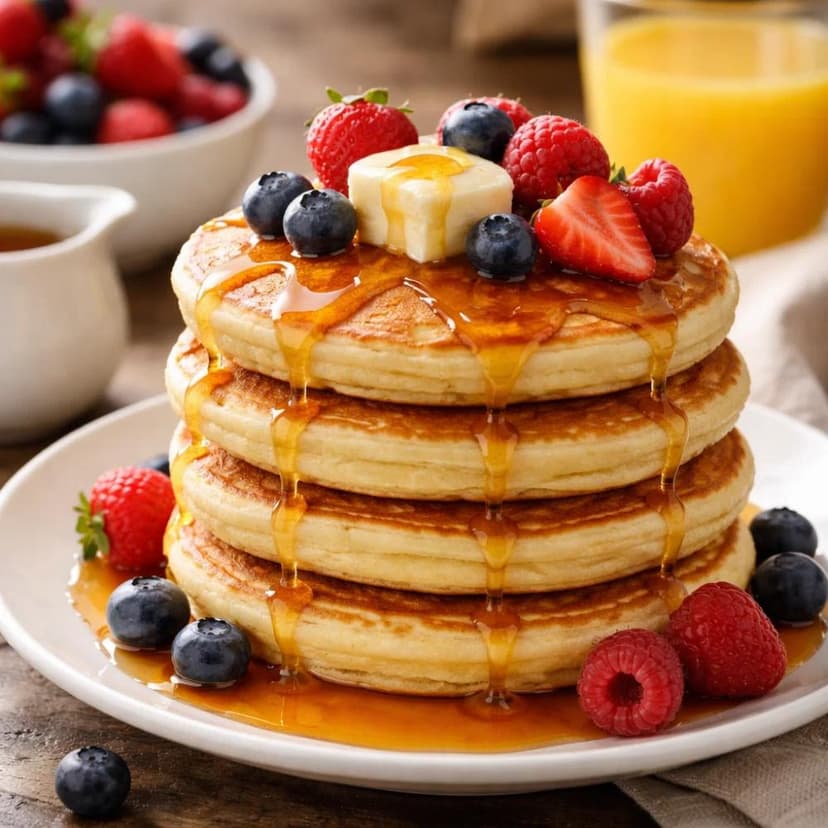
American-Style Fluffy Pancakes (Easy Breakfast Recipe)
Thick, fluffy American-style pancakes with a tender crumb and golden exterior. Stack them high and serve with maple syrup and butter — a weekend breakfast classic.

Classic Fried Chicken
Crispy, golden-brown fried chicken pieces with a juicy and tender interior, seasoned perfectly. A comforting classic meal for two.
These two show buttermilk's range. In fluffy pancakes it is all about the lift and tender crumb - the milk-and-acid swap nails it. In fried chicken, buttermilk's mild acid tenderises the meat and helps the coating cling, and a quick substitute does the same job in a pinch.
Out of more than just buttermilk? Tell our AI generator what you do have and it will build the recipe around it.
Cook With What You HaveFrequently Asked Questions
The classic is 1 tablespoon of lemon juice or white vinegar topped up with milk to 1 cup, rested 5 to 10 minutes. Thinned plain yogurt or sour cream comes closest in texture and tang, and kefir works 1:1 straight.
Not on its own - plain milk lacks the acid that reacts with baking soda to leaven and tenderise, so your bake can turn out flat and dense. Add 1 tablespoon of lemon juice or vinegar per cup to fix that.
One tablespoon of white vinegar (or lemon juice) per 1 cup. Put the acid in the measuring cup first, then top up with milk to the 1-cup line and stir - the acid is included in the cup, not added on top.
Yes - use the same volume of substitute as the buttermilk your recipe calls for. One cup of the milk-and-acid mix replaces one cup of buttermilk.
Can't decide what to make? Let our generator pick for you instantly.
Generate a Random Recipe →Tags:

Ready to Try These Recipes?
Browse our complete recipe collection for more cooking inspiration!