Zero Waste Cooking: Master Your Pantry with a Cook With What You Have Generator
Stop shopping for recipes and start cooking your fridge empty. A cook with what you have generator routes random ingredients into dinner and cuts food waste.
The Quick Answer
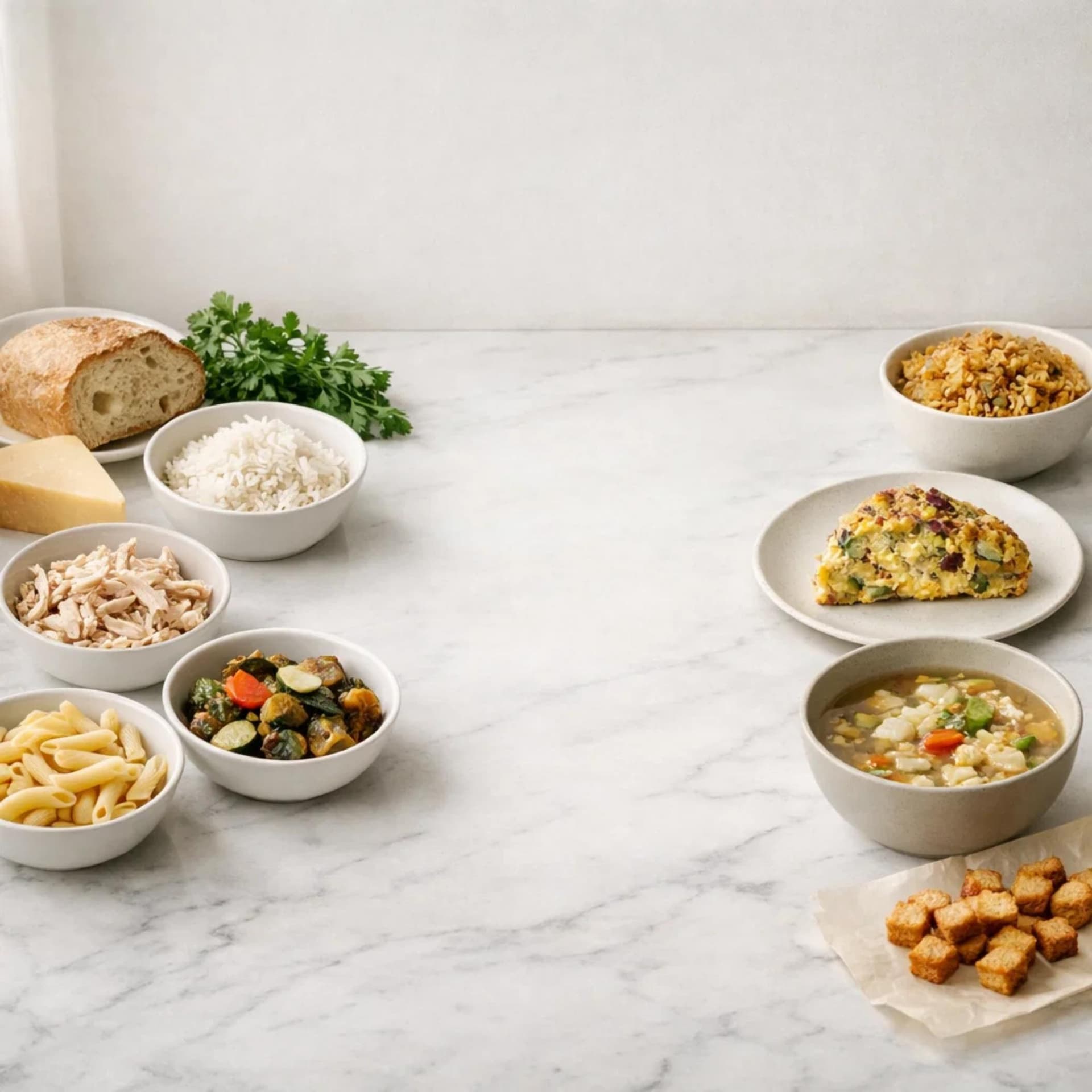
A cook with what you have generator takes the ingredients already sitting in your fridge and pantry and returns a complete recipe built around them, turning random odds and ends into dinner instead of landfill. It reverses the normal workflow: instead of picking a recipe and shopping for it, you inventory what you own and let the tool route those items into a meal, cutting the food waste and grocery spend that come from over-buying.
Roughly a third of all the food produced in the world is lost or wasted, and households are among the biggest contributors. That waste is not just moral or environmental, it is a direct cash leak: every wilted herb, forgotten half-onion, and expired yoghurt is money you already spent and then paid a bin to remove. The economics of fridge-clearing are unusually favourable because your ingredients are a sunk cost. A meal built from what you already own has a marginal cost near zero, and every use-it-up dinner is one more meal you do not have to shop for. Cook your fridge empty consistently and you are not saving a few pennies, you are cutting a recurring line item out of your grocery budget.
Logistically, clearing a fridge is an inventory-routing problem with a deadline. Perishables run on a spoilage clock, so the binding constraint is not what you feel like eating but what will be compost by Thursday. That inverts the normal cooking workflow. Instead of choosing a dish and buying its ingredients, you take a fixed, semi-random input set - the odds and ends you already have - and search for a dish that consumes the most perishable items first. Done by hand, that search is limited by what you can remember how to cook. Done programmatically, it becomes fast and close to exhaustive.
How do you inventory a near-empty kitchen efficiently?
Have ingredients but no plan? Our AI turns what you have into a custom recipe in seconds.
Try the AI Recipe Generator →Efficient inventory is a fast triage, not a full audit. Scan three zones in order of urgency: the fridge first, because its perishables are on the tightest clock, then the freezer, then the pantry, which barely ages. You are not cataloguing everything - you are answering one question: what will spoil first, and what can be built around it. A ninety-second sweep with that lens beats a meticulous spreadsheet you will never keep updated.
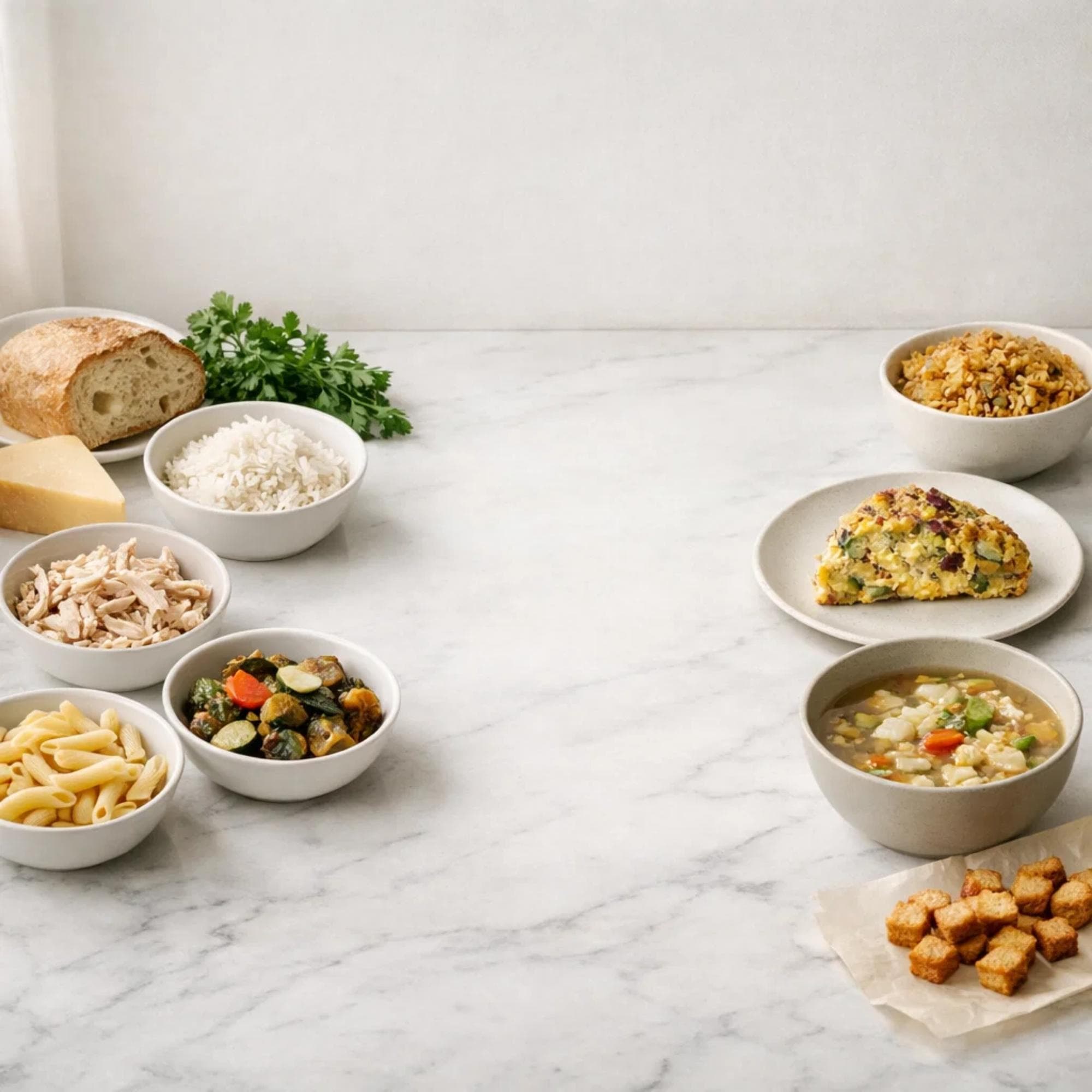
As you scan, sort what you find into functional roles rather than recipes. Almost every meal needs a base (a grain, pasta, bread, potato, or egg), a protein, an aromatic (onion, garlic, ginger, or their relatives), a fat to cook in, and an acid to finish. Once your fridge is mapped into those slots you are no longer staring at random ingredients, you are looking at the components of a dish, and the gap between the two is exactly what a generator closes.
The 90-second fridge triage
- Zone 1, fridge: flag anything wilting, opened, or near its date - these set tonight's menu.
- Zone 2, freezer: note the proteins and vegetables you can pull to fill a gap.
- Zone 3, pantry: confirm your base staples - rice, pasta, tinned tomatoes, stock, oil.
- Assign roles: sort what you have into base, protein, aromatic, fat, and acid before choosing a dish.
Why a programmatic cook with what you have generator prevents grocery waste
Human improvisation hits two walls: memory and confidence. You can only cook from what you can currently recall how to cook, and an unfamiliar combination of ingredients tends to read as 'nothing to eat' even when it is objectively a meal. That false negative is expensive - it is the exact moment people order takeout or make an unnecessary shop, buying more food while the food they own quietly spoils.
A generator maps your actual input set against a large space of dishes and returns combinations you would never have retrieved from memory, including ones that use up the awkward half-ingredients first. It works from the ingredients you have, not the ones a recipe wishes you had, and it closes the loop on partial items - the lone courgette, the last third of a jar - that manual planning routinely strands. The result is fewer emergency shops, less spoilage, and a grocery bill that reflects what you actually eat rather than what you optimistically bought.
The art of substituting base proteins and aromatics on the fly
Substitution is what turns a rigid recipe into a flexible template, and most swaps are governed by cooking method rather than exact ingredient. Proteins are broadly interchangeable within a method: any ground meat behaves the same in a ragu, any firm white fish holds up in a curry, and beans, chickpeas, or cubed tofu step into most braises and stir-fries roughly one-for-one. You are matching texture and cook time, not chasing a specific animal.
Aromatics work the same way. Onion, shallot, leek, and the white of a spring onion are a swappable base layer; garlic and ginger are near-universal boosters; and a hit of acid at the end - lemon, vinegar, a spoon of yoghurt - lifts almost anything. Hold the template steady (fat, aromatic, base, protein, acid, salt, heat) and treat every specific ingredient as a variable, and a short, random pantry stops being a limitation and becomes a set of constraints to solve.
Professional Chef Note
Learn one template and you can cook almost anything you find: fat, plus aromatic, plus base, plus protein, plus acid. Sweat an onion in oil, add whatever grain or pasta you have, fold through any protein, and finish with a squeeze of acid and a pinch of salt. Ninety percent of improvised dinners are just that skeleton wearing different clothes.
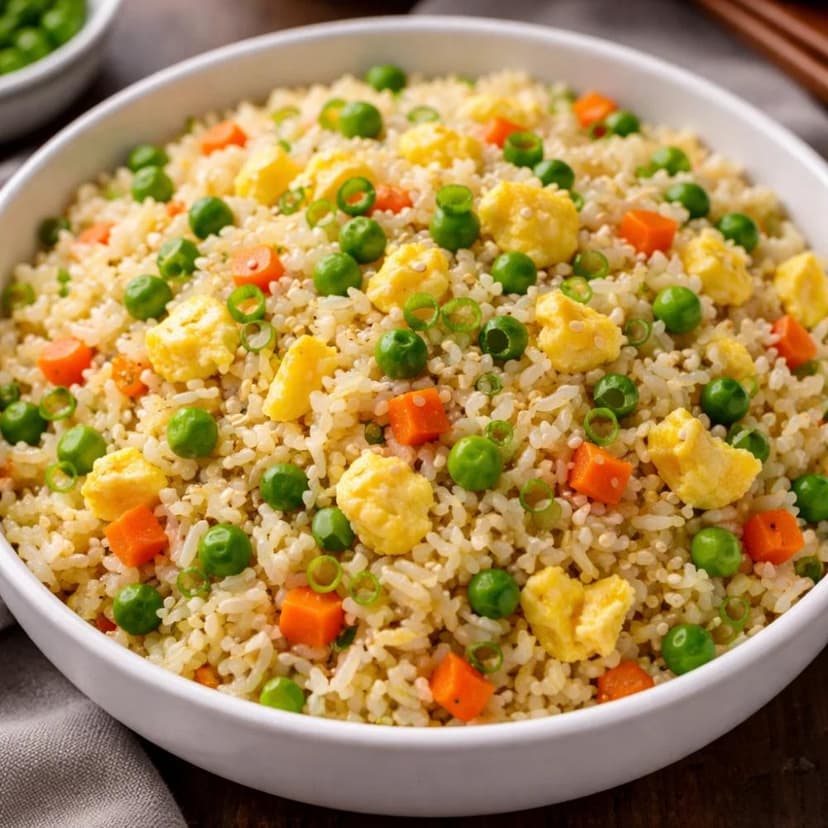
Simple Egg Fried Rice (Better Than Takeaway — 15-Minute Recipe)
Golden, smoky egg fried rice with perfectly separated grains, seasoned with soy sauce and sesame oil. Ready in 15 minutes using day-old rice — cheaper and tastier than any takeaway.
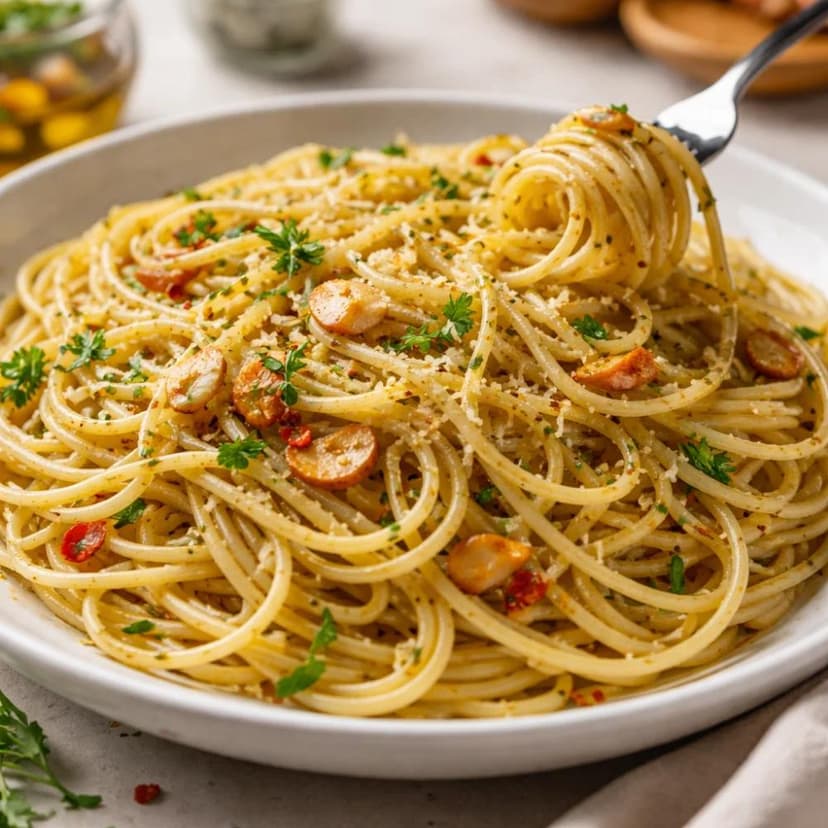
Spaghetti Aglio e Olio (Garlic and Olive Oil Pasta — 4 Ingredients)
Rome's simplest pasta: spaghetti tossed in golden garlic-infused olive oil with chilli and parsley. Four ingredients, 20 minutes, zero compromise on flavour.
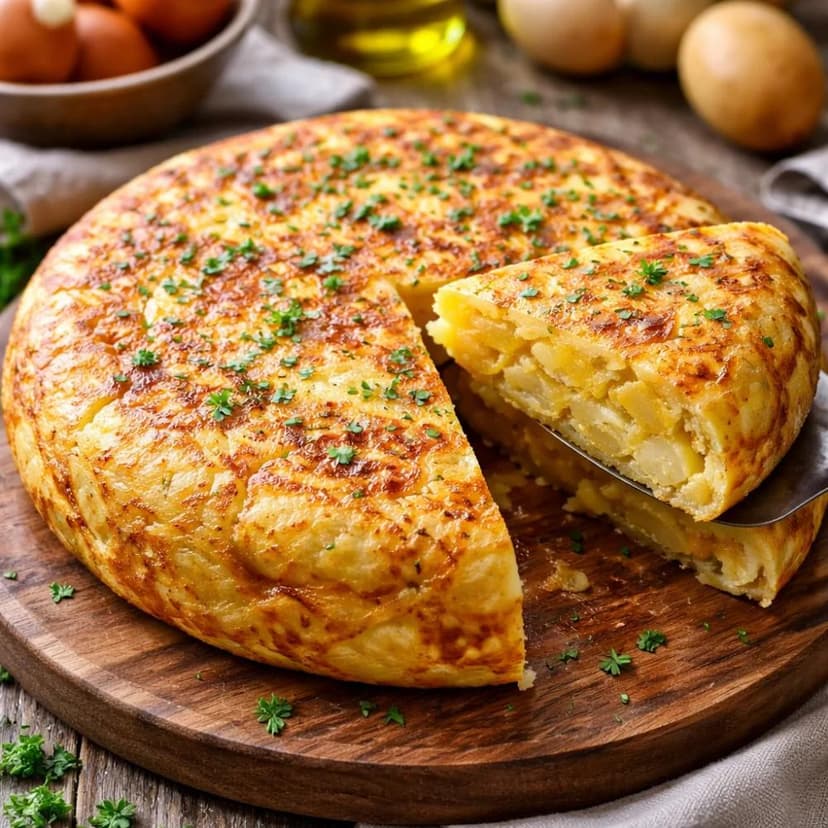
Spanish Tortilla (Potato Omelette Classic Recipe)
The great Spanish classic — a thick, set omelette of slowly confit-cooked potato and onion in olive oil, bound with egg into a golden, custardy round. At its best, a Spanish tortilla is neither fully set nor runny — it has a slightly yielding, creamy centre that sets further as it cools. Simple, endlessly satisfying, and as good at room temperature as it is warm from the pan. This is one of the most versatile dishes in all of European cooking.
Each of these is a template dish, not a fixed recipe. Egg fried rice absorbs any leftover grain and whatever vegetables are wilting; a Spanish tortilla is a vehicle for potatoes plus any odds and ends bound in egg; and aglio e olio proves you can build a satisfying dinner from four pantry staples. Learn the pattern and the specific ingredients become negotiable.
Staring at a random fridge? Feed it what you have and get a full recipe back - no shopping trip required.
Random Recipe GeneratorFrequently Asked Questions
It is a tool that takes the ingredients already in your fridge and pantry and returns a complete recipe built around them. It reverses the usual workflow - instead of choosing a recipe and shopping for it, you inventory what you own and let the tool route those items into a meal, which cuts both waste and grocery spend.
Almost always. Most dinners reduce to a base, a protein, an aromatic, a fat, and an acid, and a generator is good at finding a dish that fits an odd combination you would not think to pair yourself. A near-empty kitchen usually has more options than it appears to.
Cook from the fridge before you shop. Triage perishables by what will spoil first, build meals around those items, and use a generator to turn awkward half-ingredients into a plan. Households are among the biggest sources of food waste, largely because they buy for recipes instead of cooking what they already have; globally, about a third of all food produced never gets eaten.
Stock a small set of long-life staples that anchor most dishes: rice and pasta, tinned tomatoes and beans, stock, eggs, onions and garlic, and a good oil plus an acid like vinegar or lemon. With those on hand, almost any random protein or vegetable can be routed into a meal.
Have ingredients but no plan? Our AI turns what you have into a custom recipe in seconds.
Try the AI Recipe Generator →Tags:
Ready to Try These Recipes?
Browse our complete recipe collection for more cooking inspiration!