Scraping the Pantry: The Mechanics of a Smart Ingredient Recipe Generator
How does a tool turn a random pile of ingredients into dinner? Inside the matching engine, coverage scoring, and substitution rules of a smart ingredient recipe generator.
The Quick Answer
An ingredient recipe generator takes a list of raw ingredients you already have and returns dishes you can actually make from them, matching your inputs against a database of recipes and ranking the results by how completely they are covered. Instead of picking a recipe and shopping for its ingredients, you supply the ingredients and let the tool solve for the recipe, which is why it is the fastest way to turn a random pantry into a real meal.
At its core, an ingredient recipe generator is a matching engine. Every recipe in its database is stored as a set of required components - a base such as a grain, pasta, or protein, plus aromatics, a fat, and seasonings - and your input is just another set: the things currently in your kitchen. The tool computes the overlap between the two sets and asks a simple question of each recipe: how much of what this dish needs do you already have? That overlap score, not a category or a cuisine, is what drives the results.
The reason this works is that most recipes are far more modular than they look. A stir-fry, a frittata, a soup, a grain bowl - each is a template with a fixed structure and interchangeable slots, so the engine does not need your exact ingredients, only ingredients that fit each slot. That is why supplying 'eggs, onion, cheese, potato' can return a dozen viable dishes: the generator is not searching for recipes that name those four items, it is searching for templates whose slots your items can fill.
Can you build a complete meal from random leftover ingredients?
Have ingredients but no plan? Our AI turns what you have into a custom recipe in seconds.
Try the AI Recipe Generator →Almost always, because a complete meal is a structure, not a specific list. Reduce nearly any dinner to five functional roles - a base for bulk and carbohydrate, a protein, an aromatic layer for depth, a fat to carry flavour, and an acid or seasoning to finish - and a 'random' set of leftovers usually covers most of them already. The gaps are typically small and fillable from pantry staples you always have: oil, salt, tinned tomatoes, stock, an onion.
A generator is simply better than human memory at seeing those structures. Where you look at a fridge and see unrelated odds and ends, the engine sees a partially-filled template and finds the dish that needs the fewest additions. It works from the ingredients you have rather than the ones a recipe assumes, which is exactly why an apparently empty kitchen so often yields a genuine meal once the items are mapped to roles instead of to recipes.
The five roles a complete meal needs
- Base: rice, pasta, bread, potato, or eggs - the bulk and the carbohydrate.
- Protein: meat, fish, eggs, beans, or tofu - largely interchangeable by cooking method.
- Aromatics: onion, garlic, ginger, or their relatives - the depth layer.
- Fat: oil or butter to cook in and carry flavour.
- Acid: lemon, vinegar, or another sharp note to finish and lift the dish.
Why an ingredient recipe generator scales better than traditional menu browsing
Menu browsing scales in the wrong direction. To find a dish you can cook, you scroll recipes one by one and mentally check each against your fridge - a linear scan that gets slower as the collection grows, and worse, it starts from the recipe and forces you to reverse-engineer whether you have the parts. Most of what you scroll past is unmakeable tonight, so the effort is largely wasted.
A generator inverts the query and lets an index do the work. You state your inputs once, and the engine returns only the dishes those inputs can produce, ranked by coverage - so a larger database makes the results better, not slower, because there are simply more templates your ingredients might fit. Browsing gets more painful as options grow; ingredient-first matching gets more useful. That inversion, from 'find a recipe then check the fridge' to 'state the fridge then get recipes,' is the whole efficiency gain.
How to bypass missing components using automated substitution rules
The real intelligence in a good generator is its substitution layer. Ingredients are grouped into functional equivalence classes - any firm white fish, any ground meat, any melting cheese, any leafy green - so when a template calls for a component you lack, the engine swaps in one you have from the same class rather than discarding the recipe. A missing shallot is not a dead end; it is an onion. This is how a dish stays reachable even when you are one or two named ingredients short.
Substitution rules also encode what can be dropped versus what is structural. Aromatics and garnishes are usually optional and can be omitted at a minor flavour cost; a base or a binding agent often cannot, and the engine treats those differently. The practical payoff is that near-misses become makeable: instead of rejecting every recipe you cannot complete exactly, the tool routes around the gaps and hands you a version you can cook tonight with what is actually in the kitchen.
Professional Chef Note
Feed the generator your awkward, about-to-turn items first - the half-bunch of herbs, the lone courgette, the opened cream - not your reliable staples. Staples like oil, onions, and rice fit almost every template anyway, so the scarce, perishable ingredients are the ones worth building the meal around, and they are exactly the ones that otherwise get thrown away.
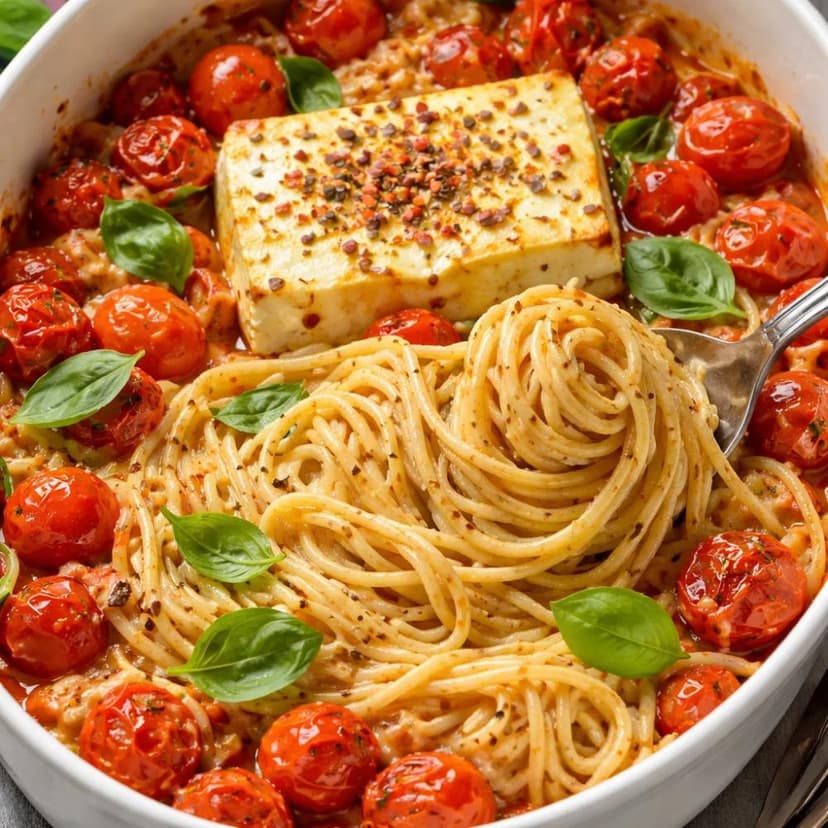
Baked Feta Pasta
The viral TikTok pasta that took the world by storm: a whole block of feta baked with cherry tomatoes until the cheese is soft and the tomatoes burst, then everything is mashed together into a creamy, tangy sauce and tossed with pasta. Ridiculously simple and genuinely delicious.

Cheesy Quesadillas (Quick Budget Dinner — 10 Minutes)
Crispy, golden flour tortillas loaded with melted cheese and your choice of fillings. The ultimate 10-minute budget meal — endlessly customisable, perfectly satisfying, and loved by everyone.
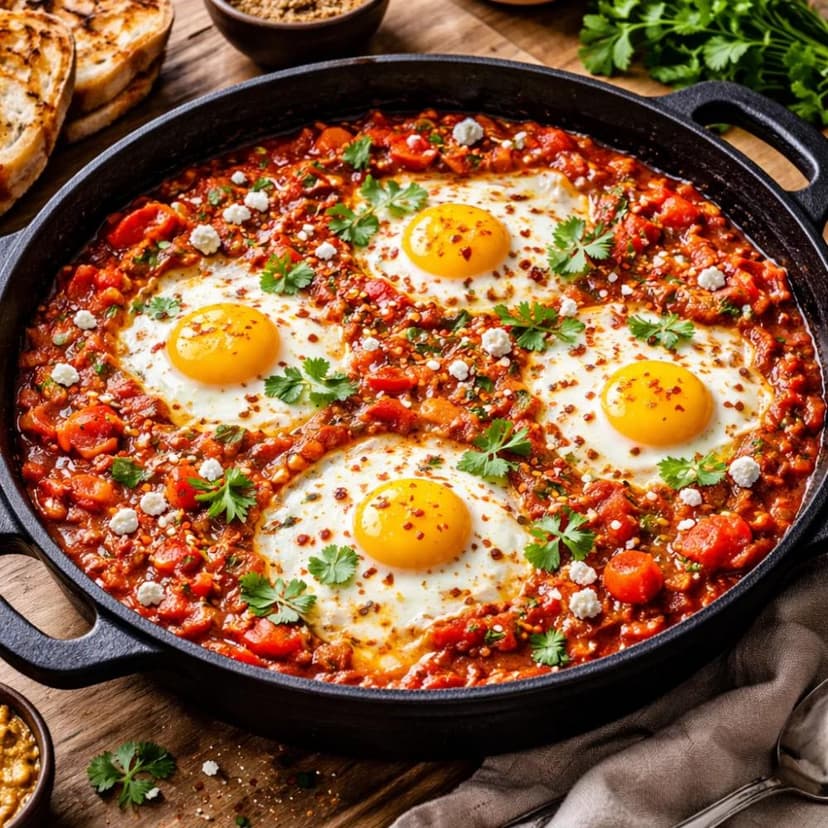
Shakshuka (Eggs Poached in Spiced Tomato Sauce)
Eggs gently poached in a rich, spiced tomato and pepper sauce with cumin, paprika, and chilli. A one-pan breakfast or brunch dish from North Africa and the Middle East.
Each of these is a template with wide tolerances. Shakshuka needs little more than eggs and tinned tomatoes, then takes any peppers, greens, or cheese you want to clear; baked feta pasta is a block of feta, tomatoes, and whatever pasta is in the cupboard; and a quesadilla is a vehicle for any cheese plus whatever needs using up. Supply the anchors and the generator fills the rest from what you have.
Got a random pile of ingredients? List what you have and get a recipe you can actually cook it into.
Random Recipe GeneratorFrequently Asked Questions
It is a tool that takes the ingredients you already have and returns recipes you can make from them, ranked by how completely each dish is covered. Instead of choosing a recipe and shopping for it, you supply your ingredients and the tool solves for the meal.
Yes. Most dishes reduce to a base, a protein, an aromatic, a fat, and an acid, so even three or four items usually fill enough roles to produce a viable meal, with small gaps covered by pantry staples. A generator is good at finding the template your handful of ingredients fits.
Map your items to roles rather than recipes: whatever can be a base, a protein, and an aromatic will usually combine into a stir-fry, frittata, soup, or grain bowl. An ingredient-first generator does this automatically and returns the dishes that use the most of what you already have.
It groups ingredients into equivalence classes - any melting cheese, any ground meat, any leafy green - and swaps a missing component for one you have from the same class. Optional items like garnishes can be dropped, while structural components are flagged, so near-miss recipes stay makeable.
Have ingredients but no plan? Our AI turns what you have into a custom recipe in seconds.
Try the AI Recipe Generator →Tags:
Related Reading
Ready to Try These Recipes?
Browse our complete recipe collection for more cooking inspiration!