What to Substitute for Kombu in Dashi (Ranked by Umami)
Out of kelp? Dried shiitake is your strongest stand-in. Here are the best kombu substitutes for dashi, ranked by umami density, plus how to use each one.

The Quick Answer
The best kombu substitute for dashi is dried shiitake mushrooms. They build a deep, fully plant-based savory base from guanylate, a different umami compound than kelp's glutamate. For roundness, add a splash of soy sauce. Wakame, toasted nori, or kombu dashi powder also work, ranked by umami strength below.
Why Kombu Is So Hard to Replace
Can't decide what to make? Let our generator pick for you instantly.
Generate a Random Recipe →Kombu is the glutamate engine of dashi. As dried kelp steeps, it releases free glutamic acid into the water, giving you that clean, marine umami with no fishiness and no cloudiness. That single compound is doing most of the heavy lifting, which is why pulling kombu out leaves an obvious hole in the broth.
No other ingredient reproduces it exactly, so you substitute by umami density and by whether you need the broth to stay vegan. The closest match in raw savory power is dried shiitake, but it works through guanylate rather than glutamate. Both compounds register as deep umami on the palate, yet shiitake reads earthy and woodsy where kombu reads sea-clean.
Worth knowing what does not work alone: katsuobushi, the bonito flakes you'd normally pair with kelp, makes a one-dimensional, fishy dashi on its own. It needs a glutamate partner to taste complete. That partnership is exactly why a good substitute matters when the kelp is gone.
How to Substitute Correctly
Building dashi without kombu
- Step 1: Reach for dried shiitake first. Even the tough stems you'd normally discard are loaded with guanylate, so save them for exactly this. Cold-steep a few caps or stems in your soaking water.
- Step 2: Steep low and slow. Cover the mushrooms with cool or barely warm water and give them time rather than a hard boil, which keeps the broth clean and pulls maximum umami.
- Step 3: Round it out with a splash of soy sauce or a small spoon of white miso. This adds the savory depth kombu would have provided, though both bring salt and color, so season the rest of the dish lightly.
- Step 4: For a milder marine note, add a little wakame, but keep it brief. Wakame turns slippery if simmered, so introduce it toward the end.
- Step 5: Finish, don't build, with toasted nori. A small torn piece added near the end lends a lighter seaweed umami that brightens the top of the broth.
- Step 6: If you have them, use kombu dashi powder or kombu tea granules as a concentrated shortcut, stirred in to taste.
Professional Chef Note
Glutamate and guanylate multiply each other. Pairing shiitake's guanylate with even a trace of glutamate, from a few drops of soy or a pinch of miso, gives you a synergistic umami punch far bigger than either delivers alone, which is the real trick to a convincing kelp-free dashi.
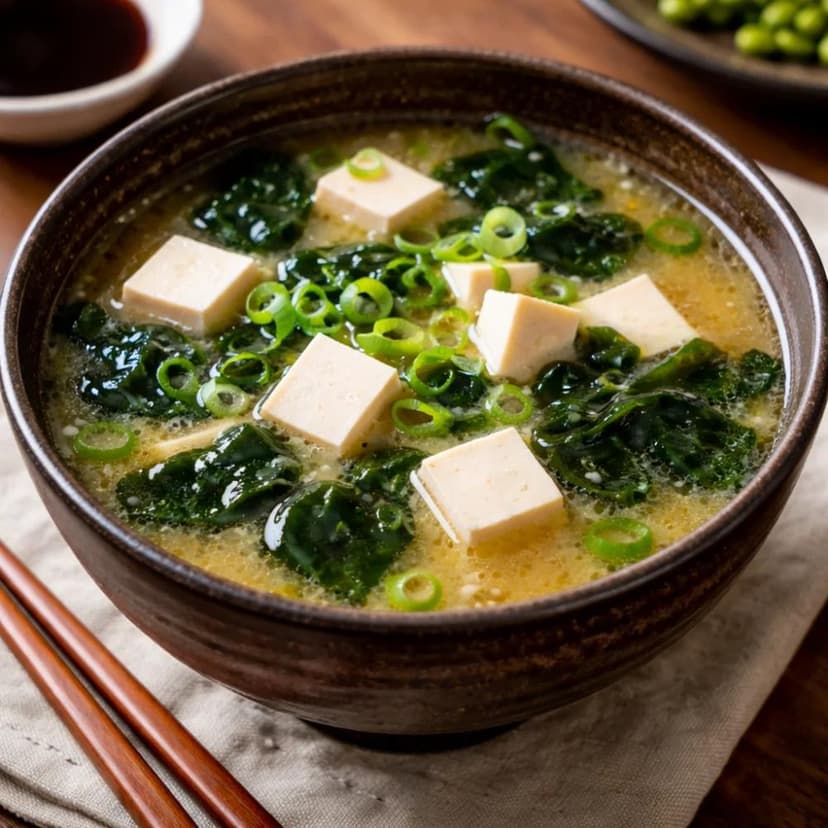
Miso Soup with Tofu and Wakame (Authentic Japanese Recipe)
Japan's most fundamental daily soup — a clean, savoury dashi broth gently stirred with miso paste, soft tofu cubes, and rehydrated wakame seaweed. Deeply nourishing, ready in 10 minutes, and endlessly comforting.
Miso soup is the perfect place to put a kombu-free dashi to work. The miso itself contributes glutamate and savory body, so even a quick shiitake-based broth tastes full and balanced once the paste goes in.
Try it the next time the kelp jar comes up empty. Steep your mushrooms, whisk in the miso off the heat to protect its flavor, and you'll have a bowl that drinks like the real thing.
Kombu Substitutes Ranked by Umami Density
Strongest to lightest
- Dried shiitake (and stems): the strongest stand-in. Rich in guanylate, fully plant-based, builds a deep base; earthy and woodsy rather than sea-clean.
- Kombu dashi powder or kombu tea granules: concentrated shortcuts that come closest to real kelp flavor if you happen to have them.
- Soy sauce or white miso: powerful umami boosters that prop up a thin broth in a pinch, but add salt and color, so use sparingly.
- Wakame: a milder marine flavor that nods to kelp, but goes slippery if simmered, so add late.
- Toasted nori: the lightest option, a finishing seaweed umami best torn in near the end rather than used to build a base.
Not sure what broth to build from your fridge and pantry? Let the tool suggest a recipe from what you already have.
Cook With What You HaveFrequently Asked Questions
Yes. Dried shiitake mushrooms make a deep, fully plant-based dashi using guanylate, a savory compound that works like kelp's glutamate. Add a splash of soy sauce for roundness to closely mimic traditional dashi.
Yes. Shiitake dashi is entirely plant-based, since it builds umami from dried mushrooms rather than fish flakes. It is the best vegan replacement for kombu-based broth.
Nori works as a finisher, not a base. A small piece of toasted nori added near the end lends a lighter seaweed umami, but it lacks the glutamate depth kombu provides for building a broth.
Katsuobushi (bonito) alone makes a one-dimensional, fishy dashi. It needs a glutamate-rich partner like kombu or shiitake to balance it into a complete, savory broth.
Can't decide what to make? Let our generator pick for you instantly.
Generate a Random Recipe →Tags:



Ready to Try These Recipes?
Browse our complete recipe collection for more cooking inspiration!