What to Do With Leftover Rehydrated Wakame Seaweed
Turn a handful of leftover rehydrated wakame into bright sunomono, miso soup, or noodle toppings within 2-3 days, with zero slimy texture.
The Quick Answer
Use leftover rehydrated wakame within 2-3 days, kept drained and refrigerated in a sealed container. The fastest, most classic use is sunomono, a Japanese cucumber-and-wakame salad dressed with rice vinegar, a little sugar and soy. You can also stir it into miso soup at the last moment, pile it on udon, ramen or soba, fold it through a grain bowl, or chop it fine as a savory seasoning.
Why Rehydrated Wakame Spoils Fast and Turns Slippery
Have ingredients but no plan? Our AI turns what you have into a custom recipe in seconds.
Try the AI Recipe Generator →Dried wakame is shelf-stable for ages, but the moment you soak it, it swells dramatically and absorbs water back into its tissue. That rehydrated state is fragile and perishable in a way the dried sheet never was, so the clock starts the instant it plumps up.
Once it holds all that moisture, the seaweed behaves like any other fresh, water-rich vegetable: it supports bacterial growth and starts to degrade. Refrigeration slows that down, and keeping it drained in a sealed container limits both excess water and air exposure, which is why 2-3 days is your realistic window.
Texture is the other half of the story. Wakame turns slippery and loses its pleasant bite when it sits in hot liquid too long or soaks too long up front. The leaf's structure softens with prolonged heat and moisture, so the goal is always to keep contact brief and add it at the very end.
How to Use It Up
Five fast ways to finish leftover wakame
- Make sunomono first: thinly slice cucumber, squeeze out water, toss with the drained wakame, and dress with rice vinegar, a little sugar and soy. It is bright, fast, and ideal for just a handful.
- Build a sesame seaweed salad by tossing the wakame with toasted sesame oil, soy, a splash of rice vinegar and toasted sesame seeds for a punchier side.
- Stir it into miso soup or any clear broth at the very last moment, off the boil, so it warms through without going slick.
- Pile it onto udon, ramen or soba as a topping, adding it right before serving rather than letting it simmer in the bowl.
- Fold it through a rice or grain bowl, where its salinity and color lift plain rice, quinoa or barley.
- Chop it finely and use it as a savory seasoning over steamed vegetables, rice or tofu when you only have scraps left.
Professional Chef Note
Treat wakame as a finishing ingredient, not a cooking one. In any hot dish, kill the heat first and stir it in last, so it keeps its tender bite instead of collapsing into something slippery.
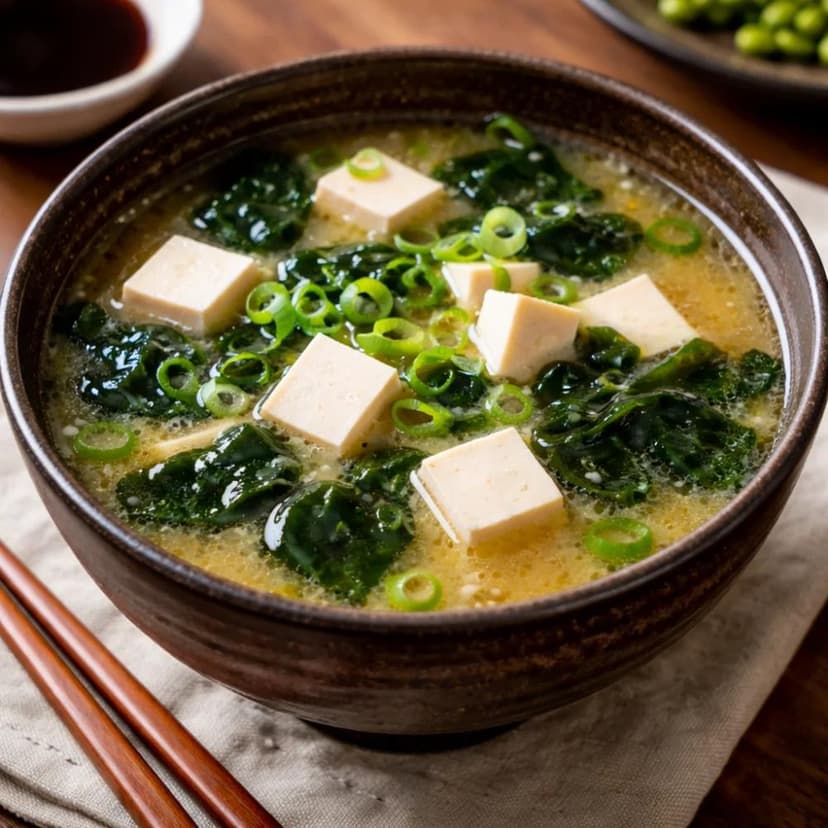
Miso Soup with Tofu and Wakame (Authentic Japanese Recipe)
Japan's most fundamental daily soup — a clean, savoury dashi broth gently stirred with miso paste, soft tofu cubes, and rehydrated wakame seaweed. Deeply nourishing, ready in 10 minutes, and endlessly comforting.
Miso soup is the gentlest landing spot for leftover wakame because it asks so little of it: a few seconds of residual heat is all the seaweed needs to soften and unfurl. Add your drained wakame at the very end, after the miso is whisked in and the pot is off the boil, and it stays tender.
If you have only a small amount left, this is the move. It stretches a single handful into a comforting bowl and rescues seaweed that would otherwise turn over in the fridge.
Sunomono vs. Seaweed Salad vs. Soup: Which to Choose
Match the dish to how much wakame you have
- A small handful: stir it into miso soup or any clear broth, where even a little reads as plenty.
- A modest amount and a cucumber on hand: make sunomono, the brightest, fastest use and the most classic.
- A generous amount: turn it into a sesame seaweed salad so the seaweed is the star, not a garnish.
- Scraps and odd ends: chop them fine and keep them as a savory seasoning to scatter over rice, noodles or vegetables.
- Any leftover noodles: pile the wakame onto udon, ramen or soba as a fresh, last-second topping.
Tell us what else is in your fridge and we will spin your leftover wakame into a recipe you can cook tonight.
Use Up Your LeftoversFrequently Asked Questions
Use leftover rehydrated wakame within 2-3 days. Keep it drained and refrigerated in a sealed container, since it becomes perishable once it swells with water.
Wakame turns slippery and loses its pleasant bite when it sits in hot liquid too long or is over-soaked. Add it near the end of cooking and avoid soaking it longer than needed.
Sunomono is a Japanese cucumber-and-wakame salad dressed with rice vinegar, a little sugar and soy. It is bright and fast, making it the most classic way to use a handful of leftover wakame.
Yes. Stir leftover wakame into miso soup or any clear broth at the last moment, off the heat, so it warms through and softens without becoming slippery.
Have ingredients but no plan? Our AI turns what you have into a custom recipe in seconds.
Try the AI Recipe Generator →Tags:

Ready to Try These Recipes?
Browse our complete recipe collection for more cooking inspiration!