Why Is My Garlic Bitter? (The Over-Frying Mistake)
Bitter garlic comes from scorching, not "burnt sugar." Learn why garlic burns so fast, how to add it at the right moment, and how to rescue a mildly bitter base.
The Quick Answer
Garlic turns bitter mainly because it scorches: it is low in moisture and high in sugars and sulphur compounds, and when it browns too far those sulphur compounds break down into harsh, acrid notes. An older clove's green germ can add to the sharpness too. To rescue a mildly bitter base, balance it with fat (butter or cream), a splash of acid (lemon or rice vinegar), and a pinch of salt or sugar, which all dampen the perception of bitterness. If the garlic is badly scorched, the acrid compounds have spread through the oil and cannot be undone - discard it and start over.
The Chemical Science: Why Garlic Scorches So Easily
Can't decide what to make? Let our generator pick for you instantly.
Generate a Random Recipe →Garlic burns faster than almost any other aromatic, for good reason: it is low in moisture, high in natural sugars, and packed with sulphur compounds, and it is usually cut into tiny pieces that race past the gentle "toasted" stage. Once it browns too far, those sulphur compounds degrade into acrid thiophenes and sulphides, and high-heat Maillard reactions throw off sharp, bitter byproducts. That, not "burnt sugar" alone, is the real source of bitter garlic.
It happens fast but not instantly. Minced garlic starts to brown within tens of seconds once the pan is hot (around 160C / 325F), and from there it tips from golden and nutty to scorched and bitter very quickly - which is why an unattended pan is almost always the culprit.
Older cloves play a part too. As a bulb breaks dormancy it grows a green germ down the centre; that germ is coloured by chlorophyll and carries extra sulphur compounds and saponins, and being thin, it burns faster than the surrounding flesh. An aged clove also tastes sharper overall because its stored starch has started converting to sugar - so older garlic is simply more prone to bitterness.
The Prevention and Rescue Routine
How to prevent it
- Mind the timing: one reliable method is to add minced garlic late - in roughly the last 30 to 60 seconds, just until it smells fragrant - rather than dropping it into a screaming-hot empty pan. Gently toasting it low-and-slow in oil works too; the trade-off is punchy-fresh flavour versus mellow, infused flavour.
- Keep the heat moderate: garlic browns and then burns in the blink of an eye over high heat, so pull the pan back, or add your other ingredients and liquid, before it colours too far.
- Consider the germ: for raw or barely-cooked uses like aioli and vinaigrettes, halve older cloves and flick out the green centre; in a long-simmered sauce a small germ makes little difference.
How to rescue a mildly bitter base
- Add fat: stir in a tablespoon of butter or a splash of cream. Fat coats the palate and dilutes the bitter compounds, muting how sharp they taste.
- Add acid plus a little salt or sugar: a half-teaspoon of lemon juice or rice vinegar with a pinch of salt or sugar rebalances the dish - salt and sweetness are actually the strongest suppressors of bitterness on the tongue.
- Know when to quit: these tricks mask bitterness, they do not remove it. Badly scorched garlic forms acrid compounds that soak into the oil, so discard the garlic and the oil and start again.
Professional Chef Note
Garlic and high, dry heat are a bad match. The safest habit is to cook your onions or proteins first and add garlic toward the end, or to sweat it gently in plenty of oil over low heat - never to brown it hard and fast in an empty pan.
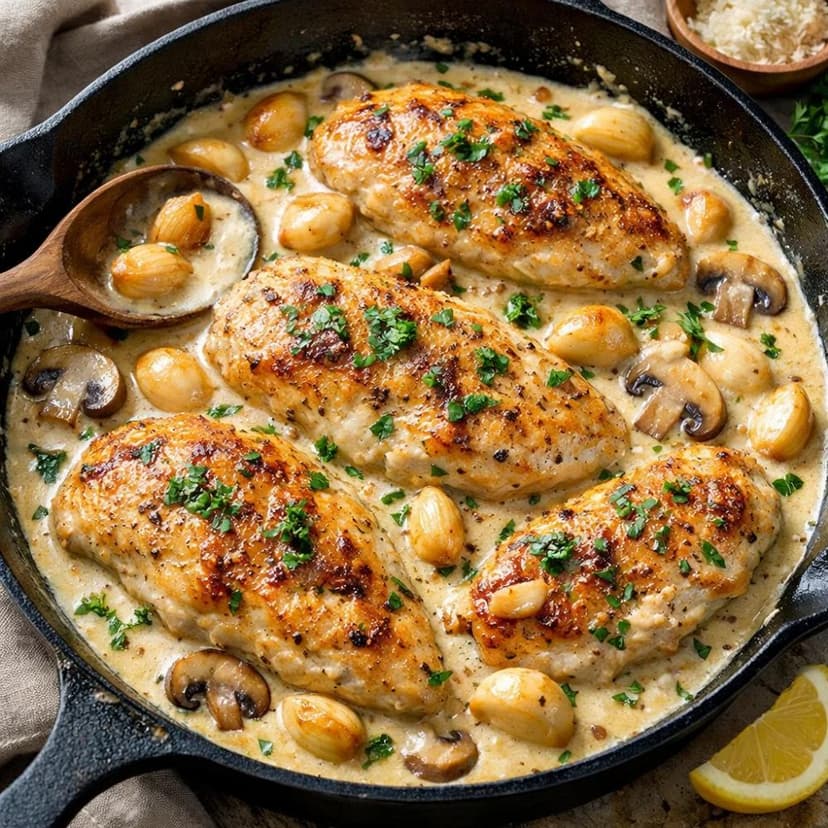
Creamy Garlic Chicken (One-Pan Skillet Recipe)
Tender pan-seared chicken breasts smothered in a rich, garlicky cream sauce made in the same pan — a complete, satisfying dinner that comes together in 30 minutes with minimal washing up. The sauce is built on slowly cooked whole garlic cloves that become sweet and almost melting, deglazed with white wine and finished with cream and Parmesan. It is the kind of one-pan weeknight dinner that tastes deeply impressive while requiring very little effort.
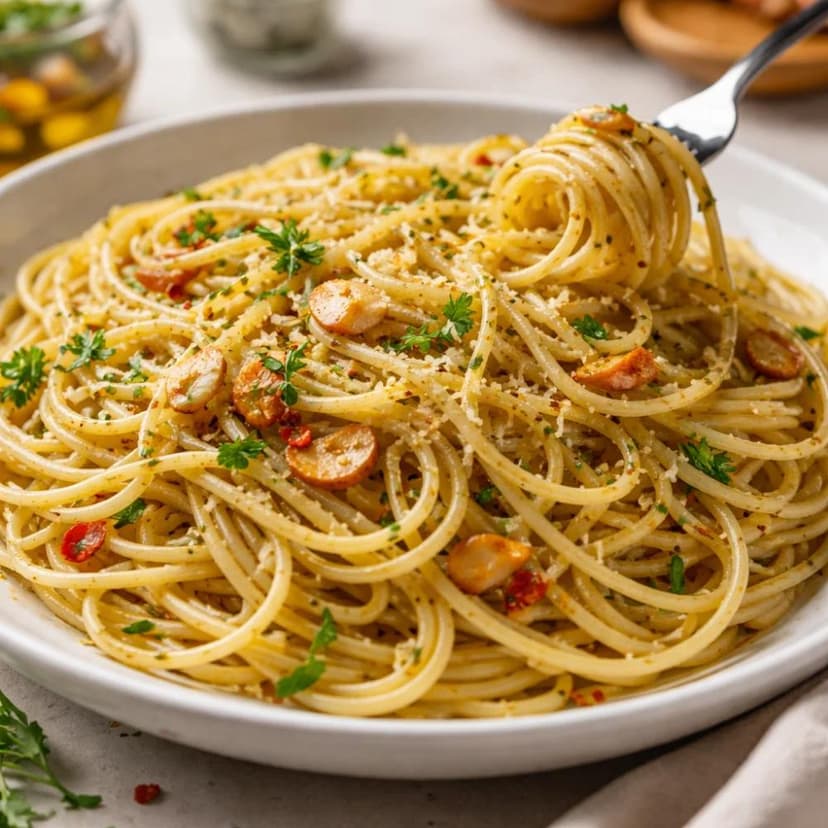
Spaghetti Aglio e Olio (Garlic and Olive Oil Pasta — 4 Ingredients)
Rome's simplest pasta: spaghetti tossed in golden garlic-infused olive oil with chilli and parsley. Four ingredients, 20 minutes, zero compromise on flavour.
Nowhere does this matter more than in a dish built on garlic itself. Spaghetti aglio e olio lives or dies by gently golden - never browned - garlic infused into olive oil, and a creamy garlic chicken depends on the same restraint. Get the timing right here and both become foolproof.
Over-extracted your aromatics or need to rebuild a dish from scratch? Map out a balanced flavour profile in seconds with our Random Recipe Generator.
Find a RecipeFrequently Asked Questions
Because it scorched. Garlic is low in moisture and high in sugars and sulphur compounds, so over high heat it browns and then burns quickly, and the degrading sulphur compounds turn acrid and bitter. Cook it gently and add it late.
It helps for raw or lightly cooked dishes like aioli and dressings, where the germ adds extra sulphur compounds and burns faster. In a long-simmered sauce, a small germ makes little difference.
A mildly bitter base can be rebalanced with fat, a splash of acid, and a pinch of salt or sugar, which mask the bitterness. Badly scorched garlic cannot be saved - the acrid compounds spread into the oil, so discard it and start over.
There is no single threshold, but minced garlic begins browning within tens of seconds once the pan reaches around 160C (325F) and scorches soon after. Watch it and pull it off the heat the moment it turns golden and fragrant.
Can't decide what to make? Let our generator pick for you instantly.
Generate a Random Recipe →Tags:
Related Reading
BlogWorld Cuisines
Italian Recipes for Beginners — 8 Classics You Can Actually Make at Home
 Blog
BlogWorld Cuisines
Indian Recipes for Beginners — 8 Dishes to Start With (and Why They Work)
BlogWorld Cuisines
Foolproof Cacio e Pepe: A Step-by-Step Guide to the Perfect Emulsified Sauce
Ready to Try These Recipes?
Browse our complete recipe collection for more cooking inspiration!