Foolproof Cacio e Pepe: A Step-by-Step Guide to the Perfect Emulsified Sauce
No cream, no clumps. The starch chemistry that emulsifies Pecorino Romano with pasta water, the correct cheese-to-water ratio, and a step-by-step method for authentic cacio e pepe.
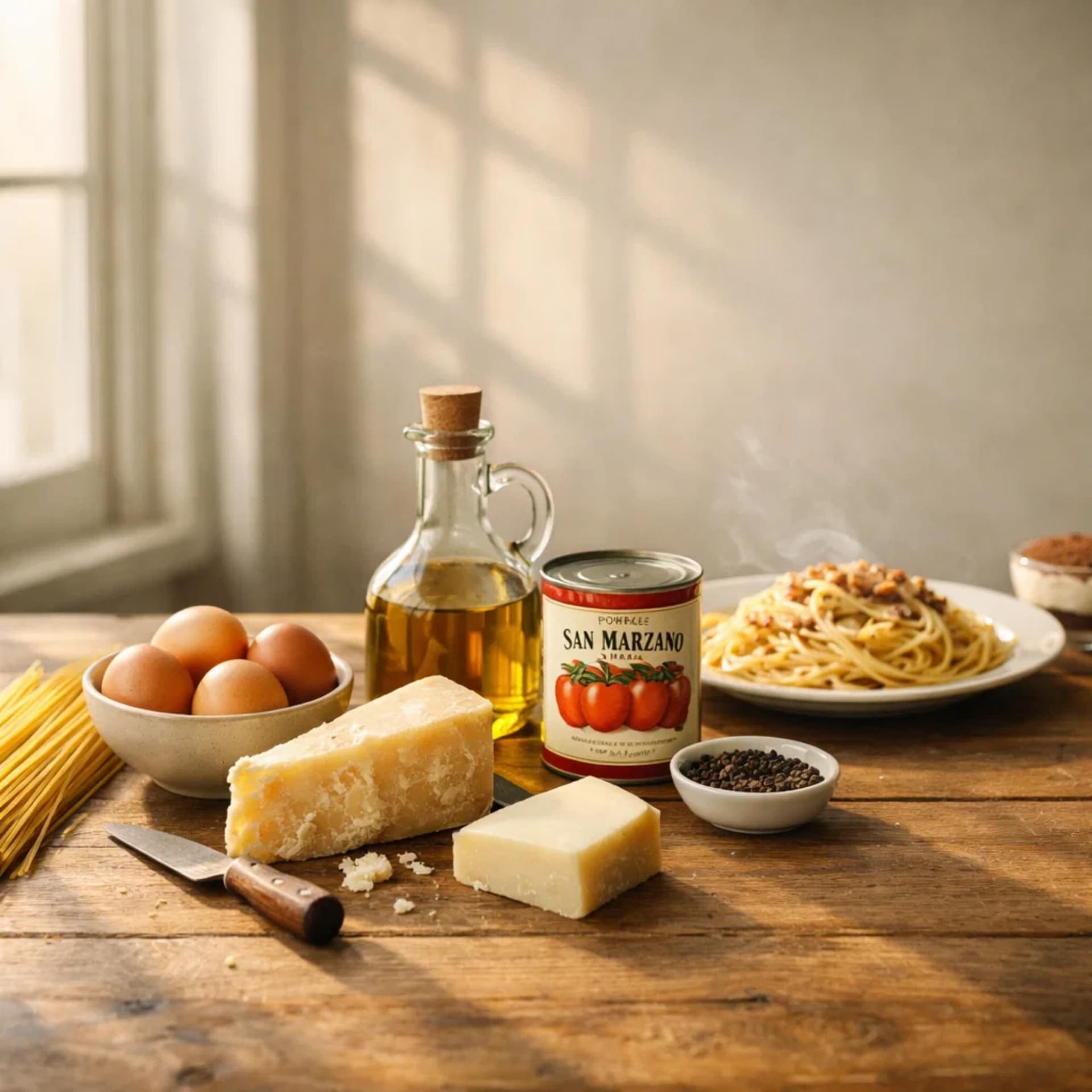
The Quick Answer
The golden rule of authentic cacio e pepe is to skip cream entirely and build the sauce from just three things: Pecorino Romano, toasted black pepper, and the starchy water your pasta cooked in. That starch is what lets the cheese emulsify into a glossy, velvety sauce instead of clumping, so this step-by-step method is really about controlling starch concentration and temperature, not adding dairy.
Cacio e pepe is an emulsion held together by starch. Pecorino Romano is mostly fat and protein, and on their own those two do not mix with water: drop grated cheese into hot liquid and the fat separates while the protein, casein, tangles into rubbery clumps. Starch is the mediator. As pasta cooks it sheds amylose and amylopectin into the water, and those long molecules coat the fat droplets and cheese proteins, holding them suspended and evenly dispersed so the sauce turns creamy rather than breaking into an oily puddle studded with lumps.
This is why the pasta water is not an afterthought but the core ingredient, and why its concentration matters. Water from a big, dilute pot barely carries enough starch to stabilise the emulsion; water from a smaller volume, or from pasta cooked risotto-style in just enough liquid, is thick with dissolved starch and does the binding work reliably. Get the starch concentration and the temperature right and cacio e pepe is genuinely foolproof; get either wrong and no amount of stirring will rescue a broken, grainy sauce.
Why does the cheese clump in Cacio e Pepe?
Can't decide what to make? Let our generator pick for you instantly.
Generate a Random Recipe →Cheese clumps for one dominant reason: heat. Casein, the main protein in Pecorino, coagulates and seizes when it meets liquid that is too hot - roughly above 65 to 70°C (150 to 160°F) - snapping from smooth to stringy, then into hard little knots. Tip grated Pecorino straight into boiling pasta water, or onto pasta fresh off the heat, and you are effectively curdling it. The fat splits out at the same time, which is why a broken sauce looks both greasy and lumpy.
The two supporting culprits are moisture and starch. Add cheese to a nearly dry pan and it has nothing to disperse into, so it melts onto itself into a mass rather than a sauce, while pasta water that is too thin cannot hold the emulsion together even at the right temperature. The fix follows directly from the causes: let the pasta water cool for a minute below the seizing point, keep enough starchy liquid in the pan, and combine off direct heat so the cheese emulsifies instead of coagulating.
The reasons cheese clumps - and the fix
- Too hot: casein seizes above about 65°C (150°F). Let the pasta water cool a minute and combine off the heat.
- Too dry: cheese needs liquid to disperse into. Keep enough starchy water in the pan before adding it.
- Too little starch: thin water cannot hold the emulsion. Use concentrated pasta water, not a big dilute pot.
- Clumpy going in: grate the cheese finely and mix it into a smooth paste with water before it touches the pasta.
The correct water-to-cheese ratio for a velvety emulsion
The most reliable route to a stable emulsion is to build a cheese paste first, off the heat, rather than adding dry cheese to the pasta and hoping. Start with finely grated Pecorino Romano and stir in warm - not boiling - pasta water a little at a time until it forms a smooth, pourable cream about the consistency of thin yoghurt. A practical starting point is about 100 g of finely grated Pecorino to 60 to 80 ml of warm pasta water for two servings, then loosen with more pasta water as needed.
Treat the ratio as a starting point, not a law, because grind size and humidity change how much water the cheese drinks. The paste should coat a spoon and fall in a ribbon; if it is stiff or pasty, add pasta water a teaspoon at a time, and if it is watery, add more cheese. Because the water is already starchy and below the seizing temperature, the paste stays smooth, and when you toss it with the hot pasta and a splash more cooking water it loosens into a glossy sauce that clings to every strand.
Building the emulsion (for 2 servings)
- Cheese: 100 g Pecorino Romano, grated as finely as possible so it melts smoothly.
- Water: start with 60 to 80 ml warm pasta water, added gradually into the cheese to form a paste.
- Consistency: loosen the cheese with pasta water a little at a time until the paste ribbons off a spoon.
- Temperature: keep the water warm, not boiling - below about 65°C (150°F) - so the cheese never seizes.
Step-by-step assembly instructions for authentic execution
Order of operations is everything in cacio e pepe, because each step manages either starch or temperature. Toast the pepper first to bloom its aromatic oils, cook the pasta in a smaller-than-usual volume of water so that water turns properly starchy, build the cheese paste off the heat, and only then bring everything together in a pan pulled from the flame. Rushing any step - especially combining while the pan is still screaming hot - is what breaks the sauce.
Work quickly once the pasta is drained, but not on high heat. The residual warmth of the pasta and pan is enough to melt the paste into a sauce; a direct flame is not needed and is actively risky. Toss vigorously and continuously, adding reserved pasta water in small splashes, until the cheese, pepper, and starch come together into a single emulsified coating. The finished sauce should be glossy and cling to the pasta, with no puddle in the bowl and no visible lumps.
Recipe: Authentic Cacio e Pepe (Serves 2)
At a glance
- Prep time: 5 minutes. Cook time: 12 minutes. Total: about 17 minutes.
- Yield: 2 servings. Cuisine: Roman Italian.
- Key gear: a wide pan or skillet, a fine grater, and tongs.
- Golden rule: no cream - starchy pasta water and Pecorino do all the binding.
Ingredients
- 200 g spaghetti, tonnarelli, or bucatini.
- 100 g Pecorino Romano, very finely grated, plus extra to finish.
- 2 tsp whole black peppercorns, freshly and coarsely cracked.
- Salt for the pasta water - use less than usual, as Pecorino is very salty.
Step-by-step instructions
- Step 1: Coarsely crack the peppercorns, then toast them in a dry wide pan over medium heat for 30 to 60 seconds until fragrant. Take the pan off the heat.
- Step 2: Cook the pasta in a small volume of lightly salted water, just enough to cover, so the water becomes very starchy. Cook to just under al dente.
- Step 3: While the pasta cooks, grate the Pecorino finely into a bowl and stir in warm pasta water a little at a time to form a smooth, ribbon-like paste.
- Step 4: Add a ladle of pasta water to the toasted pepper in the pan, then add the drained pasta and toss over low or no heat to coat and finish cooking.
- Step 5: Off the heat, add the Pecorino paste and toss vigorously, loosening with splashes of pasta water, until a glossy sauce coats every strand. Serve at once with extra pepper and cheese.
Professional Chef Note
The single move that saves a broken sauce is patience with temperature: after draining, wait thirty seconds and let the pan and pasta drop below a hard boil before the cheese goes in. Cheese added to liquid under about 65°C stays silky; added to a rolling-hot pan it seizes on contact. If your sauce ever does break, pull it off the heat and whisk in a splash of cool pasta water to bring it back together.
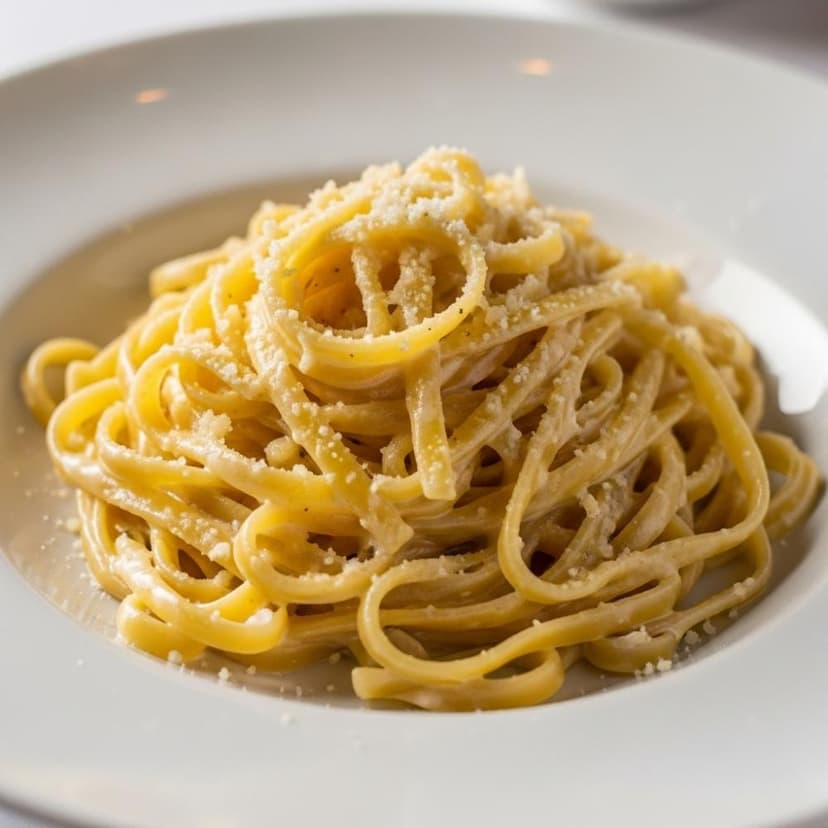
Classic Fettuccine Alfredo
A rich and creamy Italian-American pasta dish featuring tender fettuccine noodles coated in a luxurious sauce made with butter, heavy cream, and Parmesan cheese. A comforting meal for two.
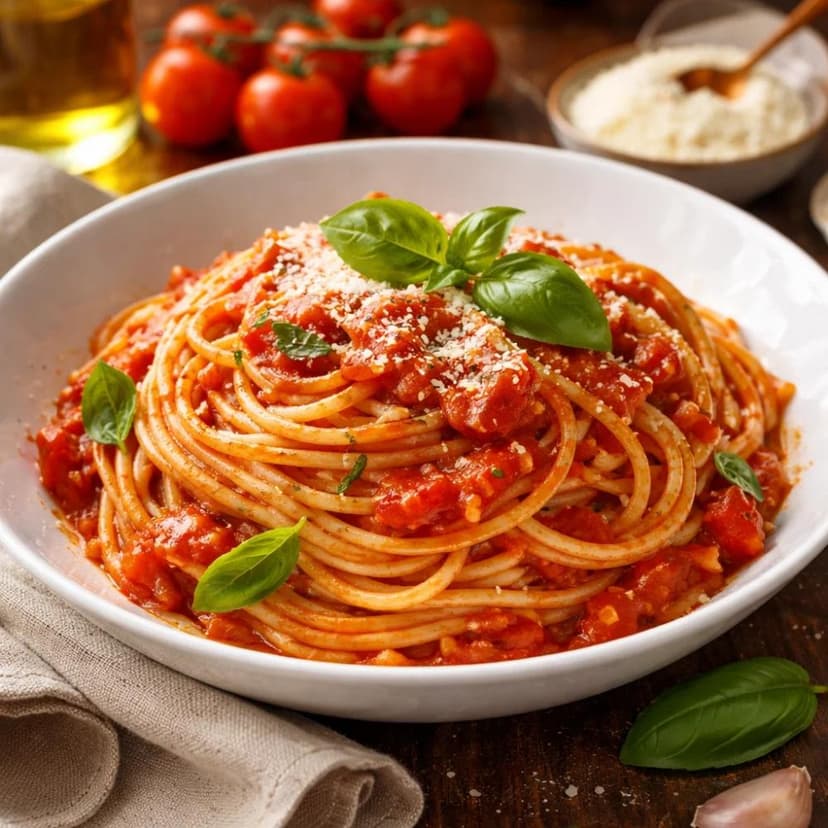
Pasta al Pomodoro (Simple Italian Tomato Pasta — 20 Minutes)
The definitive Italian tomato pasta: silky, sweet-savoury San Marzano tomato sauce tossed with al dente pasta and finished with fresh basil and a drizzle of olive oil. Perfect simplicity in 20 minutes.
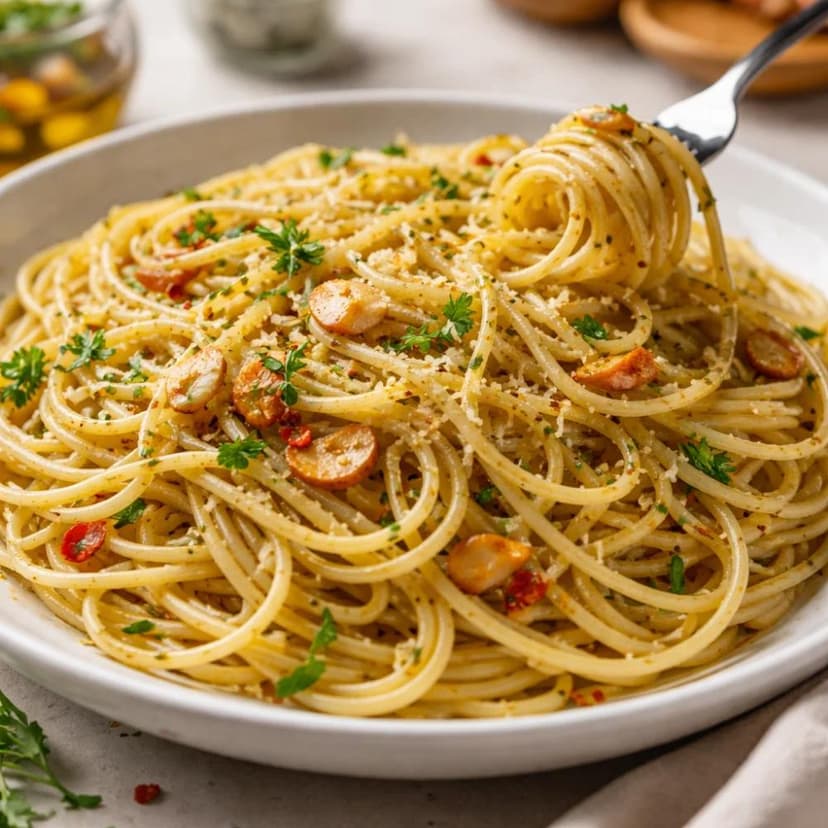
Spaghetti Aglio e Olio (Garlic and Olive Oil Pasta — 4 Ingredients)
Rome's simplest pasta: spaghetti tossed in golden garlic-infused olive oil with chilli and parsley. Four ingredients, 20 minutes, zero compromise on flavour.
Cacio e pepe is one of Rome's classic pasta sauces, all built on emulsifying a few ingredients with starchy water. Once you have this one down, these related Italian pastas use the same fundamentals - fat, starch, and restraint - to turn a short ingredient list into a glossy sauce.
If you love spontaneous Italian dinners, check out our interactive
Random Recipe GeneratorFrequently Asked Questions
Because the pan or water is too hot. The casein protein in Pecorino Romano seizes above roughly 65°C (150°F), snapping from smooth to lumpy while the fat splits out. Let the pasta water cool for a minute, keep enough starchy liquid in the pan, and combine the cheese off the heat to keep it creamy.
Authentic cacio e pepe uses Pecorino Romano, a sharp, salty sheep's-milk cheese - 'cacio' is the Roman word for it. Some cooks blend in a little Parmigiano to soften the bite, but traditional versions are pure Pecorino.
Yes - authentic cacio e pepe never contains cream. The creaminess comes entirely from emulsifying Pecorino with the starch in your pasta cooking water. Cream is a shortcut that masks a broken sauce rather than fixing the technique.
Start by making a paste of about 100 g of finely grated Pecorino to 60 to 80 ml of warm pasta water for two servings, then loosen with more starchy water until the sauce ribbons off a spoon.
Can't decide what to make? Let our generator pick for you instantly.
Generate a Random Recipe →Tags:
Ready to Try These Recipes?
Browse our complete recipe collection for more cooking inspiration!