Sazerac
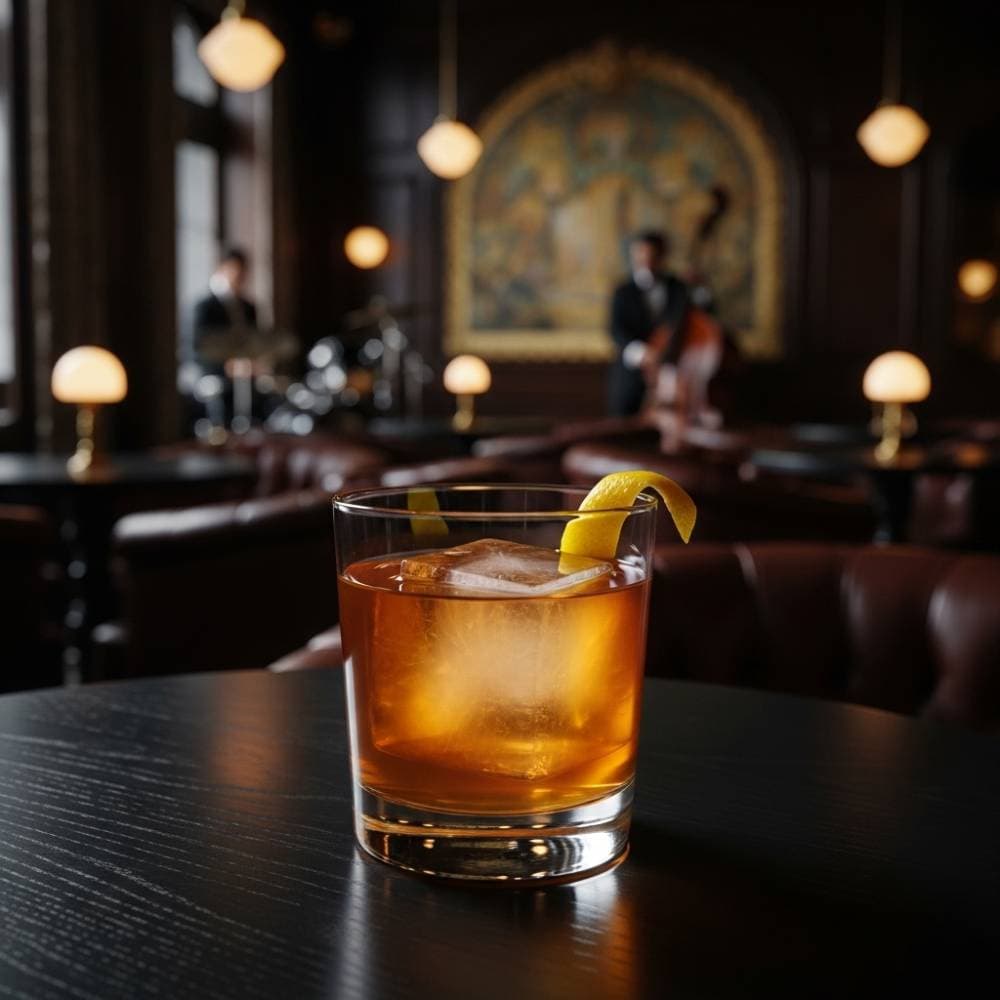
A potent and complex New Orleans classic, the Sazerac is a rye whiskey (or cognac) based cocktail, famously prepared with a Pernod or absinthe rinse, Peychaud's Bitters, a sugar cube, and a lemon peel.
Prep Time
6 min
ABV
35-40% ABV
Servings
Flavor Profile
The Quick Answer
A Sazerac goes wrong when the absinthe rinse overwhelms everything or the drink is served under-diluted and hot. Coat the chilled glass with absinthe and discard the excess, then stir the rye, sugar and Peychaud's with ice for a full 30 seconds before straining into the empty rinsed glass - no ice goes into the served drink.
Why is a Sazerac stirred and served without ice?
It is an all-spirit, spirit-forward drink with no citrus juice or cream, so it follows the stir rule: stirring chills and dilutes without aerating, keeping the rye whiskey clear, silky and cold rather than cloudy and frothy. The 30-second stir is doing precise work - it adds just enough meltwater to round off the rye's high-proof heat and bind the sugar and Peychaud's into the spirit. Serving it without ice in the glass is deliberate: the dilution has already been dialed in during the stir, and added ice would keep watering it down, drowning the careful balance of strong rye, sweet sugar and the herbal Peychaud's into blandness.
Why do you rinse the glass with absinthe instead of pouring it in?
Absinthe is intensely aromatic and anise-heavy, dominated by anethole, the same compound in fennel and licorice. Even a quarter ounce poured into the drink would steamroll the rye and bitters, so the rinse leaves only a thin aromatic film clinging to the chilled glass. You smell the absinthe and taste a whisper of it on the lips while the rye and Peychaud's carry the body - aroma and flavor working on separate channels. Anethole is also poorly water-soluble, which is why absinthe louches cloudy with water; rinsing keeps it as a clear scented coating rather than muddying the drink. Expressing the lemon peel's oils on top adds a final bright citrus aromatic without juice acidity.
Not sure what to cook next? Let the generator pick your next dish in one click.
Random Recipe GeneratorWhat is this drink?
The Sazerac is arguably America's oldest cocktail, originating in New Orleans in the 1800s. It is a spirit-forward sipper of rye whiskey (or cognac), Peychaud's bitters, and a Herbsaint-rinsed glass.
Why you'll love it
The Sazerac is the ultimate sophisticated sip — intensely aromatic, complex, and warming. The anise-rinsed glass adds a mysterious herbal backdrop to every sip.
When to serve
Serve at a formal dinner party aperitif, a New Orleans-themed evening, or any occasion that calls for a truly classic American cocktail.
Pro tip
Rinse the glass with Herbsaint (or Pernod) and discard the excess — this leaves just a whisper of anise that makes the Sazerac unmistakable.
Rye Whiskey
The backbone of the modern Sazerac — spicy, dry, and robust, it stands up beautifully to the bitters and anise rinse.
Peychaud's Bitters
The signature ingredient created by Antoine Peychaud in New Orleans — lighter and more floral than Angostura, with cherry and anise notes.
Herbsaint (or Pernod)
The anise liqueur used to rinse the glass — its ghost of licorice aroma is essential to the Sazerac experience.
Sugar Cube
Just a touch of sweetness to balance the spice of the rye and the intensity of the bitters.
Swap Options
Use cognac instead of rye for the original 19th-century Sazerac style. Pernod or absinthe can substitute for Herbsaint. Angostura bitters can replace Peychaud's in a pinch, though the flavor profile changes significantly.
Directions
Step 1
Chill glass and prepare rinse
Chill an old fashioned glass (or rocks glass) by filling it with ice water and letting it sit. In a separate mixing glass, add 0.25 ounce (7.5 ml) absinthe or Pernod. Swirl it around to coat the inside of the chilled old fashioned glass, then discard the excess liquid.
Pro Tip
- →The absinthe rinse provides a subtle aromatic complexity without overpowering the drink.
Step 2
Prepare sugar and bitters
In the mixing glass, add 2 teaspoons of simple syrup (or muddle 1 sugar cube with a few drops of water until dissolved). Add 3 dashes of Peychaud's Bitters and 1 dash of Angostura bitters (if using).
Pro Tip
- →Peychaud's Bitters are crucial for the Sazerac's unique flavor profile.
Step 3
Add whiskey and ice
Pour 2 ounces (60 ml) of rye whiskey (or cognac) into the mixing glass. Fill the mixing glass with 1 serving of ice.
Pro Tip
- →Rye whiskey is the more common choice today, offering a spicier backbone.
Step 4
Stir and garnish
Stir the mixture well for about 30 seconds until thoroughly chilled and properly diluted. Discard the ice water from the rinsed old fashioned glass. Strain the cocktail into the prepared glass. Express the oils from 1 lemon peel over the drink by twisting it, then discard the peel (do not drop it in the drink).
Pro Tip
- →The lemon peel is expressed for its aroma, not to be left in the drink.
Different ways to make this drink your own
Cognac Sazerac
Replace rye whiskey with Cognac to recreate the original 19th-century recipe. The brandy's dried fruit, vanilla, and floral character creates a softer, more refined Sazerac that feels more clearly French in origin and suits those who prefer brandy to whiskey.
Tennessee Sazerac
Use Tennessee whiskey (Jack Daniel's or George Dickel) instead of rye for a mellower, charcoal-filtered variation. The Tennessee whiskey's characteristic smoothness creates a gentler Sazerac with less spice and more vanilla sweetness.
Mezcal Sazerac
Substitute half the rye with an equal measure of lightly smoky mezcal. The agave smoke interacts dramatically with the anise rinse and Peychaud's bitters, creating an intensely complex, experimental variation for adventurous drinkers.
Tools that make this drink come together
Mixing Glass
A heavy mixing glass is used for stirring — the Sazerac is strictly a stirred cocktail, never shaken. The mixing glass's size allows ice to circulate freely, producing the right dilution and temperature without aerating the drink.
Bar Spoon
Stir for 30 to 40 seconds with a long bar spoon, rotating smoothly against the inner wall. This produces a silky, crystal-clear Sazerac at the correct temperature and dilution — the technique is central to the drink's character.
Rocks Glass (Two Glasses)
Use two rocks glasses: one chilled in the freezer for serving, and one for the Herbsaint rinse. Coat the serving glass with Herbsaint, discard the excess, then strain the stirred whiskey mixture into the anise-rinsed glass.
Can't Find These?
Stir in any large jug or tumbler with a long spoon. The Herbsaint rinse can be done with any small pour of anise spirit — swirl it around a rocks glass and tip it out. If Herbsaint is unavailable, a few drops of absinthe work identically.
The right glass makes a real difference
Rocks Glass (Old Fashioned Glass)
A Sazerac is served in a chilled rocks glass — no ice, no garnish beyond a lemon peel expressed over the surface. The short, wide glass is rinsed with Herbsaint or absinthe, leaving just a whisper of anise that transforms every sip. Serving without ice keeps the drink concentrated and strong. A properly chilled glass maintains the temperature long enough to drink comfortably without warming the whiskey.
Alternatives
A small cocktail glass or coupe can be used for a more elegant, stemmed presentation. Any short, sturdy tumbler works as a practical substitute. Avoid tall glasses — the Sazerac is a compact, spirit-forward cocktail that belongs in a low, wide vessel.
Perfect food pairings to complete the experience
Chargrilled Oysters
Chargrilled Louisiana oysters with garlic butter and Parmesan echo the Sazerac's New Orleans origins beautifully. The smoky, briny richness of the oysters pairs naturally with the rye whiskey's spice and the anise rinse's aromatic quality.
Andouille Sausage
Spiced Cajun andouille sausage with its deep smoke and paprika character matches the Sazerac's bold rye and bitters profile. A classic New Orleans ingredient pairing that celebrates the cocktail's Louisiana roots.
Dark Chocolate
70% dark chocolate with its bitter, fruity notes complements the Peychaud's bitters and the warm spice of rye whiskey. A small square between sips creates a luxurious tasting experience with the Sazerac's complex herbal and anise background.
Pork Crackling
Crispy, salty pork crackling provides a bold, rich contrast to the Sazerac's spirit-forward intensity. The saltiness amplifies the whiskey's sweetness while the crunch provides a satisfying textural counterpoint to the smooth, cold cocktail.
Prep in advance for effortless serving
Pre-Batch the Whiskey Base
Combine rye, simple syrup, and Peychaud's bitters in a sealed bottle in the correct proportions. Refrigerate up to a week — the flavours integrate over time. Stir individual portions with ice and perform the Herbsaint rinse per serving.
Chill the Glasses
Place rocks glasses in the freezer at least an hour before serving. A frost-cold glass is critical for a Sazerac served without ice — the chilled glass keeps the drink cold long enough to drink slowly and appreciate its complexity.
Pre-Prepare Lemon Peels
Cut lemon peel twists and store in a small airtight container in the fridge up to 6 hours ahead. Express each peel over the glass immediately before serving to release fresh citrus oils — this step must happen at the point of service for maximum aroma.
Measure the Herbsaint in Advance
Pour a small amount of Herbsaint into a dropper bottle for precise, easy rinsing. A few drops swirled around a rocks glass is all that is needed — having it in a controlled bottle prevents over-pouring the anise spirit.
Common questions answered by our bartenders
Got Leftovers?
Turn what you already have in your fridge into delicious meals. Our AI-powered generator creates personalized recipes from your ingredients.
Browse more like this:
Please drink responsibly. All drink recipes are intended for those of legal drinking age in their country. TheRandomRecipe does not promote excessive alcohol consumption. Alcohol Responsibility Policy