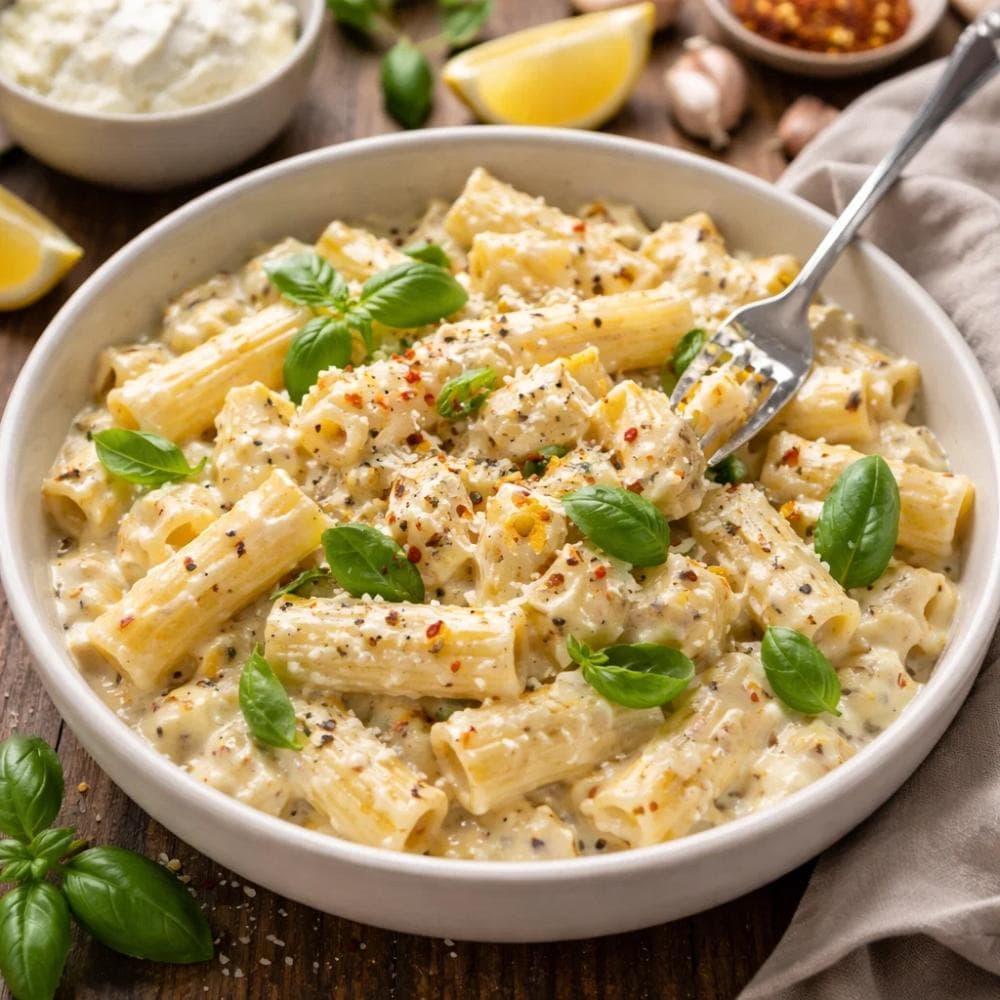
Cottage Cheese Pasta
Creamy, high-protein pasta sauce made by blending cottage cheese completely smooth. 28g protein per serving, ready in 20 minutes, no heavy cream needed.
You'll likely need to buy
Likely in your pantry
Planning the week? Start with a free 7-day dinner plan
Seven tested weeknight dinners from our kitchen, with one combined shopping list. Free, and no sign-up needed to see it.
Step-by-Step Instructions
Cook the pasta
Bring a large pot of generously salted water to a rolling boil. Add the pasta and cook according to packet instructions until al dente — it should have a slight bite and not be fully soft. Before draining, scoop out at least 60ml (4 tablespoons) of the starchy pasta cooking water and set aside. Drain the pasta.
Chef's Tips
- ›Salt the pasta water until it tastes noticeably salty — this is the only opportunity to season the pasta itself.
- ›Reserve more cooking water than you think you need. The starch in the water is what helps the sauce cling to the pasta.
Blend the sauce
While the pasta cooks, combine the cottage cheese, grated Parmesan, garlic cloves, olive oil, salt, black pepper, and 2 tablespoons of the reserved pasta cooking water in a blender or food processor. Blend on high for 60–90 seconds until the sauce is completely smooth and creamy with no lumps. Taste and adjust seasoning.
Chef's Tips
- ›Blending cottage cheese completely transforms its texture — the curds disappear entirely and it becomes as smooth as a cream sauce.
- ›Full-fat cottage cheese produces a richer, creamier sauce. Low-fat versions work but produce a slightly thinner result.
Combine and serve
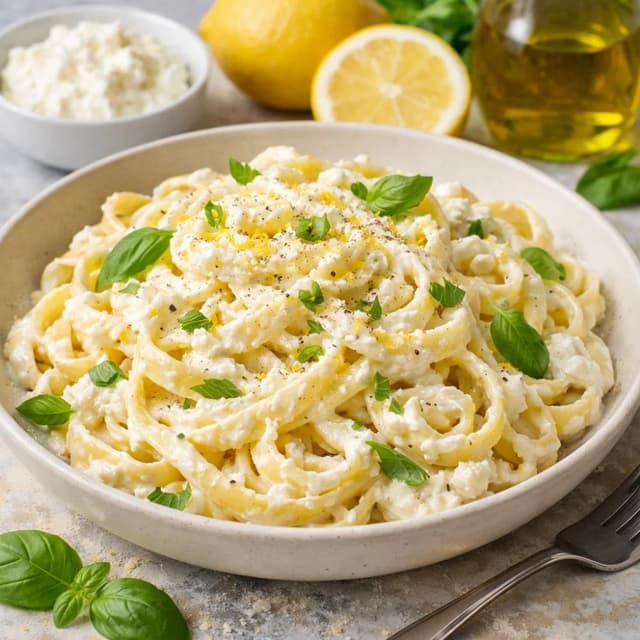
Return the drained pasta to the pot (off the heat or on very low heat). Pour the blended cottage cheese sauce over the pasta and toss immediately to coat thoroughly. The residual heat from the pasta will warm the sauce. If the sauce is too thick, add the remaining pasta water a tablespoon at a time and toss until you reach your desired consistency. Divide into bowls, top with extra Parmesan, fresh basil, and chilli flakes.
Chef's Tips
- ›Do not boil the sauce — high heat can cause the proteins in the cottage cheese to separate and turn grainy. The residual pasta heat is sufficient.
- ›Serve immediately — the sauce thickens as it sits and cools.
About This Recipe
What is this dish?
Cottage cheese pasta is a high-protein take on creamy pasta sauce that blends cottage cheese until completely smooth, creating a rich, velvety coating indistinguishable from heavy cream-based alternatives. The recipe went viral as a healthier, protein-packed swap for traditional Alfredo or cream pasta sauces, and it genuinely delivers: 28g of protein per serving, ready in 20 minutes, and requiring nothing more than a blender.
Why you'll love it
It tastes indulgent but is packed with protein. A single serving delivers 28g of protein — more than most chicken dishes — while staying under 430 calories. The sauce is genuinely creamy and smooth once blended, with no cottage cheese taste or texture remaining. It is one of the fastest high-protein meals available: pasta takes 10 minutes, blending takes 2 minutes.
When to serve
A perfect weeknight dinner when you want something satisfying and protein-rich without effort. Works for meal prep — the sauce stores well for up to 24 hours. Great for post-workout meals where high protein intake is a priority.
Quick tips
Use full-fat cottage cheese for the richest result. Blend for at least 60 seconds. Reserve pasta water before draining. Combine off the heat to prevent the sauce from seizing.
Ingredient Highlights
Cottage Cheese
The star ingredient — when blended completely, cottage cheese curds disappear entirely and the mixture becomes as smooth as double cream. Full-fat cottage cheese is highest in protein and produces the richest sauce. A 250g portion provides approximately 25g of protein — an exceptionally high return for a pasta sauce.
Parmesan
Added to the blender alongside the cottage cheese to contribute saltiness, umami depth, and a sharpness that balances the mild cottage cheese. It also helps thicken the sauce slightly. Always use freshly grated rather than pre-grated — pre-grated Parmesan contains cellulose anti-caking agents that prevent it from melting smoothly.
Pasta Cooking Water
The starchy water in which pasta was cooked is liquid gold — it contains dissolved starch from the pasta that helps the sauce emulsify and cling to the pasta rather than pooling at the bottom of the bowl. Never skip this step.
Substitution Options
Ricotta cheese can replace cottage cheese for a slightly richer, less tangy result — blend thoroughly the same way. Nutritional yeast (3 tablespoons) replaces Parmesan for a vegan version with similar umami depth, though the result is less creamy. Pecorino Romano replaces Parmesan for a sharper, saltier flavour. Lemon zest (1 teaspoon) can be added to the blender for brightness.
Chef's Tips
Techniques that separate good from great
Blend the garlic raw into the sauce
Adding raw garlic directly into the blender with the cottage cheese infuses the sauce with a sharp, pungent garlic flavour throughout. For a milder, sweeter garlic note, roast the garlic first (wrap in foil with olive oil, 200°C for 25 minutes until golden and soft). Both approaches work — raw gives more punch, roasted gives more sweetness and depth.
Use the sauce as a base and customise
The cottage cheese sauce is neutral enough to carry many flavours. Stir through wilted spinach and lemon zest for a green version. Add roasted cherry tomatoes for a sweet, jammy version. Toss through crispy bacon or pancetta for richness. Mix in sun-dried tomatoes and olives for a Mediterranean slant. The base recipe is a blank canvas.
Nutrition Facts
Per serving · Estimated values
* Estimated per serving based on a 2,000 calorie diet.
Equipment Needed
As an Amazon Associate we earn from qualifying purchases — at no extra cost to you.
Quick Tips
- The key to a lump-free sauce is blending the cottage cheese fully — at least 60 seconds in a high-powered blender. A food processor works but may take slightly longer to achieve a completely smooth result.
- Add the sauce to the pasta off the heat. Cottage cheese proteins seize and become grainy if overheated — the warmth of the freshly drained pasta is exactly the right temperature.
- The pasta water is essential — it contains dissolved starch that helps the sauce emulsify and cling to each piece of pasta.
Recipe Variations
Different ways to make this dish your own
Spinach and Lemon Cottage Cheese Pasta
Add 2 large handfuls of fresh spinach to the blender along with the cottage cheese. Add the zest of 1 lemon. The spinach turns the sauce a vibrant green and adds iron; the lemon adds brightness.
Roasted Tomato Cottage Cheese Pasta
Roast 300g of cherry tomatoes with olive oil and salt at 200°C for 20 minutes until jammy and caramelised. Stir through the finished pasta alongside the cottage cheese sauce.
Spicy Arrabbiata Cottage Cheese Pasta
Add 1 teaspoon of chilli flakes and 2 tablespoons of tomato paste to the blender. The tomato paste adds colour and a rich, slightly sweet base note alongside the heat from the chilli.
What to Serve With
Perfect pairings to complete the meal
With Garlic Bread
Simple garlic bread alongside for scooping up the extra sauce.
With a Simple Green Salad
A lightly dressed rocket or green salad balances the richness of the pasta.
Topped with Crispy Chickpeas
Roasted crispy chickpeas scattered over the top add crunch and additional protein.
Storage & Reheating
Keep it fresh and plan ahead
Refrigerator
Store leftovers in an airtight container for up to 2 days. The pasta will absorb the sauce and become thicker when cold.
Freezer
Not recommended — the cottage cheese sauce can separate and become grainy when frozen and thawed.
Make-Ahead
The sauce can be blended up to 24 hours ahead and stored separately in the fridge. Cook pasta fresh and combine when ready.
Reheating
Reheat gently in a saucepan over low heat with a splash of water or milk, stirring constantly. Do not microwave on high — the sauce can become grainy. Alternatively, add a little cold water and stir through at room temperature before reheating.
Cooking tonight?
Get a month of dinners like this — done for you
30 chef-tested dinners mapped to the month, plus 5 ready-to-shop grocery lists. One-time $8.99 — 30 dinners planned for you, zero nightly decisions.
See the 30-Day Plan →The Quick Answer
The classic ruin is a grainy, curdled sauce where the cottage cheese splits into rubbery flecks instead of staying creamy, caused by direct heat tightening its casein proteins. Blend the cheese completely smooth, then combine it with the pasta off the heat using only residual warmth, so the proteins relax around the pasta without seizing.
Why does my cottage cheese sauce turn grainy and curdled?
Cottage cheese is essentially loose curds of casein protein suspended in whey. When you apply direct stovetop heat, those casein strands contract and bond tightly to each other, squeezing out moisture and forming the grainy, rubbery texture of overcooked dairy. That is why the sauce goes onto the pasta off the heat: the residual warmth of freshly drained pasta sits well below the temperature that makes casein seize, so the blended cheese stays smooth. Blending first matters too, because it breaks the curds into a uniform suspension with the Parmesan, leaving no large protein clumps that could clench together and turn the sauce lumpy.
Why does blending cottage cheese remove the tang and lumps?
Whole cottage cheese reads as tangy and chunky because your tongue meets discrete acidic curds with whey in between. A high-speed blend for 60-90 seconds disrupts those curds into microscopic particles, smoothing the texture completely and dispersing the acidity evenly so it registers as gentle creaminess rather than sharp tang. The 60g of Parmesan adds glutamate-driven savouriness and its own fat, which further masks the residual sourness and rounds the sauce. The raw garlic cloves blend in at the same time, mellowing into the mixture instead of staying harsh. Add the reserved starchy pasta water during blending to loosen the sauce to a pourable, clinging consistency.
Not sure what to cook next? Let the generator pick your next dish in one click.
Random Recipe GeneratorGot Leftovers?
Turn what you already have in your fridge into delicious meals. Our AI-powered generator creates personalized recipes from your ingredients.
Go Deeper
Master the Culinary Science
Every recipe is a doorway. Our 7 Mastery Guides give you the science, technique, and framework to understand why food works — not just how to follow steps.
AI-Powered
Have Ingredients? Generate a Recipe.
Tell our AI what's in your fridge and get a custom recipe with image in seconds. No waste, no boredom.
Try the AI Recipe Generator →You Might Also Like
Discover more delicious recipes similar to what you're cooking