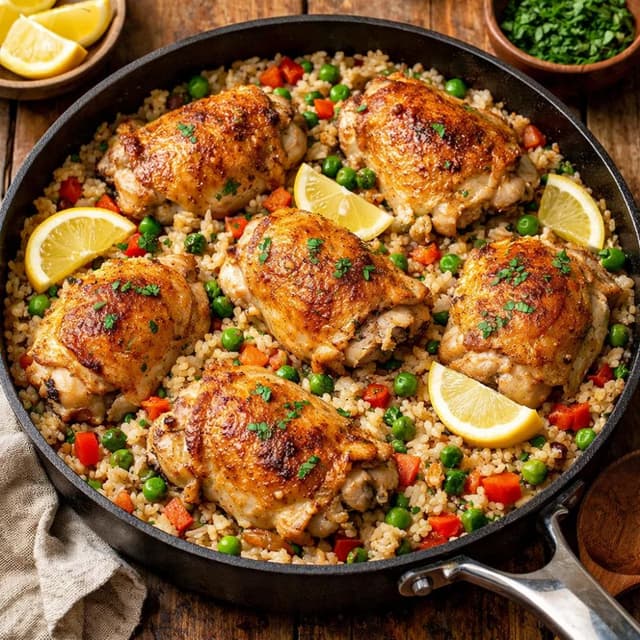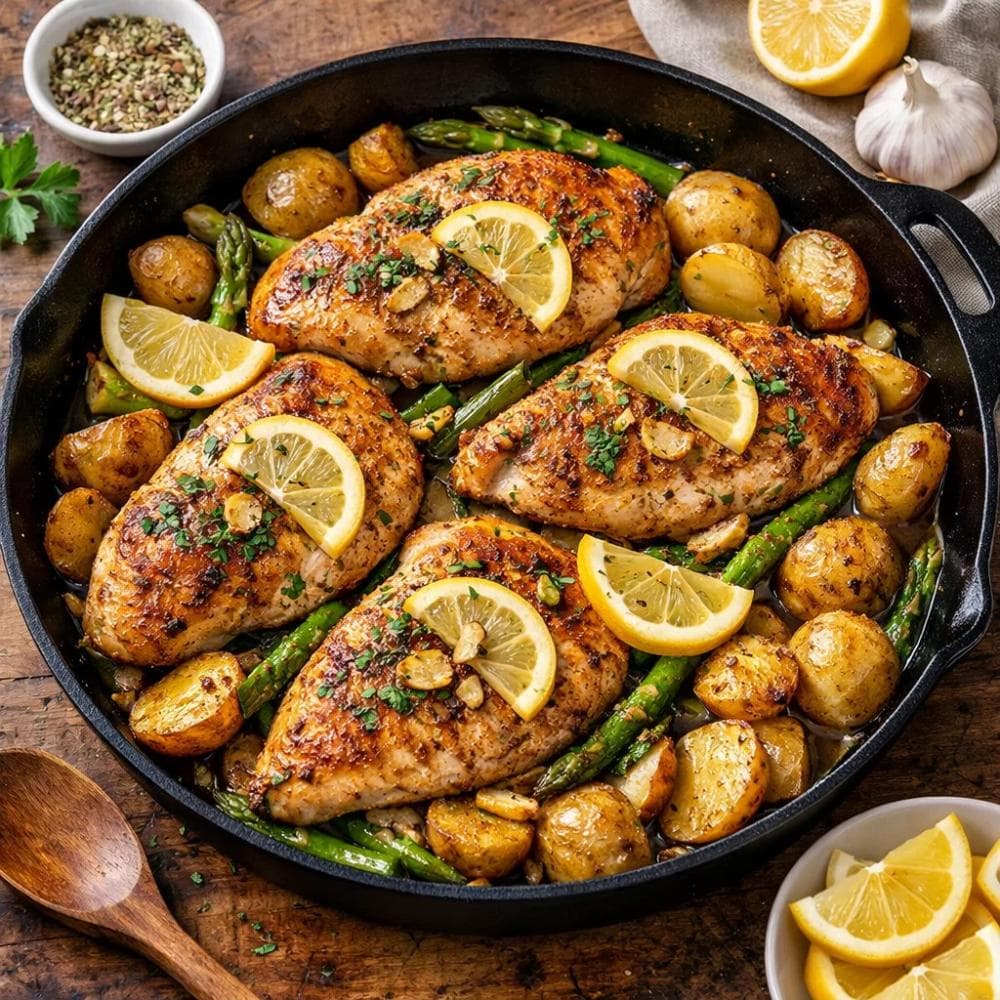
One-Pan Lemon Garlic Chicken
Juicy chicken thighs seared golden in one pan, finished with a bright lemon-garlic butter sauce. Under 30 minutes, one skillet, minimal washing up.
You'll likely need to buy
Likely in your pantry
Planning the week? Start with a free 7-day dinner plan
Seven tested weeknight dinners from our kitchen, with one combined shopping list. Free, and no sign-up needed to see it.
Step-by-Step Instructions
Season and sear the chicken
Pat the chicken thighs completely dry with kitchen paper — moisture is the enemy of a good sear. Season all over with salt, black pepper, and smoked paprika, rubbing the seasoning evenly into the skin and underside. Heat the olive oil in a large oven-safe skillet or cast-iron pan over medium-high heat until shimmering. Place the chicken thighs skin-side down in the pan — do not move them. Sear for 8–10 minutes until the skin is deeply golden and releases easily from the pan. Flip and sear the underside for 3 minutes.
Chef's Tips
- ›Patting the chicken dry is essential — wet skin steams rather than crisps.
- ›Do not move the chicken while it sears — it will release naturally when a proper crust has formed. If it resists, it needs more time.
Build the sauce
Remove the chicken from the pan and set aside. Reduce the heat to medium. Add the sliced garlic to the rendered fat in the pan and cook, stirring, for 60–90 seconds until golden and fragrant — watch carefully as garlic burns quickly. Pour in the chicken stock and lemon juice, scraping the bottom of the pan with a wooden spoon to lift all the caramelised bits (this is flavour). Stir in the lemon zest and thyme. Bring to a simmer.
Chef's Tips
- ›The browned bits on the bottom of the pan (fond) contain the most flavour — deglazing with stock lifts them into the sauce.
- ›Keep the heat at medium when adding garlic — the fat in the pan is hot from searing and can burn garlic immediately on high heat.
Finish and serve
Return the chicken thighs to the pan, skin-side up. Reduce heat to medium-low, cover loosely, and cook for 10–12 minutes until the chicken is cooked through (internal temperature of 74°C / 165°F). Remove from heat, add the butter and swirl the pan until it melts into the sauce. Spoon the sauce over the chicken. Scatter over fresh parsley and serve directly from the pan.
Chef's Tips
- ›Keeping the chicken skin-side up while finishing ensures the skin stays crispy and does not soften in the sauce.
- ›The butter added at the end enriches and thickens the sauce — swirl rather than stir to emulsify it into the pan juices.
About This Recipe
What is this dish?
One-pan lemon garlic chicken is a weeknight staple: bone-in chicken thighs seared until the skin is golden and crispy, then finished in a bright, buttery lemon-garlic sauce — all in a single pan in under 30 minutes. The technique is straightforward, the ingredients are pantry staples, and the result tastes like a restaurant dish with minimal effort.
Why you'll love it
One pan, 30 minutes, and genuinely impressive results. The method of searing skin-side down without moving the chicken produces a crackling golden crust that most people cannot achieve at home. The pan sauce made from the chicken's own rendered fat, stock, lemon juice, and garlic is deeply flavourful and takes 3 minutes to make. The whole dish uses one pan, which means one pan to wash.
When to serve
An ideal weeknight dinner for 2–4 people. Works for casual entertaining because it looks and tastes more impressive than its effort level suggests. Pairs with almost any side — potatoes, rice, bread, or greens.
Quick tips
Pat the chicken completely dry before searing. Do not move the chicken while it sears. Build the sauce in the same pan. Keep skin-side up while finishing to maintain crispiness.
Ingredient Highlights
Bone-In, Skin-On Chicken Thighs
The specific cut matters here. Bone-in thighs take longer to cook than breasts but the bone conducts heat evenly and keeps the meat moist. The skin, when seared properly, provides the defining textural element — crispy, golden, and flavourful. The fat rendered from the skin becomes the base of the sauce.
Fresh Lemon
Both lemon juice and zest are used — juice provides acidity and brightness, zest provides the intense floral-citrus fragrance from the lemon's essential oils. Using both gives a more complete, layered lemon flavour than juice alone.
Garlic
Six cloves sliced thinly and cooked in the rendered chicken fat until golden — the gentle cooking mellows the raw sharpness and develops a sweet, nutty flavour that forms the aromatic backbone of the sauce.
Substitution Options
Boneless thighs replace bone-in with a shorter cook time. Chicken breast can be used with careful temperature monitoring. Lime juice replaces lemon juice for a more citrus-forward, slightly sharper result. Rosemary or oregano replace thyme. White wine (60ml) replaces half the chicken stock for a more complex sauce. Coconut oil replaces butter at the end for a dairy-free version.
Chef's Tips
Techniques that separate good from great
Dry brine the chicken for extra juicy meat
For the best possible result, season the chicken thighs with salt and leave uncovered in the refrigerator for at least 1 hour (up to overnight). This draws moisture to the surface, which is then reabsorbed — seasoning the meat from within. The skin also dries out further, producing an even crispier result when seared. The improvement in both seasoning and texture is significant.
Finish in the oven for larger quantities
If cooking 6 or more chicken thighs, the stovetop method becomes crowded and the chicken will steam rather than finish evenly. After building the sauce, transfer the pan to an oven preheated to 200°C (400°F) and bake for 15 minutes instead of finishing on the stovetop. This scales the recipe without compromising quality.
Nutrition Facts
Per serving · Estimated values
* Estimated per serving based on a 2,000 calorie diet.
Equipment Needed
- Large oven-safe skillet or cast-iron pan (28cm / 11-inch minimum)
- Kitchen thermometer (recommended)
- Kitchen paper
As an Amazon Associate we earn from qualifying purchases — at no extra cost to you.
Quick Tips
- Use bone-in, skin-on chicken thighs — they are far more forgiving than breast meat and the bone and skin provide flavour and keep the meat juicy throughout the cooking process.
- Get the pan properly hot before adding the chicken. A shimmering, slightly smoking pan produces the golden sear that gives the dish its flavour. A pan that is not hot enough will steam the chicken rather than sear it.
- Make the sauce in the same pan immediately after removing the chicken — the rendered chicken fat and fond (caramelised bits) are the foundation of the sauce's flavour.
Recipe Variations
Different ways to make this dish your own
Lemon Garlic Chicken with Capers
Add 2 tablespoons of drained capers to the sauce along with the lemon juice. The briny, pungent capers add a piquant note that works brilliantly against the richness of the chicken.
Lemon Garlic Chicken with Olives and Tomatoes
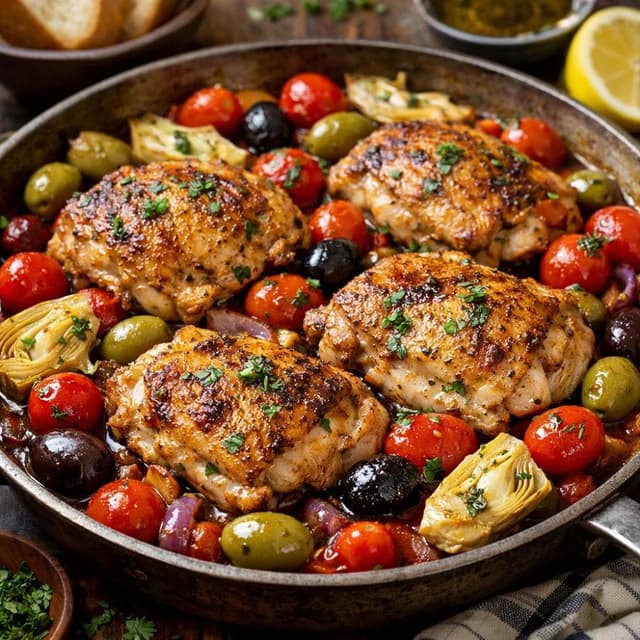
Add 100g of halved cherry tomatoes and 50g of pitted Kalamata olives to the pan when returning the chicken. The tomatoes collapse into the sauce and the olives add a Mediterranean saltiness.
Creamy Lemon Garlic Chicken
After building the sauce, add 60ml (1/4 cup) of double cream and stir to combine before returning the chicken. The result is a richer, creamier sauce — reduce the lemon juice slightly to balance the cream.
What to Serve With
Perfect pairings to complete the meal
With Roasted Potatoes
Roasted potatoes are the natural partner — they absorb the pan sauce and the textures complement each other.
With Steamed Rice
Plain steamed rice soaks up the lemon-garlic sauce perfectly and provides a neutral base.
With Crusty Bread
A thick slice of crusty sourdough or ciabatta for mopping the pan sauce — one of the most satisfying ways to eat this dish.
Storage & Reheating
Keep it fresh and plan ahead
Refrigerator
Store leftovers in an airtight container for up to 3 days. The skin will soften but the flavour remains excellent.
Freezer
Freeze cooked chicken (without sauce) for up to 2 months. The sauce does not freeze well due to the butter emulsion separating on thawing.
Make-Ahead
The chicken can be seasoned and refrigerated uncovered for up to 24 hours ahead (dry brine) for better flavour. Cook fresh on the day.
Reheating
Reheat gently in a covered pan over medium-low heat with a splash of stock or water for 8–10 minutes. Alternatively, reheat in the oven at 180°C (350°F) for 12–15 minutes. The skin will not return to its original crispiness.
Cooking tonight?
Get a month of dinners like this — done for you
30 chef-tested dinners mapped to the month, plus 5 ready-to-shop grocery lists. One-time $8.99 — 30 dinners planned for you, zero nightly decisions.
See the 30-Day Plan →The Quick Answer
The usual disappointment is flabby, pale skin instead of a crisp golden crust, caused by leaving the thighs wet and crowding them in a pan that is not hot enough. Pat the skin bone-dry, get the oil shimmering, and leave the thighs untouched skin-side down so the fat renders and the surface browns before you build the lemon sauce.
Why does my chicken skin come out soft instead of crispy?
Crisp skin depends on two things: driving off surface water and rendering the fat layer beneath it. Wet skin spends the first minutes of cooking boiling off moisture, which cools the pan and prevents browning, so patting it bone-dry is essential. Once dry skin meets a shimmering pan, the heat first renders the subcutaneous fat into liquid, then the Maillard reaction between proteins and sugars builds the deep golden colour and savoury flavour. Moving the thighs interrupts both processes and tears the forming crust. Leaving them undisturbed for the full 8-10 minutes lets the skin release naturally once it has crisped, which is the sign it is ready to flip.
Why do I add the butter at the very end of the sauce?
The two tablespoons of butter go in off the heat to finish the sauce by mounting it, a technique that uses cold butter's emulsified structure to thicken and gloss a pan liquid. Butter is fat and water held together by milk-protein membranes; swirled into the warm stock and lemon juice without boiling, those droplets stay suspended and give the sauce a silky, slightly thickened body that coats the chicken. If you add butter while the pan is still bubbling hard, the emulsion breaks and you get a thin, oily sauce. The lemon juice also goes in earlier so its acid can deglaze the fond, lifting the caramelised bits that flavour the whole dish.
Not sure what to cook next? Let the generator pick your next dish in one click.
Random Recipe GeneratorGot Leftovers?
Turn what you already have in your fridge into delicious meals. Our AI-powered generator creates personalized recipes from your ingredients.
Go Deeper
Master the Culinary Science
Every recipe is a doorway. Our 7 Mastery Guides give you the science, technique, and framework to understand why food works — not just how to follow steps.
AI-Powered
Have Ingredients? Generate a Recipe.
Tell our AI what's in your fridge and get a custom recipe with image in seconds. No waste, no boredom.
Try the AI Recipe Generator →You Might Also Like
Discover more delicious recipes similar to what you're cooking