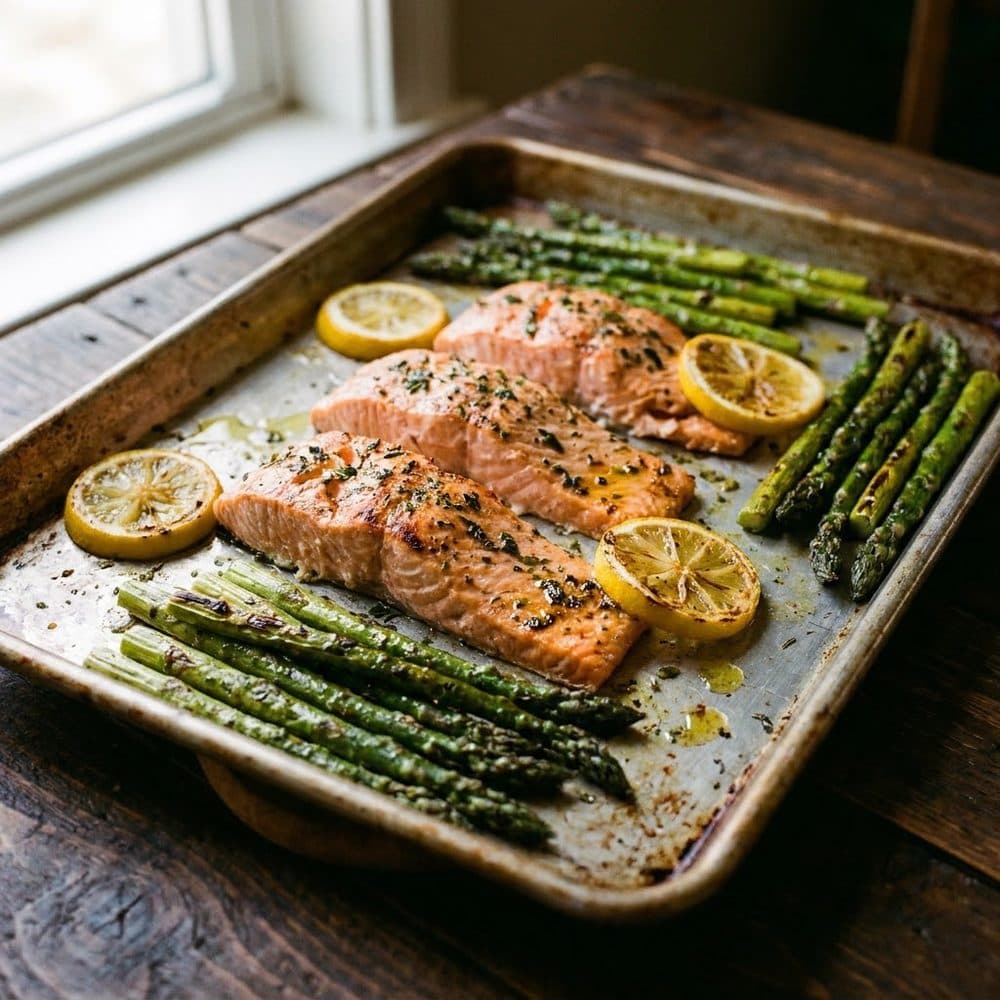
Sheet Pan Salmon and Asparagus
Made it? Rate this recipeSalmon fillets brushed with garlic lemon butter and topped with thin lemon slices, roasted on one sheet pan alongside olive oil asparagus spears. Both finish in about 15 minutes, making this a simple, high-protein dinner with very little cleanup.
You'll likely need to buy
Likely in your pantry
Planning the week? Start with a free 7-day dinner plan
Seven weeknight dinners from our recipe library, with one combined shopping list. Free; we email you the plan and the list.
Step-by-Step Instructions
Preheat and prepare the pan
Preheat the oven to 400°F (200°C) with a rack in the center. Line a rimmed sheet pan with parchment paper or foil. Take the salmon out of the fridge while the oven heats and pat each fillet dry on all sides with paper towels.
Chef's Tips
- ›Dry salmon takes seasoning better and roasts rather than steams.
- ›Parchment stops the skin sticking if you are using skin-on fillets.
Season the asparagus
Put the asparagus on the pan, drizzle with 1 tablespoon of the olive oil, sprinkle with 1/4 teaspoon of salt and a little pepper, and roll the spears to coat. Arrange them in a single layer down both long sides of the pan, leaving a strip in the middle for the salmon.
Chef's Tips
- ›Thick spears suit the same 12 to 15 minutes as the salmon; pencil-thin spears may be ready in 8 to 10 minutes, so add them partway through or pull them early.
- ›Snap each spear where it bends naturally to remove the woody base.
Make the garlic lemon butter and top the salmon
Stir together the melted butter, remaining 1 tablespoon olive oil, minced garlic, lemon zest, lemon juice, dill, the remaining 1/2 teaspoon salt and the rest of the pepper. Lay the salmon fillets skin-side down in the center of the pan, brush the mixture generously over the tops and sides, and lay two or three lemon slices on each fillet.
Chef's Tips
- ›Keep a little space between fillets so hot air can reach the sides.
- ›Tuck any thin tail ends under so the fillet is an even thickness.
Roast
Roast for 12 to 15 minutes, until the salmon flakes easily with a fork and reads 145°F (63°C) in the thickest part on an instant-read thermometer, and the asparagus is tender with lightly browned tips. Thinner fillets cook faster, so start checking at 10 minutes.
Chef's Tips
- ›USDA guidance for fish is 145°F (63°C); measure at the thickest point of the largest fillet.
- ›For extra color, broil for the last 1 to 2 minutes, watching that the lemon slices and garlic do not burn.
Finish and serve
Spoon any garlic butter from the pan back over the fillets, scatter with chopped parsley, and serve straight from the sheet pan with the asparagus and extra lemon wedges.
Chef's Tips
- ›If you want to serve the salmon without skin, slide a thin spatula between the flesh and the skin; it usually lifts away easily once cooked.
Made it? Rate it
One tap. It helps other cooks pick a dinner.
Want a month of dinners decided?
The 30-Day Dinner Plan: 30 full recipes and 5 weekly shopping lists with the amounts already added up. Cook from your phone with the screen kept awake, or print the whole plan.

Honey Garlic Chicken Thighs

Keto Chicken Parmesan
Korean Beef Rice Bowls
$8.99 once, no subscription. 30-day refund.
About This Recipe
What is this dish?
Sheet pan salmon and asparagus is a one-pan dinner where salmon fillets and asparagus spears roast side by side. The salmon gets a garlic, lemon and dill butter and a few lemon slices on top, and the asparagus is simply oiled and salted so it browns at the tips.
Why you'll love it
Both components cook in the same 12 to 15 minutes at the same temperature, so there is no staggering or second pan. It is naturally gluten-free and high in protein, and cleanup is one sheet of parchment.
When to serve
Serve on weeknights when you want something light, in spring when asparagus is in season, or for a simple dinner for guests that takes almost no hands-on time.
Quick tips
Pat the fish dry, match the asparagus thickness to the fillets, roast at 400°F (200°C), and pull the salmon at 145°F (63°C).
Ingredient Highlights
Salmon Fillets
Center-cut fillets about 1 inch (2.5cm) thick cook most evenly. Skin-on fillets hold together better on the pan, while skinless ones absorb more of the garlic butter.
Asparagus
Roasting at 400°F (200°C) concentrates asparagus flavor and browns the tips. Spear thickness decides the timing, which is why it pays to buy medium to thick spears for this recipe.
Lemon
Lemon goes in three ways here: zest and juice in the butter for flavor, and slices on top that soften and lightly caramelize, adding a gentle citrus note without bitterness.
Substitution Options
Swap salmon for steelhead trout, arctic char or cod (cod fillets are leaner and may need a couple of minutes more depending on thickness; cook to 145°F / 63°C). Replace asparagus with green beans (add 5 minutes) or broccolini. Use olive oil instead of butter to make it dairy-free. Fresh thyme or parsley can replace the dill.
Chef's Tips
Techniques that separate good from great
Score the skin for crispness
If you like crisp skin, place the fillets skin-side up for the first 8 minutes on a lightly oiled pan, then carefully flip, brush with the garlic butter, add the lemon slices and finish roasting. This is fussier, so the skin-down method is the default.
Add a quick sauce
Stir 1/2 cup (120g) plain Greek yogurt with 1 tablespoon chopped dill, a squeeze of lemon and a pinch of salt for a cool sauce that goes well with both the salmon and the asparagus.
Nutrition Facts
Per serving · Estimated values
* Estimated per serving based on a 2,000 calorie diet.
Equipment Needed
- Sheet pan
- Parchment paper or foil
- Small bowl
- Pastry brush or spoon
- Instant-read thermometer
- Thin spatula
Kitchen tools for this recipe
The equipment this recipe is cooked with.
As an Amazon Associate we earn from qualifying purchases.
Quick Tips
- Choose fillets of similar thickness so they all finish at the same time.
- Match the asparagus to the salmon: thick spears roast in about the same time, thin spears need less.
- Do not overcook. Salmon goes from moist to dry quickly once it passes 145°F (63°C).
- Bring the salmon out of the fridge while the oven preheats, but do not leave raw fish at room temperature for more than 30 minutes.
Recipe Variations
Different ways to make this dish your own
Honey Garlic Salmon
Add 1 tablespoon honey and 1 tablespoon soy sauce or tamari to the garlic butter and leave out the dill. Brush on before roasting for a sweeter glaze that browns at the edges.
Pesto Salmon
Spread 1 tablespoon basil pesto over each fillet in place of the garlic butter, then add the lemon slices. Scatter cherry tomatoes around the asparagus for extra color.
Salmon with Potatoes
Roast 1 lb (450g) halved baby potatoes tossed in oil and salt for 20 minutes at 400°F (200°C) first, then push them aside and add the asparagus and salmon to finish together.
What to Serve With
Perfect pairings to complete the meal
Over Rice or Quinoa
A scoop of steamed rice or quinoa soaks up the lemon garlic butter left on the pan.
With Crusty Bread
Warm bread on the side is useful for mopping up the pan juices and makes the meal more filling.
Simple Green Salad
Mixed greens with a lemon vinaigrette echo the citrus on the salmon and keep the meal light.
Storage & Reheating
Keep it fresh and plan ahead
Refrigerator
Store leftover salmon and asparagus in an airtight container for up to 3 days.
Freezer
Cooked salmon can be frozen for up to 2 months, though the texture becomes drier. Asparagus turns soft after freezing and is better eaten fresh.
Make-Ahead
Make the garlic lemon butter and trim the asparagus up to a day ahead and refrigerate. Season and roast the salmon just before serving.
Reheating
Reheat gently at 275°F (135°C) for 10 to 15 minutes until warmed through, or flake leftovers cold into salads and grain bowls to avoid drying the fish out.
Be the first to review this recipe!
Got Leftovers?
Turn what you already have in your fridge into dinner. Add your ingredients and see which of our recipes use the most of them.
Go Deeper
Master the Culinary Science
Every recipe is a doorway. Our 7 Mastery Guides give you the science, technique, and framework to understand why food works — not just how to follow steps.
Cook with what you have
Have Ingredients? Find a Recipe.
Add what's in your fridge and see which of our recipes you can make tonight, and what each one still needs.
Find recipes by ingredient →You Might Also Like
Discover more delicious recipes similar to what you're cooking