How to Fix a Broken Sauce or Dressing in 60 Seconds
A broken sauce isn't ruined. Learn the 60-second rescues for hollandaise, mayonnaise, and vinaigrette - plus the emulsion science that stops them splitting.

The Quick Answer
A sauce breaks when its emulsion collapses and the fat and water separate into an oily, curdled mess. To rescue a warm egg sauce like hollandaise, take it off the heat, whisk a fresh egg yolk with a teaspoon of warm (not hot) water in a clean bowl, then slowly stream the broken sauce back in while whisking. For a split cold vinaigrette, whisk in a teaspoon of Dijon mustard; for broken mayonnaise, slowly blend it into a fresh yolk.
The Chemistry of a Split Emulsion
Can't decide what to make? Let our generator pick for you instantly.
Generate a Random Recipe →Oil and water do not mix: oil is hydrophobic and its molecules refuse to bond with water. An emulsion is a forced truce - the fat is broken into millions of microscopic droplets suspended in the liquid, and an emulsifier coats those droplets so they cannot find each other and merge back into a layer of grease.
In mayonnaise and hollandaise, that emulsifier is egg yolk - lecithin along with the yolk's proteins and lipoproteins all do the work. In a vinaigrette, mustard emulsifies through its mucilage and proteins; honey does not truly emulsify, but its thickness helps slow the separation. When the truce collapses, the droplets coalesce back into bulk fat and water - that is a broken sauce.
Why Sauces Break
The three usual culprits
- Too much heat: in a warm egg sauce, going much above about 70C (160F) makes the yolk proteins coagulate and scramble, destroying their grip on the fat. Hold hollandaise around 60-71C (140-160F).
- Fat added too fast: pour the oil or butter in faster than the emulsifier can coat it and the emulsion is overwhelmed before it can form.
- Too little base liquid: without enough water phase, there is no room for the fat droplets to suspend, so they crowd together and merge.
The Rapid Rescue Routines
Hot egg sauces (hollandaise, bearnaise)
- Pull the split sauce off the heat completely.
- In a clean, warm bowl, whisk one fresh egg yolk with a teaspoon of warm (not hot) water until it loosens and foams.
- Whisking constantly, drizzle the broken sauce into the new yolk a tablespoon at a time; the fresh emulsifier grabs the loose fat and rebuilds the structure. For a minor break, whisking in a splash of cold water alone can sometimes bring it back.
Cold sauces (mayonnaise, aioli, vinaigrette)
- Broken mayo or aioli: put a fresh egg yolk (or a tablespoon of intact mayo) and a teaspoon of acid or water in a clean bowl, then slowly stream the broken mixture in while running an immersion blender or whisking hard. A little emulsifier in the new base is what makes it grab - lemon juice and water alone often is not enough.
- Split vinaigrette: whisk in about a teaspoon of Dijon mustard to re-form and stabilise the emulsion. A vinaigrette will still separate again over time and just needs a quick re-whisk before serving - that is normal, not a failure.
Professional Chef Note
Temperature control prevents most breaks before they start. Build warm emulsions over gentle, indirect heat - a bowl set over barely-simmering water - add your fat in a slow, steady stream rather than all at once, and keep a tablespoon of water nearby to loosen the sauce the moment it starts to look tight or greasy.
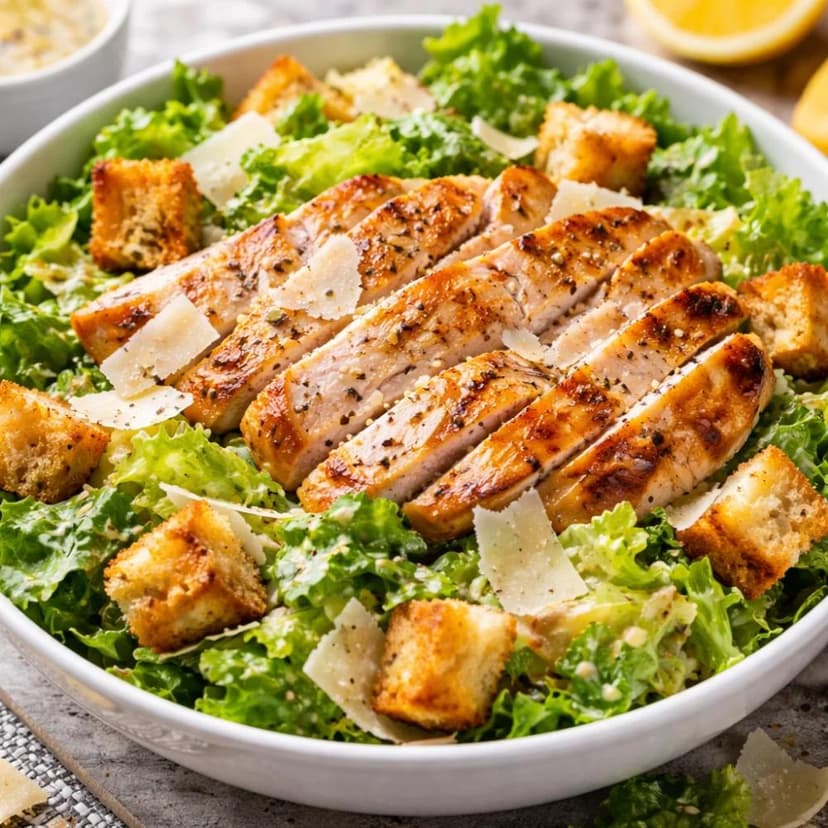
Chicken Caesar Salad (Classic Restaurant Recipe Made at Home)
Crisp romaine lettuce, pan-seared chicken, shaved Parmesan, crunchy croutons, and the real Caesar dressing made from scratch — creamy, anchovy-spiked, and far better than any bottled version.

Eggs Benedict with Hollandaise Sauce
Toasted English muffins topped with Canadian bacon, perfectly poached eggs, and a rich, lemony hollandaise sauce. A classic weekend brunch dish made achievable at home.
These techniques shine on the classics most likely to test them: a silky hollandaise over eggs Benedict, or a properly emulsified Caesar dressing clinging to crisp romaine. Once you can rescue a sauce on the fly, neither feels intimidating.
Working with what is in the fridge and need a fast swap or a dish to build around your sauce? Let our AI generator sort it.
Cook With What You HaveFrequently Asked Questions
It means the emulsion has collapsed and the fat and liquid have separated, turning a smooth sauce greasy and curdled. It usually happens from too much heat, adding the fat too quickly, or too little base liquid.
Take it off the heat, whisk a fresh egg yolk with a teaspoon of warm (not hot) water in a clean bowl, then slowly drizzle the broken sauce back in while whisking constantly. The fresh yolk re-emulsifies the loose fat.
Start a new base with a fresh egg yolk (or a tablespoon of intact mayo) plus a little acid or water, then slowly stream the broken mayo into it while blending. Acid and water alone usually do not contain enough emulsifier to fix a large batch.
Oil and vinegar separate naturally once the mixing stops. Whisk in a teaspoon of Dijon mustard to hold the emulsion longer, but expect to re-whisk or shake it again before serving - that is normal, not a failure.
Can't decide what to make? Let our generator pick for you instantly.
Generate a Random Recipe →Tags:
Related Reading
Ready to Try These Recipes?
Browse our complete recipe collection for more cooking inspiration!