Why Is My Curry Splitting? (How to Keep Coconut Milk Smooth)
A coconut curry splits from hard boiling - and from acid. Learn the real science, and the cornstarch-slurry rescue that brings a broken sauce back to glossy.
The Quick Answer
A coconut curry splits when the coconut milk's emulsion breaks and its proteins coagulate - usually from boiling it too hard, but also from adding acidic ingredients like lime, tamarind or tomato, which curdle the proteins on their own. To bring a split curry back together, keep it at a gentle simmer and stir in a slurry of 1 teaspoon cornstarch mixed into 1 tablespoon cold water; the starch thickens the sauce and suspends the loose oil so it looks smooth and glossy again.
The Thermodynamics of Coconut Cream
Can't decide what to make? Let our generator pick for you instantly.
Generate a Random Recipe →Coconut milk is an oil-in-water emulsion held together by its own plant proteins (globulins and albumins). Splitting is really two things happening at once: the emulsion breaks and fat globules merge into free oil, and the proteins denature and clump into grainy white curds.
Heat drives both. A hard, rolling boil makes the proteins contract and squeeze out the water and fat they were holding - but they begin denaturing from around 80C even at a gentle simmer if you hold them there long enough. Acid is a co-equal trigger that many recipes ignore: lime, tamarind and tomatoes can curdle coconut proteins regardless of how gently the pot is bubbling.
One nuance worth knowing: most canned coconut milk is homogenised and includes stabilisers like guar or xanthan gum precisely to resist separation, so it is fairly forgiving. It is fresh or additive-free coconut milk that is genuinely fragile - which is exactly why Thai cooks seek out unstabilised coconut cream when they deliberately "crack" it to fry curry paste in the rendered oil.
The Stabilizing Protocol
How to prevent a split
- Keep it gentle: never bring a coconut curry to a rolling boil. Hold it at a bare, lazy simmer with just a few small bubbles, and stir gently rather than thrashing it.
- Add acid late: stir in lime, tamarind or tomato near the end, off the highest heat, so the proteins are not held hot in an acidic sauce.
- Temper it in: for delicate dishes, add the coconut milk toward the end and warm it through rather than boiling it for a long time.
- Shake the can: shake before opening so the solid cream cap blends back into the liquid - this evens out the texture, though on its own it will not stop heat- or acid-induced curdling.
The emergency slurry repair
- Steady the heat: turn the burner down to a gentle simmer, but do not cool the pan completely - the starch needs sustained heat to work.
- Mix the binder: whisk 1 teaspoon of cornstarch into 1 tablespoon of cold water until smooth. Never add dry starch straight to a hot pot.
- Stream and simmer: stir the slurry into the curry and let it simmer for about 2 minutes. The cornstarch gelatinises, thickens the watery phase and suspends the loose oil so the sauce looks smooth and glossy again. A vigorous whisk, or a splash of fresh coconut milk, can help too.
Professional Chef Note
Be clear-eyed about what the fix does: the starch masks the split by thickening and re-suspending the loose fat - it cannot un-cook protein curds that have already formed. So prevention (gentle heat, acid added late) always beats the rescue, and a curry that has fully scrambled is better strained or rebuilt than saved.
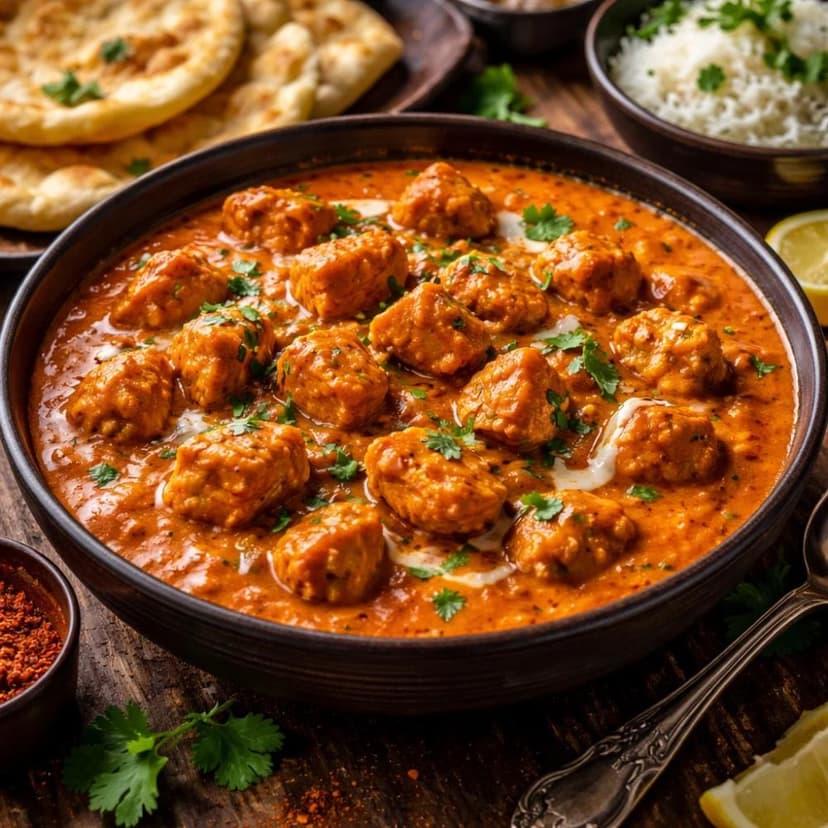
Chicken Tikka Masala (Easy British-Indian Takeaway Recipe)
Tender marinated chicken in a rich, mildly spiced tomato and cream sauce — Britain's favourite curry, made from scratch in under an hour.
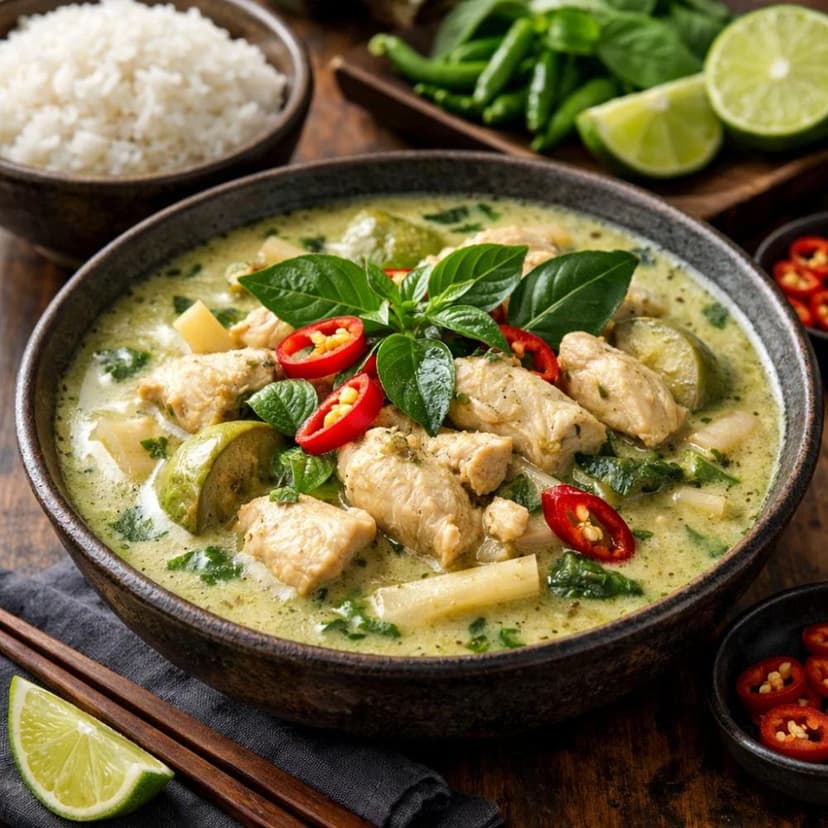
Thai Green Chicken Curry (Easy 30-Minute Recipe)
Coconut milk, green curry paste, tender chicken, and fragrant Thai basil — a vibrant, aromatic curry that rivals any restaurant in 30 minutes.
Coconut-based curries like a Thai green curry are where this matters most, but the same gentle-heat discipline keeps a creamy chicken tikka masala silky too. Treat the coconut or dairy as the fragile part of the sauce and add it with care.
Missing a thickener or want to explore another route for your proteins? Our AI generator can swap elements without breaking your sauce.
Cook With What You HaveFrequently Asked Questions
Usually because it was boiled too hard, which breaks the coconut milk emulsion and coagulates its proteins into grainy curds. Acidic ingredients like lime, tamarind or tomato can also curdle it on their own, even at a gentle simmer.
Keep it at a gentle simmer and stir in a slurry of 1 teaspoon cornstarch dissolved in 1 tablespoon cold water, then simmer about 2 minutes. The starch thickens the sauce and suspends the loose oil so it looks smooth again, though it will not undo protein curds.
Coconut proteins start to denature from around 80C, so holding a curry at a hard boil reliably splits it. Keep it at a bare simmer and avoid prolonged boiling, especially once acidic ingredients are in.
Not exactly - it masks the split rather than reversing it. The gelatinised starch thickens the water phase and re-suspends the loose fat so the sauce looks smooth, but it cannot reverse proteins that have already curdled.
Can't decide what to make? Let our generator pick for you instantly.
Generate a Random Recipe →Tags:
Related Reading

Ready to Try These Recipes?
Browse our complete recipe collection for more cooking inspiration!