Why Is My Meat Sticking to My Stainless Steel Pan? (The Water-Drop Fix)
Meat sticks to stainless steel when the pan isn't hot enough. Learn the water-drop (Leidenfrost) test and the 4-step method for a clean, no-stick sear every time.
The Quick Answer
Meat sticks to stainless steel mainly because the pan was not hot enough: when the metal is cool, proteins form direct chemical bonds with the surface and tear when you lift them. The fix is the water-drop (Leidenfrost) test - heat the dry pan until a drop of water rolls into a skittering ball that glides like mercury, which happens around 190-200C (375-400F). Only then add oil, then the food, and leave it alone until it releases on its own.
The Culinary Science: Heat, Proteins, and the Leidenfrost Test
Can't decide what to make? Let our generator pick for you instantly.
Generate a Random Recipe →Sticking is mostly about temperature, not scratches. When raw protein meets cool or unevenly heated metal, its amino acids form genuine chemical bonds with the surface - sulphur in the protein bonds to the iron and chromium in the steel - and those bonds tear the food when you try to move it. Counterintuitively, a properly preheated pan sticks less, partly because the hot metal expands and its microscopic surface actually becomes smoother.
The reliable readiness cue is the water-drop test, which relies on the Leidenfrost effect. Once the pan is hot enough (around 190-200C / 375-400F), the underside of a water droplet flash-vaporises into a thin cushion of steam that suspends the rest of the drop, so it beads up and skitters across the surface like mercury instead of spreading and boiling away. Below that, water just sizzles and evaporates - a sign the pan is not ready.
Add oil to a pan in that state and it spreads into a thin, low-friction film between the food and the metal. That film, together with the steam released by the food's own moisture, is what lets a sear release cleanly.
The 4-Step Non-Stick Method for Steel
The sequence that releases every time
- Step 1 - Dry heat: place a clean, completely dry stainless steel pan over medium-high heat for 2 to 3 minutes. No oil yet.
- Step 2 - The water test: flick a few drops of water in. If they sizzle and vanish, it is still too cold; when they tighten into small spheres that skitter and glide without evaporating, you have hit the zone (about 190-200C / 375-400F).
- Step 3 - Add oil: pour in a high-smoke-point oil and swirl. It should thin out and shimmer almost immediately.
- Step 4 - Sear and wait: lay the protein down and leave it. Do not poke or flip it - a real seared crust takes a couple of minutes per side, and the meat will release itself once that Maillard crust forms. Test with a gentle tug; if it still grips, give it longer.
Professional Chef Note
Pat the surface of your protein completely dry with paper towel before it hits the pan - surface moisture is the enemy of a sear, because it cools the oil and steams the meat instead of browning it. A heavy, well-preheated pan and an uncrowded surface matter far more than letting meat sit on the counter, which barely changes its internal temperature in 20 minutes and is best skipped.
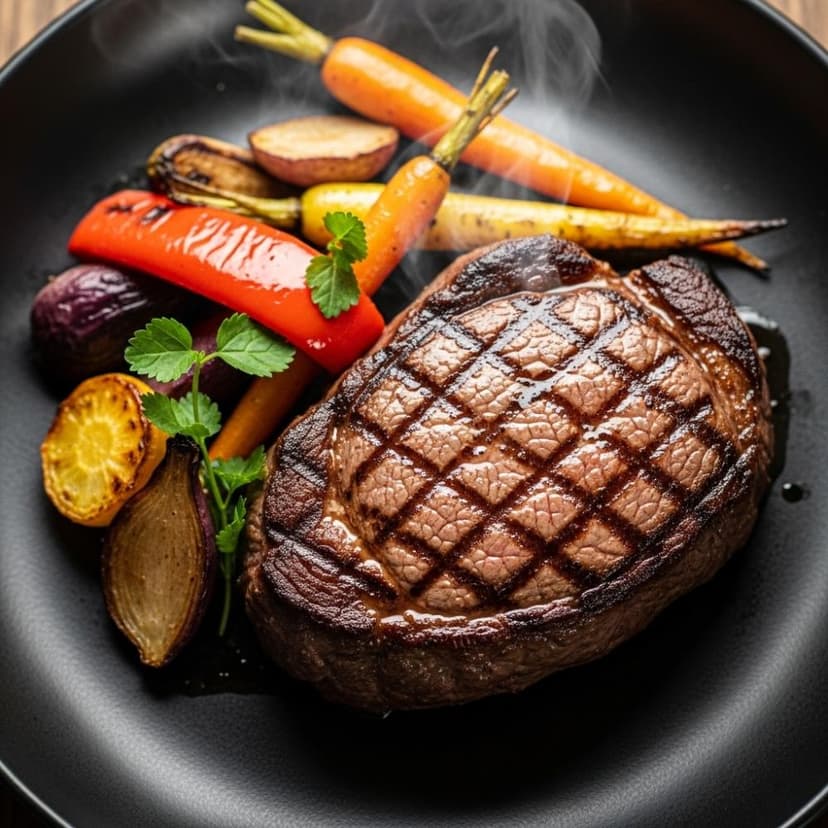
Grilled Steak with Roasted Vegetables
A flavorful grilled steak paired with tender roasted vegetables, seasoned simply with herbs and spices. A hearty and wholesome meal for two.
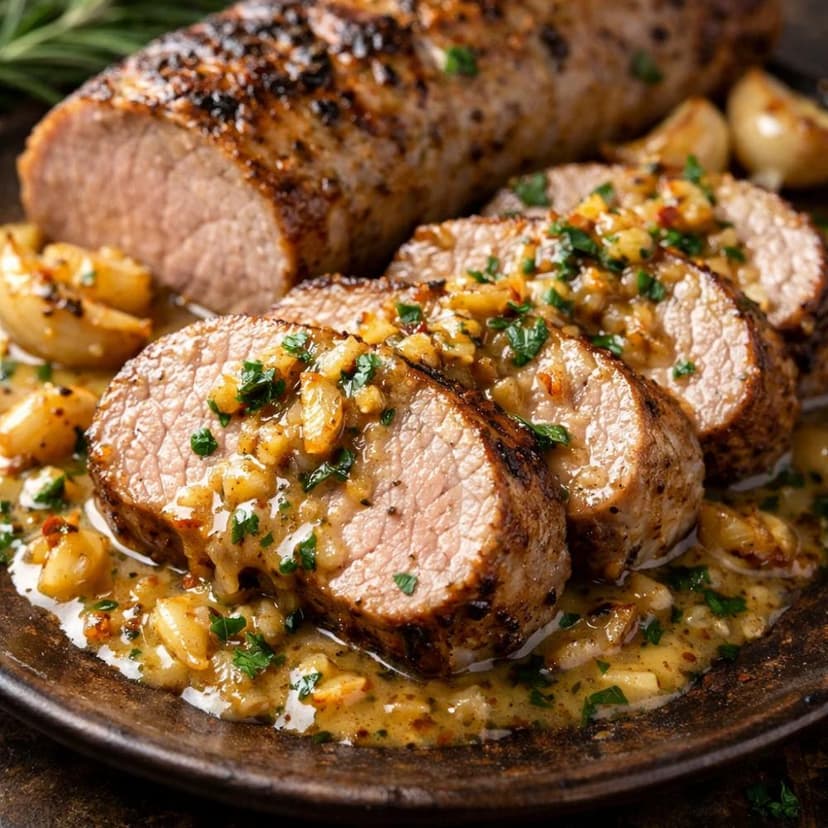
Juicy Pork Tenderloin with Garlic Sauce
Pan-seared pork tenderloin with a golden crust, finished in the oven and served with a rich, buttery garlic and herb pan sauce. Pork tenderloin is one of the leanest, most tender cuts of meat available — this method ensures it stays juicy every time, with a restaurant-quality sauce made from the pan drippings.
Put the method to work on something worth searing. A good steak or a pork tenderloin rewards a clean, hot pan with a deep golden crust and an easy release - no scraping, no tearing - and the browned fond left behind becomes the base of a quick pan sauce.
Got your sear down and need a side or sauce to match? Spin up a flavour pairing in seconds with our Random Recipe Generator.
Find a RecipeFrequently Asked Questions
Aim for roughly 190-200C (375-400F). At that point a drop of water beads up and skitters across the surface (the Leidenfrost effect) instead of sizzling away, which is your cue to add oil and food.
Usually because the pan was not hot enough before the oil went in, or the meat surface was wet. Preheat the dry pan until it passes the water test, add oil, pat the protein dry, and do not move it until the crust releases on its own.
Hot. Preheat the dry pan first, then add oil just before the food. Oil added to a cold pan can soak into the surface and polymerise into a sticky residue over time.
Do not force it. A proper seared crust usually takes a couple of minutes per side, and the meat lifts cleanly once that crust forms. If it grips when you tug gently, give it another 30 to 60 seconds.
Can't decide what to make? Let our generator pick for you instantly.
Generate a Random Recipe →Tags:

Ready to Try These Recipes?
Browse our complete recipe collection for more cooking inspiration!