Why Is My Chicken Rubbery? (The Overcooking Fix)
Rubbery chicken is almost always overcooked. Here's the real temperature science - why breast and thighs fail in opposite ways, and how to cook both tender.
The Quick Answer
Chicken turns rubbery mainly from overcooking: as the meat heats past about 66C (150F), its muscle fibres contract and squeeze out water, and lean breast dries out fastest. The fix is to stop sooner and cook evenly - use a thermometer, even out the thickness, and rest the meat. Note that 74C (165F) is a food-safety target, not the point where chicken first toughens.
At what temperature does chicken get tough?
Can't decide what to make? Let our generator pick for you instantly.
Generate a Random Recipe →Toughening starts earlier than most people think. Moisture loss and fibre contraction kick in around 66C (150F), when a protein called actin denatures and the fibres shorten sharply, wringing out water like a twisted sponge - and it accelerates with every degree above that. Lean breast, which has almost no fat or collagen to protect it, dries and turns rubbery fastest.
The familiar 74C (165F) is a food-safety number - the temperature that instantly kills salmonella - not the moment chicken becomes rubbery. Because pasteurisation depends on time as well as temperature, breast pulled around 150 to 157F (66 to 69C) and rested is just as safe and noticeably juicier. 165F is the simple, conservative default, but it is already past the breast's peak juiciness.
Why are chicken thighs chewy but breast is rubbery?
It comes down to what each cut is made of, and the two fail in opposite directions. Lean breast turns rubbery from too much heat - cook it past actin denaturation and it dries out. Thighs and other dark meat are full of connective tissue (collagen), which only melts into soft gelatin with sustained heat: it begins converting around 71C (160F) and renders properly between roughly 80 and 96C (175 to 205F).
So pulling thighs at 165F - perfect for breast - leaves the collagen un-rendered and the meat chewy. Dark meat is effectively undercooked for tenderness at the temperature that is ideal for white meat. Take thighs to about 175 to 195F (80 to 90C), or cook them low and slow, and they turn silky.
How do you stop chicken being rubbery?
Five fixes for tender chicken
- Use an instant-read thermometer: pull breast somewhere between 150 and 165F (66 to 74C) depending on how you balance juiciness against caution, and rest it; take thighs to 175 to 195F (80 to 90C).
- Even out the thickness: pound or butterfly breasts so the thin end does not turn rubbery while the thick centre catches up.
- Brine briefly: even 15 to 30 minutes in salted water improves the meat's ability to hold water and seasons it through.
- Rest before slicing: a few minutes lets the temperature even out and the juices redistribute.
- Match the cut to the method: gentle heat for breast, longer and lower for thighs to render the collagen.
Professional Chef Note
If your chicken breast is tough no matter what you do, it may not be your cooking. "Woody breast" is a real and increasingly common condition in fast-grown broiler chickens - the muscle becomes fibrous and hard regardless of technique. It is harmless to eat, but if a whole batch is uniformly tough, the bird, not the pan, is the problem.
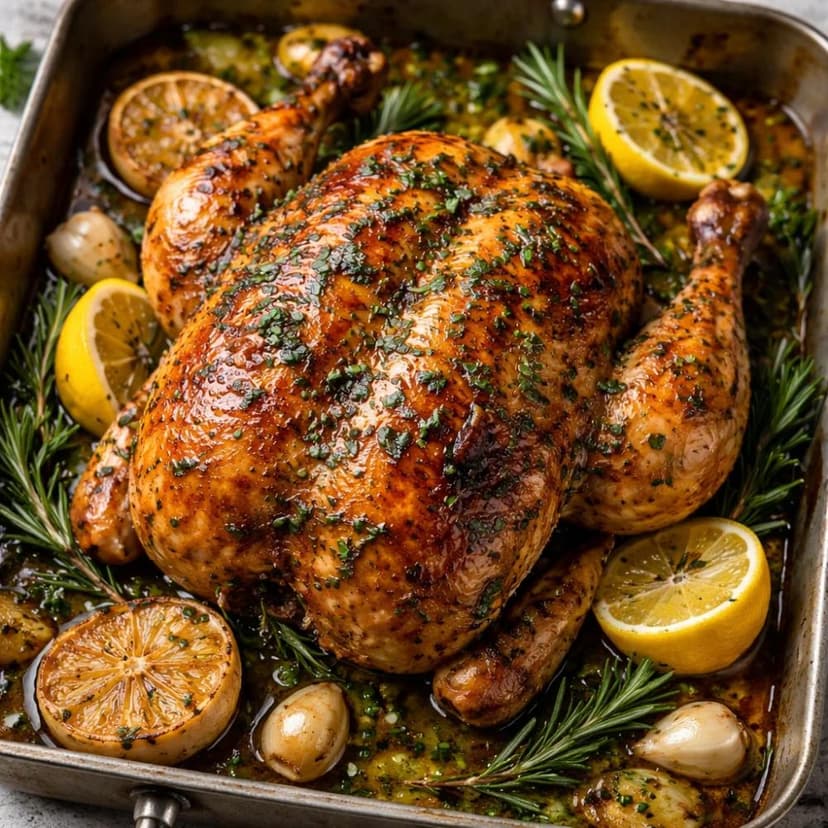
Lemon and Herb Roast Chicken (Classic Sunday Dinner Recipe)
A whole chicken roasted with butter, lemon, garlic, and fresh herbs — golden, crispy skin with juicy, herb-scented meat. The definitive Sunday roast.
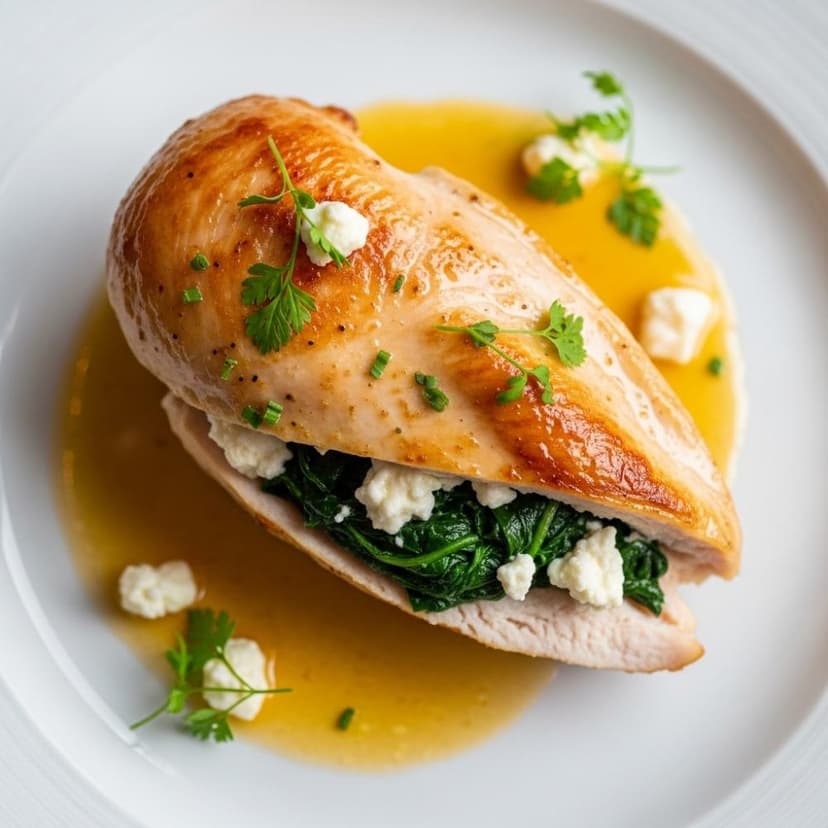
Spinach and Feta Stuffed Chicken Breast
Tender chicken breasts pounded thin and filled with a savory mixture of fresh spinach, tangy feta cheese, and herbs, then baked until juicy and golden. An elegant and flavorful meal for two.
A stuffed chicken breast is a great place to practise: the filling keeps it moist and a thermometer keeps it from overshooting. And a whole roast chicken rewards the same discipline - pull it at temperature, rest it, and the breast stays juicy while the thighs finish tender.
Cooked your chicken perfectly and need a side or a sauce to match? Get one in a click.
Find a RecipeFrequently Asked Questions
For safety, 165F (74C) instantly kills salmonella and is the simple default. For juicier breast, many cooks pull it around 150 to 157F (66 to 69C) and rest it, which is also safe because pasteurisation depends on time as well as temperature. Thighs should go higher, to 175 to 195F (80 to 90C), to render their collagen.
They fail in opposite ways. Lean breast turns rubbery from overcooking past about 150F, while collagen-rich thighs turn chewy when undercooked - their connective tissue needs higher heat (175 to 195F) to melt into tender gelatin.
Yes - it is the main cause. Past roughly 66C (150F) the muscle fibres contract and squeeze out moisture, leaving lean meat dry and rubbery. Use a thermometer and stop sooner.
It may be "woody breast," a real condition in fast-grown broiler chickens that makes the meat fibrous and hard regardless of technique. If a whole batch is uniformly tough despite careful cooking, the bird is the likely cause.
Can't decide what to make? Let our generator pick for you instantly.
Generate a Random Recipe →Tags:
Related Reading
BlogCooking Tips & Techniques
Why Is My Meat Sticking to My Stainless Steel Pan? (The Water-Drop Fix)
 Blog
BlogCooking Tips & Techniques
How to Fix a Broken Sauce or Dressing in 60 Seconds
 Blog
BlogCooking Tips & Techniques
Why Is My Curry Splitting? (How to Keep Coconut Milk Smooth)
Ready to Try These Recipes?
Browse our complete recipe collection for more cooking inspiration!