How to Fix Over-Salted Broth (The Potato Myth Debunked)
The raw potato trick is a myth. Here's the real fix for over-salted broth: dilute, rebuild umami with kombu and bonito, then balance with acid and sweet.

The Quick Answer
Skip the raw potato trick, it doesn't work. To fix over-salted broth, lower the salt concentration by diluting with unsalted dashi or plain water, then rebuild depth with umami instead of more salt: add kombu, katsuobushi, or dried shiitake. A splash of rice vinegar or a touch of mirin blunts the sharpness, and tofu, vegetables, or noodles soak up excess seasoning.
Why the Potato Trick Doesn't Work (and What Actually Does)
Can't decide what to make? Let our generator pick for you instantly.
Generate a Random Recipe →The famous fix of dropping a raw potato into salty broth to absorb the salt is a myth. A potato does soak up liquid, and that liquid happens to be salty, but it never selectively pulls salt out of the surrounding broth. The salt concentration of what remains is essentially unchanged. Worse, when you fish the potato out you also remove a chunk of seasoned liquid, so you've lost flavor without meaningfully lowering saltiness.
Saltiness is a matter of concentration, not total amount. The only reliable way to make broth taste less salty is to lower the ratio of salt to liquid, then restore the flavor that dilution costs you. That's the real strategy: dilute, then rebuild with umami rather than more salt.
Umami is the lever that makes this work. Glutamate from kombu, inosinate from bonito (katsuobushi), and guanylate from dried shiitake create a synergistic umami boost when combined. That synergy lets a less-salty broth still taste full and satisfying, because umami, fat, and acid all mask and soften the perception of salt.
How to Fix Over-Salted Broth
The Dilute-and-Rebuild Method
- Step 1: Dilute the broth with unsalted dashi or plain water, adding a little at a time and tasting between additions so you don't overshoot.
- Step 2: Rebuild depth with umami, not salt. Steep extra kombu, katsuobushi, or dried shiitake; combining sources stacks glutamate, inosinate, and guanylate for a synergistic lift.
- Step 3: Blunt the sharp edge of the salt with a small splash of rice vinegar. Acid masks saltiness without adding more sodium.
- Step 4: Round the flavor with a touch of mirin. A little sweetness balances the remaining salt and softens the bite.
- Step 5: Add bulky low-sodium ingredients like tofu, vegetables, or noodles, which soak up and dilute the seasoned liquid as they cook.
- Step 6: Taste as you go and adjust gradually, since umami, fat, and acid all mask salt and it's easy to over-correct.
Professional Chef Note
Build a small jar of concentrated unsalted dashi ahead of time and keep it cold. When a pot runs salty you can dilute and re-deepen in one move, instead of watering it down into something thin and flat.
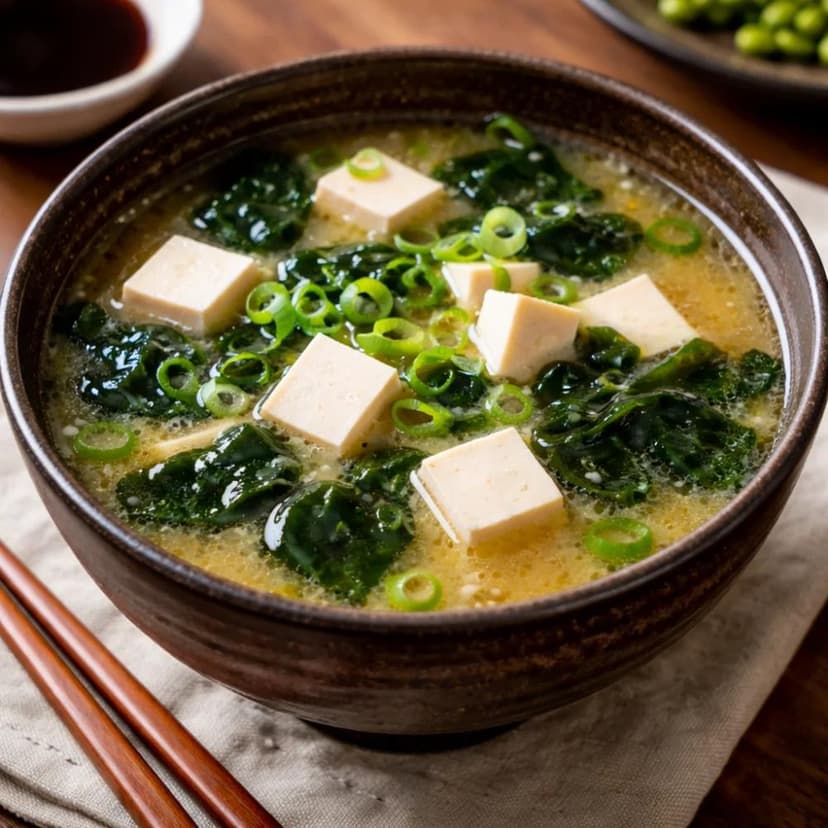
Miso Soup with Tofu and Wakame (Authentic Japanese Recipe)
Japan's most fundamental daily soup — a clean, savoury dashi broth gently stirred with miso paste, soft tofu cubes, and rehydrated wakame seaweed. Deeply nourishing, ready in 10 minutes, and endlessly comforting.
Miso soup is the ideal place to practice this rescue, because miso itself is a major source of both salt and umami. If your soup turns sharp, loosen it with unsalted dashi or water, then lean on extra kombu and katsuobushi to keep it tasting deep rather than diluted.
Tofu and seaweed earn their place here too. They add body, soak up seasoned liquid, and stretch a salty pot into a balanced bowl. Try the recipe and treat the dashi as your dial: more umami, not more miso, when things drift too salty.
Salt-Masking Add-Ins, Ranked by What They Do
Choose the Right Tool for the Job
- Unsalted dashi or water: lowers salt concentration directly. Use this first, before anything else.
- Kombu, katsuobushi, dried shiitake: rebuild umami so a diluted broth still tastes full; combine them for synergy.
- Rice vinegar: acid that masks saltiness and brightens; add by the splash.
- Mirin: sweetness that balances and softens salt; a touch goes a long way.
- Tofu, vegetables, noodles: bulky low-sodium additions that absorb and dilute seasoned liquid as they cook.
Stuck with a salty pot and a fridge full of odds and ends? Let the generator build a balanced bowl around what you already have.
Cook With What You HaveFrequently Asked Questions
No. A potato absorbs liquid, and that liquid is salty, but it doesn't selectively pull salt out, so the salt concentration of the remaining broth is essentially unchanged. You also lose seasoned liquid when you remove the potato, so it's a net loss of flavor.
Dilute with unsalted dashi or water to lower the salt concentration, then rebuild depth with umami from kombu, katsuobushi, or dried shiitake rather than more salt. The combined glutamate, inosinate, and guanylate keep the broth tasting full even when it's less salty.
Yes, both help. A small splash of rice vinegar adds acid that masks saltiness, and a touch of mirin adds sweetness that balances and softens the salt. Add them gradually and taste as you go, since acid and umami both blunt the perception of salt.
Miso is a concentrated source of salt and umami, so a little too much makes the whole bowl sharp. Loosen it with unsalted dashi or water and deepen the flavor with extra kombu or katsuobushi instead of adding more miso.
Can't decide what to make? Let our generator pick for you instantly.
Generate a Random Recipe →Tags:


Ready to Try These Recipes?
Browse our complete recipe collection for more cooking inspiration!