Why Is My Silken Tofu Falling Apart in My Soup?
Silken tofu shreds in soup because its soft gel breaks under heat and stirring. Cut bigger cubes, add it last, simmer gently, and fold instead of stir.
The Quick Answer
Silken tofu falls apart in soup because its delicate, water-rich gel shears under heat and motion. Cut it into larger 2 to 3 cm cubes, add it in the final minute or two, keep the liquid at a bare simmer instead of a boil, and fold the pot gently rather than stirring. Slide the cubes off a spoon so they never tumble or get battered by bubbles.
Why This Happens: The Custard-Like Gel Inside Silken Tofu
Can't decide what to make? Let our generator pick for you instantly.
Generate a Random Recipe →Silken tofu, known in Japanese as kinugoshi, is set with a very high water content and a gentle coagulant, most often glucono delta-lactone, or GDL. Instead of pressing curds into a firm block like regular tofu, the soy proteins are coaxed into a smooth, custard-like gel. That gel is what gives silken tofu its luxurious texture, and it is also exactly why it disintegrates the moment things get rough.
This protein network is fragile. It shears apart under almost any mechanical stress: vigorous stirring, a rolling boil tumbling the cubes against each other, scooping with a hard edge, or simply cutting the pieces so small that they have no structural mass to hold together. The less tofu there is in a given cube, the less internal support it has, and the faster it crumbles.
Heat compounds the damage. Excess cooking first tightens the gel and then breaks it, while rapid bubbles physically batter the cubes into shreds. So the failure is rarely one mistake. It is usually small cubes, plus a boil, plus a few too many stirs, all attacking the same soft network at once.
How to Fix It: Keep Silken Tofu Intact in Soup
The right way to add silken tofu
- Step 1: Cut into larger cubes around 2 to 3 cm so each piece has enough mass to support itself, and slice the tofu while it is still in the block or cradled in your palm to avoid crushing it.
- Step 2: Finish building your soup first. Get the broth, vegetables, and seasoning fully cooked before the tofu ever goes in.
- Step 3: Add the tofu near the very end of cooking, in the last minute or two, so it only needs to warm through, not actually cook.
- Step 4: Slide the cubes off a spoon into the pot instead of dropping them, so they enter gently and do not splash apart on impact.
- Step 5: Drop the heat so the liquid sits at a bare simmer, never a boil, once the tofu is in. A boil is the single fastest way to shred it.
- Step 6: Fold the pot gently, lifting from the bottom, rather than stirring in circles. A few soft folds distribute the tofu without tearing it.
Professional Chef Note
For the most pristine cubes, warm the silken tofu separately in a ladle of hot broth off the heat, then spoon it into each bowl at serving time. The tofu never touches the boiling pot at all, which is exactly how the smoothest miso soups stay clean.
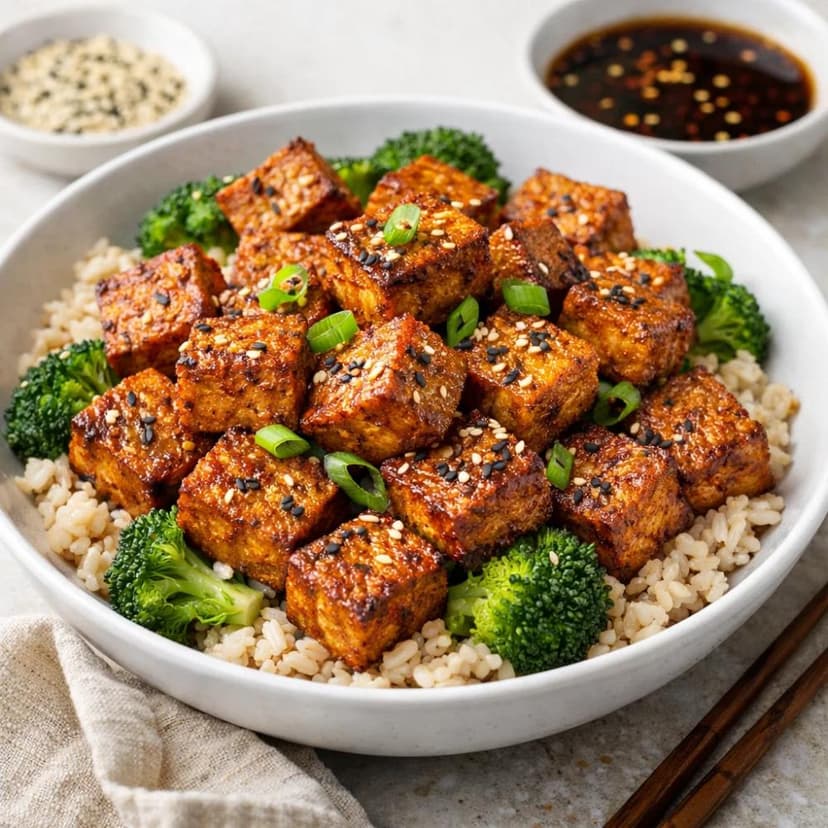
Crispy Baked Tofu
Firm tofu pressed dry, tossed in cornstarch, soy sauce, and oil, then baked on a wire rack at high heat until deeply golden and crisp on every side.
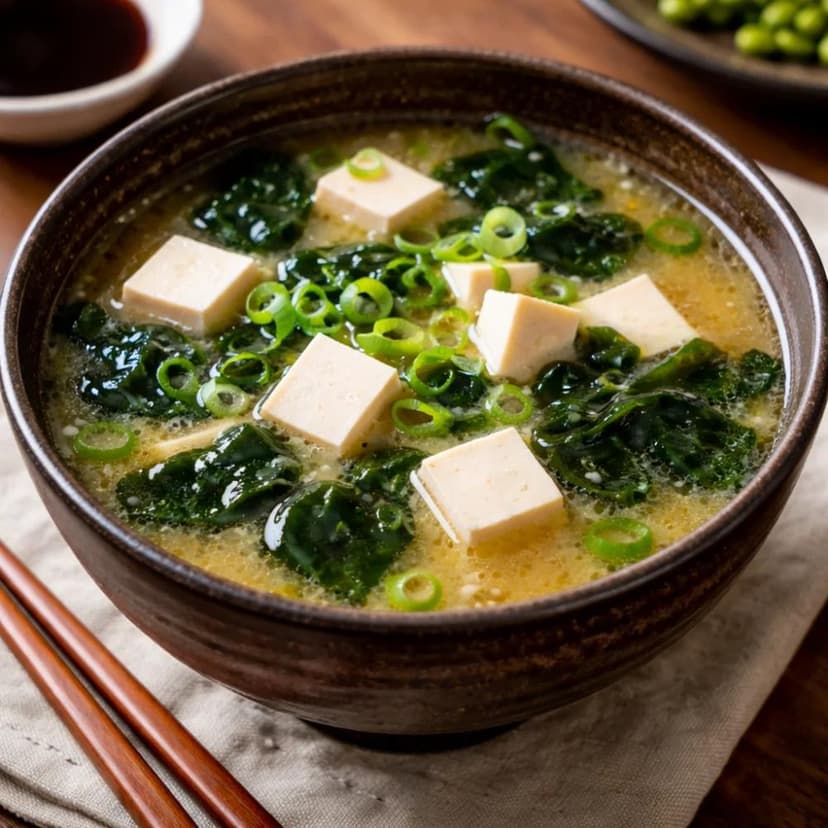
Miso Soup with Tofu and Wakame (Authentic Japanese Recipe)
Japan's most fundamental daily soup — a clean, savoury dashi broth gently stirred with miso paste, soft tofu cubes, and rehydrated wakame seaweed. Deeply nourishing, ready in 10 minutes, and endlessly comforting.
Miso soup is the classic place to practice this. The traditional method already does the work for you: the dashi is built first, the miso is whisked in off the boil, and the silken tofu is folded in at the very end so it stays in soft, intact cubes. Treat it as your template for any brothy soup that calls for silken tofu.
If you find silken tofu too temperamental for your cooking style, crispy baked tofu is the opposite end of the spectrum. It uses firmer tofu that is pressed and roasted into sturdy, golden pieces that hold their shape no matter how you handle them, which makes it a forgiving option to keep in rotation.
Silken vs Firm Tofu: Which to Use Where
Match the tofu to the job
- Silken tofu: high water content, custard-like GDL gel, no pressing. Best for delicate soups, blended sauces, smoothies, and desserts. Add it last and never boil it.
- Firm and extra-firm tofu: pressed into a denser curd with less water. Best for stir-fries, roasting, grilling, and any dish with stirring, flipping, or high heat.
- For soup specifically: use silken when you want a soft, melt-in-the-mouth texture and firm when you want pieces that survive simmering and reheating.
- Cannot find silken and need it intact? Use the softest firm tofu you can get and still add it at the end, since it will hold together far more reliably.
Not sure what to cook tonight? Let the generator pick a recipe for you.
Find a RecipeFrequently Asked Questions
Cut it into larger 2 to 3 cm cubes, add it in the last minute or two of cooking, and keep the broth at a bare simmer rather than a boil. Fold the pot gently and slide the cubes off a spoon so they never tumble or get battered by bubbles.
Add silken tofu near the very end, after the broth and other ingredients are fully cooked. It only needs to warm through, so a minute or two of bare simmering is enough and prevents the gentle gel from overcooking and breaking down.
Silken tofu is set with very high water content and a gentle coagulant, usually glucono delta-lactone, which forms a soft custard-like gel instead of a pressed curd. That delicate protein network shears apart easily under stirring, boiling, or rough handling.
Yes. Firm and extra-firm tofu are pressed into a denser, lower-water curd that holds its shape through simmering and reheating. The texture is chewier rather than custardy, so use it when you want pieces that survive stirring and longer cooking.
Can't decide what to make? Let our generator pick for you instantly.
Generate a Random Recipe →Tags:
Related Reading

Ready to Try These Recipes?
Browse our complete recipe collection for more cooking inspiration!