Why Is My Dashi Bitter? (And How to Fix the Batch)
Bitter dashi comes from boiling kombu or overcooking bonito flakes. Learn the science of over-extraction and how to rescue and prevent a harsh batch.

The Quick Answer
Dashi turns bitter and slimy primarily because the kombu (dried kelp) was left in the pot while the water boiled. Boiling kombu causes it to rapidly release bitter polyphenols and viscous alginic acids. To fix it immediately, strain out the solids, dilute the broth with about 20% fresh water, and stir in a tiny pinch of sugar or a splash of mirin to neutralise the sharp edge.
The Culinary Science: What Went Wrong?
Can't decide what to make? Let our generator pick for you instantly.
Generate a Random Recipe →Dashi is an elegant exercise in synergistic umami, relying on glutamates from kombu and inosinates from bonito flakes. The catch is that kombu is highly temperature-sensitive.
The ideal extraction window for clean glutamates is roughly 60C to 80C. The moment the water reaches a rolling boil at 100C, the cell walls of the kelp rupture and discharge heavy tannins and mucilaginous compounds instead of clear, savoury ones.
The result is a cloudier broth with a distinctly harsh, astringent aftertaste and an unpleasant, slightly thick mouthfeel. Overcooking the bonito flakes compounds the problem, turning the broth fishy and sharp.
Step-by-Step Recovery Plan
Re-balance a bitter batch
- Step 1 - Immediate isolation: kill the heat at once and pour the liquid through a fine-mesh sieve lined with cheesecloth or a paper towel to halt any further extraction from the remaining micro-particles.
- Step 2 - The dilution ratio: measure your bitter broth and add 200ml of fresh, filtered water for every 1 litre of damaged dashi to pull the harshness back into balance.
- Step 3 - The flavour counter-weight: stir in about 1/4 teaspoon of sugar or 1/2 teaspoon of mirin. The goal is not to sweeten the broth but to use the natural sugars to mask the bitter receptors on your palate.
Professional Chef Note
The gold-standard rule for dashi is simple: watch the pot. As soon as tiny pinhead-sized bubbles begin forming rapidly around the inside perimeter of the saucepan (roughly 85C), lift the kombu out immediately. Never let it reach a true boil.
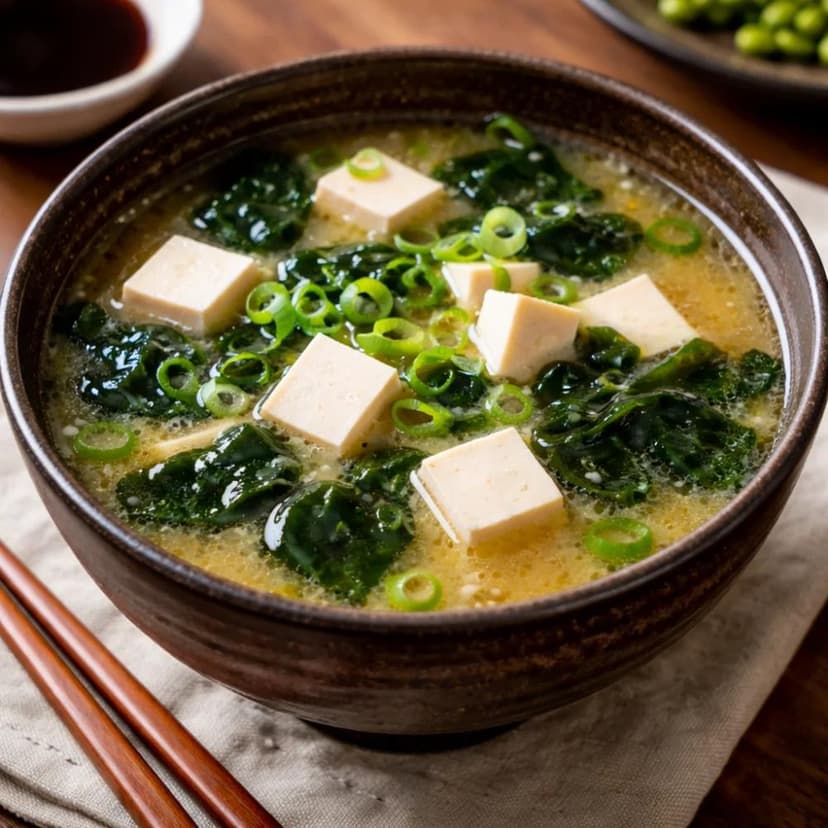
Miso Soup with Tofu and Wakame (Authentic Japanese Recipe)
Japan's most fundamental daily soup — a clean, savoury dashi broth gently stirred with miso paste, soft tofu cubes, and rehydrated wakame seaweed. Deeply nourishing, ready in 10 minutes, and endlessly comforting.
A clean, balanced dashi is the entire foundation of good miso soup - once the base is free of bitterness, the broth reads savoury and rounded and lets the miso bloom on top instead of fighting an astringent edge.
Try the featured miso soup with a gently-made dashi and stir the miso in off the heat, exactly as you handled the kombu, to protect both flavour and aroma.
Now that your dashi base is perfectly clean, build out the rest of the meal. Drop whatever you have on hand into our Random Recipe Generator for an authentic dinner in seconds.
Open the GeneratorFrequently Asked Questions
Prolonged high heat over-extracts the kelp, pulling out astringent bitter compounds and alginic acid, which makes the broth viscous and slick. Remove kombu before the water reaches a boil, around 60 to 65C.
No. Boiling katsuobushi turns the broth bitter, overly fishy, and astringent. Add the flakes off the heat, steep them briefly for thirty seconds to a few minutes, then strain promptly.
Dilute it with water or a fresh, gently-made dashi to pull back the harshness, then rebalance with a small amount of mirin or a pinch of sugar to soften the perceived bitterness.
No. The white powder on the surface is rich in umami. Wipe the kombu gently with a cloth rather than washing it, so you keep that flavor instead of scrubbing it away.
Can't decide what to make? Let our generator pick for you instantly.
Generate a Random Recipe →Tags:

Ready to Try These Recipes?
Browse our complete recipe collection for more cooking inspiration!