Why Is My Miso Soup Separating? (The Suspension Fix)
Miso soup separates because it's a suspension, not a solution. Learn why the solids sink, why boiling ruins it, and the off-heat trick to keep it smooth.

The Quick Answer
Your miso soup separates because miso is a suspension, not a true solution. The ground soybean and koji particles plus natural oils stay dispersed only while the liquid moves; once it sits, gravity pulls the solids down, leaving cloudy sediment below and clearer broth on top. This is completely normal and not a sign of spoilage. Whisk the miso into hot dashi off the heat and give the bowl a gentle stir before serving.
Why Miso Settles Out (and Why Boiling Makes It Worse)
Can't decide what to make? Let our generator pick for you instantly.
Generate a Random Recipe →Miso paste does not dissolve the way salt or sugar does. It is a colloid: millions of finely ground particles of fermented soybean and koji, plus the natural oils released during fermentation, held in temporary suspension throughout the dashi. As long as the liquid is moving, those particles stay evenly spread and the soup looks uniformly cloudy. The moment you stop stirring, physics takes over. Gravity slowly drags the heavier solids toward the bottom while the lighter water rises, so you end up with sediment underneath and a thinner, clearer layer on top.
Heat is the other half of the story. A hard boil tears apart the loose emulsion that keeps everything together, drives off the delicate aromatic compounds that give miso soup its fragrance, and dulls the savory depth you fermented all that flavor for. Boiling also kills the beneficial live cultures in unpasteurized miso and speeds up the rate at which solids drop out of suspension.
If you see an oily sheen on the surface, that is usually fat rendered from tofu or abura-age, the fried tofu pouches. It pools at the top for the same reason the solids sink: different densities want to separate when nothing is keeping them mixed. None of this means the soup has gone bad. It simply means miso behaves like the suspension it is.
How to Fix It and Keep It Smooth
The right way to add and serve miso
- Step 1: Build your dashi and add any tofu, seaweed, or vegetables first, simmering gently rather than at a rolling boil.
- Step 2: Ladle out a cup of the hot dashi into a separate bowl. It should be hot but not boiling.
- Step 3: Whisk the miso into that ladleful using a small whisk or a miso muddler until the paste is completely smooth with no lumps.
- Step 4: Pour the smooth slurry back into the pot and stir to combine evenly.
- Step 5: Take the pot off the heat immediately. Never let miso soup return to a boil once the paste is in.
- Step 6: Serve right away while everything is still suspended.
- Step 7: Give the pot or each bowl a gentle stir right before ladling, because the soup will re-settle within minutes.
Professional Chef Note
Add the miso last and off the heat every single time. The slurry method is not just about avoiding lumps; dissolving paste into a small volume of hot liquid first guarantees even dispersion before it ever hits the larger pot, which keeps both the live cultures and the aromatics intact.
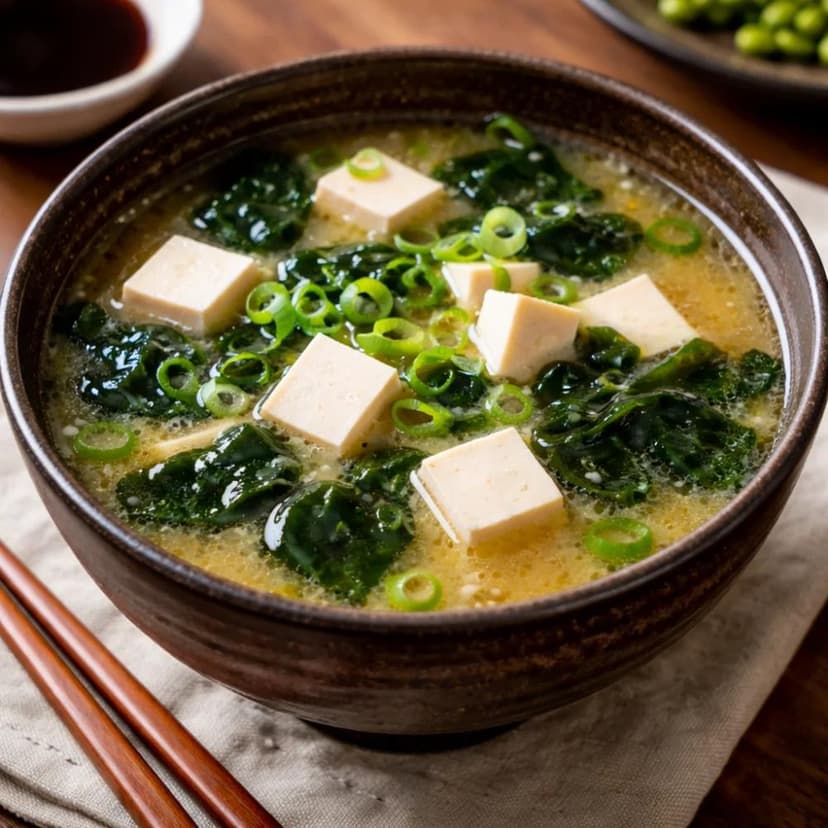
Miso Soup with Tofu and Wakame (Authentic Japanese Recipe)
Japan's most fundamental daily soup — a clean, savoury dashi broth gently stirred with miso paste, soft tofu cubes, and rehydrated wakame seaweed. Deeply nourishing, ready in 10 minutes, and endlessly comforting.
This miso soup recipe is built around exactly that technique: gentle dashi, miso whisked in off the heat, and a final stir before serving. Follow it and you will taste why temperature control matters so much for both flavor and texture.
Make it once paying attention to when you add the miso, and the difference between a smooth, fragrant bowl and a flat, separated one becomes obvious. It is the single habit that separates restaurant miso soup from the cloudy puddle in the bottom of the pot.
Separated, Curdled, or Spoiled? How to Tell the Difference
Reading your bowl correctly
- Normal separation: cloudy sediment settles at the bottom with clearer broth on top after sitting. Harmless. A quick stir brings it right back together.
- Surface oil sheen: a thin slick floating on top, usually from tofu or abura-age fat rendering out. Also harmless and expected.
- Boil damage: the soup tastes flat and smells weaker than it should, with solids dropping out fast. Not unsafe, just overcooked. Lower your heat next time and add miso off the heat.
- Actual spoilage: a sour, off, or fermented-gone-wrong smell, sliminess, or visible mold on stored leftover soup. That is when you discard it. Separation alone is never the signal.
Not sure what to cook tonight? Let our generator pick the perfect dish for you.
Find a RecipeFrequently Asked Questions
No. Miso is a suspension of soybean and koji particles plus natural oils, not a true solution, so the solids naturally sink when the soup sits. Separation is completely normal and is not a sign of spoilage. A gentle stir brings it back together.
A hard boil breaks the loose emulsion, drives off the delicate aromatics, and dulls the flavor. It also kills the beneficial live cultures in unpasteurized miso and accelerates the solids dropping out of suspension. Always add miso off the heat.
Whisk the miso into a ladleful of hot, not boiling, dashi using a small whisk or a miso muddler until smooth, then stir that slurry back into the pot. Dissolving it in a small volume first guarantees even dispersion before it joins the larger amount of broth.
That oily sheen is usually fat rendered from tofu or abura-age, the fried tofu pouches, which pools on the surface because of its different density. It is harmless and expected, not a sign that anything is wrong with the soup.
Can't decide what to make? Let our generator pick for you instantly.
Generate a Random Recipe →Tags:


Ready to Try These Recipes?
Browse our complete recipe collection for more cooking inspiration!