Why Did My Chocolate Seize? (And How to Rescue It)
Seized chocolate - grainy and stiff - comes from a little stray water. Here's the science, the counterintuitive rescue, and how to melt chocolate without it seizing.

The Quick Answer
Chocolate "seizes" - turning grainy, stiff, and dull - when even a tiny amount of water or steam gets into the melted chocolate and clumps the sugar together. Counterintuitively, the rescue is to add more liquid: stir in about 1 teaspoon of warm water, cream, or oil per ounce until it loosens into a smooth sauce or ganache. It will not return to a glossy, tempered state, but it is perfectly usable.
Why does a little water make chocolate seize?
Can't decide what to make? Let our generator pick for you instantly.
Generate a Random Recipe →Melted chocolate is a suspension - tiny particles of sugar and cocoa solids floating in liquid cocoa butter, which is a fat. Sugar loves water, so when even a small splash or a puff of steam lands in it, the water wets the sugar into a sticky syrup that glues the cocoa particles together into stiff clumps. The smooth, flowing mass seizes into a grainy paste almost instantly.
The strange part is that a tiny amount of water causes the problem, but a larger amount fixes it - because enough liquid dissolves the sugar completely instead of just gluing it together. That is the key to the rescue below.
Is seized chocolate the same as burnt chocolate?
No - they are two different failures with two different fixes, and it helps to tell them apart. Seizing is water-driven: a smooth melt suddenly turns grainy and stiff. Overheating, or scorching, is heat-driven: the chocolate goes thick, dull, and grainy because the cocoa butter and milk solids start to degrade.
Milk and white chocolate scorch more easily than dark because of their milk solids and sugar, so keep the temperatures gentle: white chocolate around 43C (110F), milk around 46C (115F), and dark up to about 49 to 50C (120F). Push past those and you burn it - a problem extra liquid will not undo.
How do you fix seized chocolate?
The rescue (for water-seized chocolate)
- Take it off the heat immediately so it does not also scorch.
- Add warm liquid gradually: about 1 teaspoon of warm water, cream, or milk per ounce (roughly 1 tablespoon per 6 ounces), stirring after each addition.
- Keep stirring until the clumps dissolve and the mass loosens into a smooth, glossy sauce or ganache.
- Use it as a sauce, drizzle, or ganache - it cannot be re-tempered for dipping or moulding, so do not try to set it hard.
- One nuance: for chocolate that seized from water, a water-based liquid works best because it dissolves the sugar; a neutral oil or extra cocoa butter is the better rescue for chocolate that split from overheating.
Professional Chef Note
Prevention is far easier than rescue: make sure every bowl, spoon, and spatula is bone dry; melt over a double boiler with the bowl above - not touching - barely simmering water, or in 20-to-30-second microwave bursts with a stir between each. Use a wide, shallow bowl and lift it off the pan now and then so trapped steam can escape before it condenses into your chocolate.
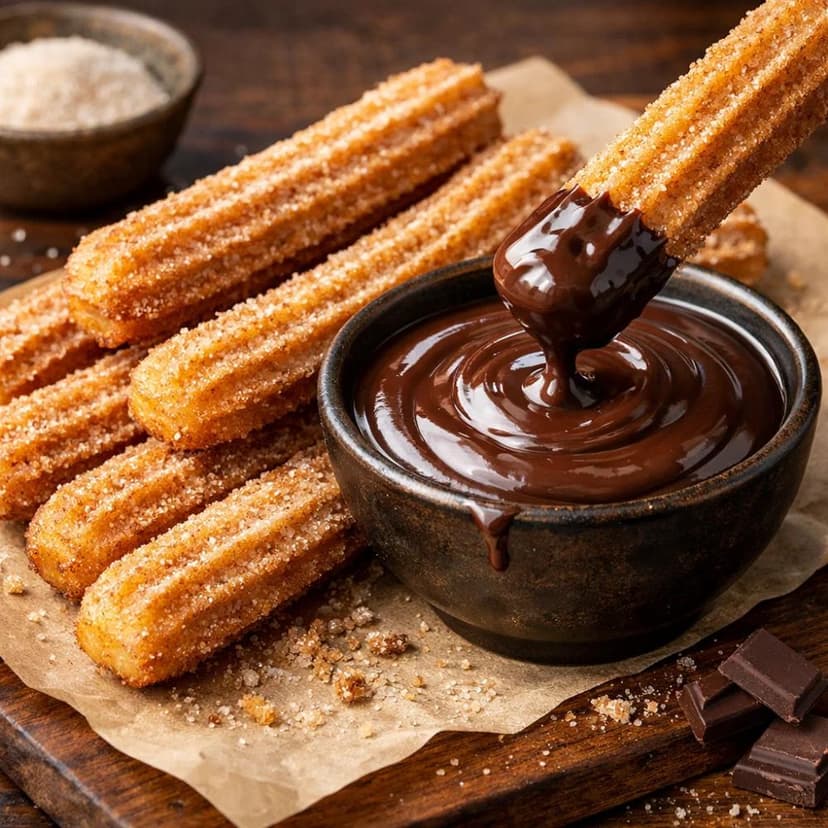
Churros with Chocolate Dipping Sauce (Spanish Street Food)
Crispy fried dough rolled in cinnamon sugar with a thick, dark chocolate dipping sauce. Classic Spanish street food made at home in 30 minutes.
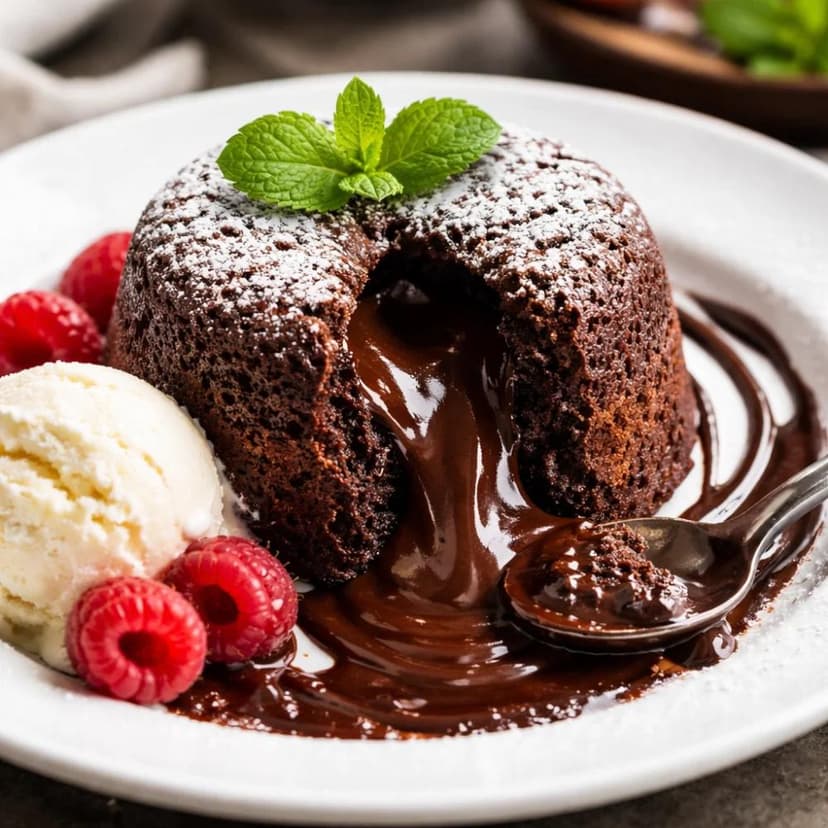
Classic Chocolate Lava Cake (Easy Restaurant-Style Dessert)
Individual dark chocolate cakes with a molten, flowing centre — crisp outside, liquid fudge inside. Made in 30 minutes and guaranteed to impress.
Smooth, glossy chocolate is the whole point of a good churros sauce - and now you know how to bring it back if a stray drop of water turns it grainy. A molten lava cake is the same lesson in reverse: gentle heat and a careful melt are what give you that flowing centre.
Chocolate sorted - now find something to pour it over. Pick a dessert in one click.
Find a RecipeFrequently Asked Questions
It most likely seized - a small amount of water or steam got in and clumped the sugar. Less commonly it overheated, which degrades the cocoa butter. For seizing, stir in more warm liquid to smooth it; for overheating, it is usually beyond saving.
Yes, if it seized from water. Stir in about 1 teaspoon of warm water, cream, or oil per ounce until it loosens into a smooth sauce or ganache. It cannot be re-tempered for moulding, but it is perfectly good for sauces and frosting.
Keep everything bone dry, and melt gently over a double boiler (bowl above barely simmering water, not touching it) or in 20-to-30-second microwave bursts, stirring between each. Guard against steam and condensation.
Gently: aim for about 43C (110F) for white chocolate, 46C (115F) for milk, and up to 49-50C (120F) for dark. Milk and white scorch more easily, so keep them cooler.
Can't decide what to make? Let our generator pick for you instantly.
Generate a Random Recipe →Tags:
Related Reading
 Blog
BlogCooking Tips & Techniques
Why Is My Meat Sticking to My Stainless Steel Pan? (The Water-Drop Fix)
BlogCooking Tips & Techniques
How to Fix a Broken Sauce or Dressing in 60 Seconds
 Blog
BlogCooking Tips & Techniques
Why Is My Curry Splitting? (How to Keep Coconut Milk Smooth)
Ready to Try These Recipes?
Browse our complete recipe collection for more cooking inspiration!