Lasagna Bolognese
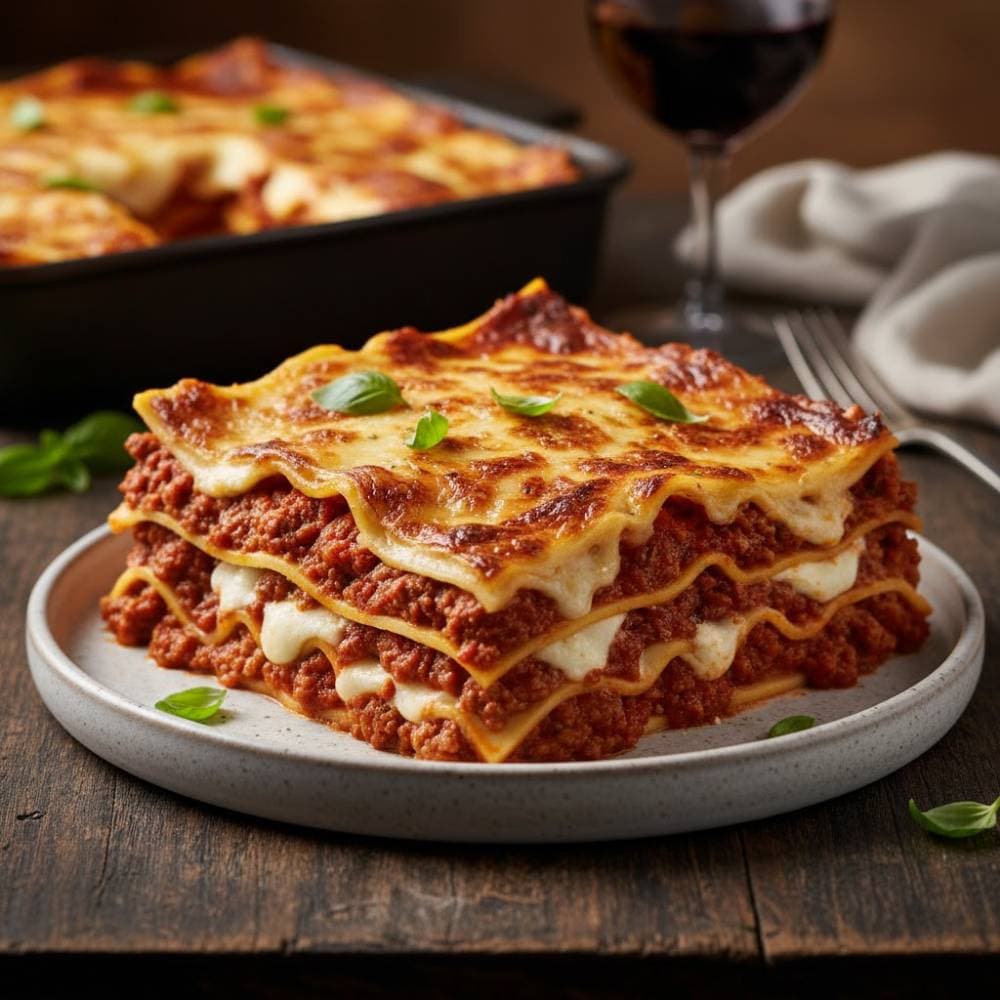
Layers of tender pasta, rich Bolognese meat sauce, creamy béchamel, and melted cheese create the ultimate Italian comfort food. This showstopping lasagna is worth every minute of effort.
The Quick Answer
Lasagna Bolognese rewards patience, and its depth comes from layering two meats over a slow soffritto rather than rushing a single browning. Build the sauce on a properly cooked vegetable base and a beef-and-pork blend, then let the assembled dish rest so the layers set into clean slices.
Why does Bolognese use both ground beef and pork?
Beef and pork bring different things, and the blend is why this sauce tastes richer than an all-beef version. Lean ground beef supplies deep, savoury, mineral flavour but can turn dry and grainy as its proteins tighten over a long simmer. Ground pork carries more fat, which melts into the sauce and coats the tongue, keeping the texture lush and silky through the 30 to 40 minutes of cooking. Pork also adds a mild sweetness that balances the acidity of the crushed tomatoes and red wine. Browning both meats first builds Maillard compounds that deepen the base, while the soffritto of onion, carrot, and celery adds aromatic sweetness and body that a meat-only sauce never reaches.
Why does my bechamel turn out lumpy?
Bechamel lumps when the flour clumps before it can disperse into the milk. Cooking the butter and flour into a smooth, bubbling roux for a couple of minutes coats each starch granule in fat, which keeps them from sticking together when liquid hits. Adding warmed milk gradually while whisking constantly lets the starch hydrate and swell evenly, thickening the sauce as it gelatinizes. Cold milk poured in all at once shocks the roux and seizes pockets of flour into lumps. The nutmeg is just seasoning, but the whisk-and-add discipline is what gives you the smooth, spoon-coating sauce that binds the lasagna layers.
Not sure what to cook next? Let the generator pick your next dish in one click.
Random Recipe GeneratorAbout This Recipe
What is this dish?
Lasagna Bolognese is the definitive Italian baked pasta dish — layers of fresh pasta sheets, slow-cooked meat ragù (Bolognese), velvety béchamel sauce, and melted Parmesan baked into a golden-crusted, deeply layered masterpiece. This is not the American-style lasagna with ricotta — it is the authentic Emilia-Romagna version with no ricotta, no eggs in the filling, and béchamel instead of American-style tomato-heavy sauce. It is the ultimate special-occasion Italian comfort food.
Why you'll love it
Lasagna Bolognese is one of the most deeply satisfying dishes in Italian cooking. The long-cooked Bolognese develops extraordinary depth, the béchamel provides creamy richness between every layer, and the Parmesan creates a golden, slightly crispy top. The result is a dish that tastes like pure Italian hospitality — impressive, warming, and deeply comforting.
When to serve
Lasagna Bolognese is the perfect dish for family gatherings, dinner parties, and holiday meals. It serves a crowd from a single baking dish and benefits from being made ahead. It is a Sunday project worth every minute of effort, and the leftovers refrigerate beautifully for days.
Quick tips
Make the Bolognese a day ahead for dramatically better flavor. Season every component individually before layering. Rest the finished lasagna for 20 minutes before cutting for clean slices. Use an 8x12 inch or 9x13 inch baking dish for the right layer thickness.
Ingredient Highlights
Ground Beef (and Pork Mix)
Traditional Bolognese uses a combination of ground beef and pork for the best fat content, flavor, and texture. The pork fat enriches the sauce and gives it a silky quality that all-beef cannot achieve. An 80/20 blend of each meat prevents the sauce from being dry.
Béchamel Sauce
The authentic alternative to ricotta in lasagna Bolognese. Made from butter, flour, milk, and nutmeg, béchamel creates a creamy, neutral-tasting layer between the pasta and Bolognese that binds the dish together and provides richness without the tang of ricotta.
Lasagna Noodles
Fresh pasta sheets (if available) give the most authentic, delicate texture. Dried noodles work very well — no-boil noodles are the easiest option and absorb the sauce during baking. Traditional lasagna noodles boiled until just under al dente give the best control over final texture.
Dry Red Wine
Added to the Bolognese to deglaze the pan and add acidity, depth, and complexity. The wine's tannins soften as it reduces, leaving behind concentrated flavor. Use a wine you would drink — Chianti, Barbera d'Asti, or any dry Italian red works beautifully.
Substitution Options
Use ground turkey for a lighter Bolognese. Replace all beef with a 50/50 mix of beef and pork sausage (removed from casing) for extra flavor. Vegetarian version: replace meat with finely diced mushrooms and lentils for a plant-based Bolognese. No-boil lasagna noodles work well — just add slightly more liquid to the Bolognese. For gluten-free lasagna, use gluten-free lasagna sheets and substitute the béchamel flour with rice flour or cornstarch.
You'll likely need to buy
Likely in your pantry
Step-by-Step Instructions
Make the Bolognese sauce
Heat 2 tablespoons olive oil in a large, heavy-bottomed pot or Dutch oven over medium-high heat. Add 1 pound ground beef and 8 oz ground pork. Break up the meat with a wooden spoon and cook for 6-8 minutes until browned. Add 1 diced onion, 2 diced carrots, 2 diced celery stalks, and 4 cloves minced garlic. Cook for 5 minutes until vegetables soften. Stir in 2 tablespoons tomato paste and cook for 1 minute. Pour in 1 cup red wine and scrape up any browned bits from the bottom. Let the wine reduce by half, about 3 minutes. Add 1 can crushed tomatoes, 1 cup beef broth, 2 teaspoons oregano, 1 teaspoon basil, 2 bay leaves, 1 teaspoon salt, 1/2 teaspoon black pepper, and red pepper flakes if using. Bring to a simmer, reduce heat to low, cover partially, and cook for 30-40 minutes, stirring occasionally. The sauce should be thick and rich. Remove bay leaves and set aside.
Chef's Tips
- ›A mix of beef and pork creates deeper flavor than beef alone.
- ›The longer the sauce simmers, the richer it becomes.
Make the béchamel sauce
Melt 4 tablespoons butter in a medium saucepan over medium heat. Add 1/4 cup flour and whisk constantly for 2 minutes to create a roux—it should be smooth and bubbly but not browned. Gradually pour in 3 cups warmed milk, whisking constantly to prevent lumps. Continue whisking and cooking for 5-7 minutes until the sauce thickens enough to coat the back of a spoon. Stir in 1/4 teaspoon freshly grated nutmeg, 1/2 teaspoon salt, and 1/4 teaspoon white pepper. Remove from heat and set aside.
Chef's Tips
- ›Warming the milk before adding it helps prevent lumps.
- ›Nutmeg is essential—it adds a subtle warmth that defines great béchamel.
Cook the lasagna noodles
Bring a large pot of salted water to a boil. Add 12-15 lasagna noodles and cook according to package directions until al dente (usually 8-10 minutes). If using no-boil noodles, skip this step. Drain the noodles and lay them flat on a clean kitchen towel or lightly oiled baking sheet to prevent sticking.
Chef's Tips
- ›Add a tablespoon of oil to the boiling water to prevent noodles from sticking.
- ›Slightly undercook the noodles—they'll finish cooking in the oven.
Assemble the lasagna
Preheat your oven to 375°F (190°C). Spread 1/2 cup of Bolognese sauce on the bottom of a 9x13-inch baking dish. Layer 4-5 lasagna noodles over the sauce, overlapping slightly. Spread 1/3 of the remaining Bolognese sauce over the noodles. Drizzle 1/3 of the béchamel sauce on top. Sprinkle with 1/2 cup mozzarella and 1/3 cup Parmesan. Repeat this layering process two more times: noodles, Bolognese, béchamel, mozzarella, and Parmesan. For the final layer, top with noodles, the remaining béchamel, and finish with the remaining mozzarella and Parmesan.
Chef's Tips
- ›Don't skimp on the béchamel—it keeps the lasagna moist and creamy.
- ›The top layer should be mostly cheese for that golden, bubbly finish.
Bake the lasagna
Cover the baking dish tightly with aluminum foil (tent it slightly so the foil doesn't touch the cheese). Bake for 25 minutes. Remove the foil and bake for an additional 20-25 minutes until the top is golden brown and bubbly. If the top isn't browning enough, turn on the broiler for the last 2-3 minutes, watching closely to prevent burning.
Chef's Tips
- ›Tenting the foil prevents the cheese from sticking to it.
- ›The lasagna should be bubbling around the edges when done.
Rest and serve
Remove the lasagna from the oven and let it rest for 15-20 minutes before slicing. This resting time allows the layers to set, making it easier to cut clean slices. Garnish with fresh basil or parsley if desired. Serve hot with a simple green salad and crusty bread.
Chef's Tips
- ›Patience is key—cutting too early results in a saucy mess.
- ›Lasagna tastes even better the next day as the flavors meld.
Chef's Tips
Techniques that separate good from great
Make the Bolognese a day ahead — it transforms overnight
Bolognese is one of the most improved-by-resting sauces in cooking. Made and refrigerated overnight, the fat from the meat redistributes throughout the sauce, the tomatoes mellow, and all the flavors meld into something richer and more cohesive than fresh-made sauce. Plan ahead if you can.
Simmer Bolognese low and slow for at least 2 hours
The difference between a 30-minute Bolognese and a 2-hour Bolognese is extraordinary. Long, gentle simmering caramelizes the tomatoes, tenderizes the meat, and reduces the sauce to a rich, concentrated depth. The sauce should barely bubble — high heat toughens the meat and creates a harsh, acidic result.
Season every element: pasta water, Bolognese, béchamel, and layers
Lasagna has many components, and bland components at any layer result in a flat-tasting final dish. The pasta water should taste like the sea. The Bolognese needs enough salt to taste boldly seasoned before layering. The béchamel should be seasoned with nutmeg and black pepper. Taste everything individually before assembly.
Rest the assembled lasagna for 20 minutes before cutting
Cutting into a freshly baked lasagna causes the layers to collapse and the filling to pour out rather than holding its shape. The rest allows the béchamel and Bolognese to set slightly, giving you clean, photogenic slices. This step is non-negotiable.
Nutrition Facts
Per serving · Estimated values
* Estimated per serving based on a 2,000 calorie diet.
Equipment Needed
- Large pot or Dutch oven (for Bolognese)
- Medium saucepan (for béchamel)
- Large pot (for pasta)
- 9x13-inch baking dish
- Whisk
- Wooden spoon
- Aluminum foil
- Knife and cutting board
- Measuring cups and spoons
As an Amazon Associate we earn from qualifying purchases — at no extra cost to you.
Quick Tips
- Make the Bolognese sauce a day ahead and refrigerate—it tastes even better after the flavors meld.
- Assembled, unbaked lasagna can be covered tightly and refrigerated for up to 2 days or frozen for up to 3 months. Add 10-15 minutes to baking time if baking from cold.
- For a vegetarian version, substitute the meat with sautéed mushrooms, spinach, and zucchini.
Recipe Variations
Different ways to make this dish your own
Vegetarian Lasagna Bolognese
Replace the meat with a mixture of finely diced cremini mushrooms, zucchini, and cooked green lentils. The mushrooms provide umami depth, the lentils add body, and the vegetable ragù is simmered with the same tomatoes, wine, and aromatics as the meat version.
Spinach and Ricotta Lasagna (American Style)
Replace the béchamel with a mixture of whole-milk ricotta, eggs, spinach, and mozzarella between layers. Omit the Bolognese and use a simple tomato sauce. This creates the American-style vegetarian version.
White Lasagna (Lasagna Bianca)
Replace the Bolognese entirely with extra béchamel layered with prosciutto, mushrooms, and mozzarella. No tomatoes — the result is an entirely different, cream-forward dish with a delicate, subtle flavor.
Individual Lasagna Portions
Assemble individual lasagnas in oven-safe ramekins or small baking dishes for elegant dinner party presentation. Each person gets their own perfectly layered individual lasagna, baked for 20-25 minutes.
What to Serve With
Perfect pairings to complete the meal
Simple Arugula Salad with Lemon Dressing
The peppery bitterness of arugula dressed with fresh lemon juice and extra virgin olive oil provides the perfect palate-cleansing contrast to the rich, meaty, cheesy lasagna. Keep the salad completely simple — the lasagna is the star.
Warm Crusty Italian Bread
Thick-sliced ciabatta or a crusty Italian loaf for soaking up the sauce that pools around each slice of lasagna. Serve with good olive oil and a light dusting of Parmesan on the side.
Chianti or Barbera d'Asti
A medium-bodied Italian red wine with bright acidity is the natural pairing. Chianti Classico, Barbera d'Asti, or a Sangiovese from Emilia-Romagna complements the rich meat sauce without overwhelming the béchamel's delicacy.
Roasted Cherry Tomatoes
A simple side of oven-roasted cherry tomatoes with olive oil, garlic, and fresh basil alongside the lasagna adds freshness and acidity that cuts through the richness of the dish beautifully.
Storage & Reheating
Keep it fresh and plan ahead
Refrigerator
Cover tightly and refrigerate for up to 4 days. Lasagna actually improves after the first day as the layers set and the flavors meld. Individual portions can be reheated directly in the microwave.
Freezer
Freeze assembled but unbaked lasagna for up to 3 months, wrapped tightly in two layers of plastic wrap and foil. Thaw overnight in the refrigerator before baking, adding 15 minutes to the total baking time. Alternatively, freeze baked portions wrapped individually.
Make-Ahead
The Bolognese can be made up to 3 days ahead and refrigerated or 3 months ahead and frozen. Assemble the complete lasagna up to 2 days before baking, cover tightly, and refrigerate. Remove from the refrigerator 30 minutes before baking to take the chill off.
Reheating
Reheat individual portions in the microwave covered for 2-3 minutes. For larger amounts, cover with foil and reheat in a 350°F oven for 20-25 minutes until heated through. A splash of broth or water over the top prevents drying. Remove foil for the last 5 minutes to crisp the top.
Cooking tonight?
Get a month of dinners like this — done for you
30 chef-tested dinners mapped to the month, plus 5 ready-to-shop grocery lists. One-time $8.99 — 30 dinners planned for you, zero nightly decisions.
See the 30-Day Plan →Got Leftovers?
Turn what you already have in your fridge into delicious meals. Our AI-powered generator creates personalized recipes from your ingredients.
Go Deeper
Master the Culinary Science
Every recipe is a doorway. Our 7 Mastery Guides give you the science, technique, and framework to understand why food works — not just how to follow steps.
AI-Powered
Have Ingredients? Generate a Recipe.
Tell our AI what's in your fridge and get a custom recipe with image in seconds. No waste, no boredom.
Try the AI Recipe Generator →Browse more like this:
You Might Also Like
Discover more delicious recipes similar to what you're cooking