Fueling Hypertrophy: Why an Automated High Protein Meal Generator Beats Manual Tracking
Manual macro tracking decays; an automated high protein meal generator does not. Here is the amino-acid science behind hitting your protein target every single day.
The Quick Answer
A high protein meal generator is an automated tool that assembles complete, protein-dense meals so you hit a daily target of roughly 1.6 to 2.2 grams of protein per kilogram of bodyweight without hand-logging a single macro. By spreading that intake across four leucine-rich meals of 30 to 40 grams each, it maximises muscle protein synthesis far more reliably than manual tracking, which decays the moment motivation drops.
Skeletal muscle is built from twenty amino acids, but only nine are essential, meaning your body cannot synthesise them and must take them from food. Of those nine, leucine is the master switch: it activates the mTOR pathway that triggers muscle protein synthesis, and the threshold to flip that switch sits at roughly 2.5 to 3 grams of leucine in a single sitting. This is why protein quality, not just quantity, decides how much of what you eat actually becomes muscle. Complete proteins - meat, fish, eggs, dairy - carry the full essential spectrum in the right ratios and score highest on the DIAAS and PDCAAS quality scales, while most plant proteins are limited in one or more essentials and need to be combined to match them.
Distribution is the other half of the equation. Muscle protein synthesis is capped per meal: once you clear the leucine threshold with about 0.4 grams of protein per kilogram of bodyweight, roughly 30 to 40 grams for most adults, additional protein in that same sitting is used less efficiently for building muscle. The practical consequence is blunt. Four meals of 35 grams drive more total daily synthesis than one 140 gram protein bomb at dinner, even though the daily total is identical. Optimising hypertrophy is therefore a scheduling problem as much as a shopping one, and scheduling is exactly what software does better than willpower.
Why do traditional meal plans fail for muscle hypertrophy?
Can't decide what to make? Let our generator pick for you instantly.
Generate a Random Recipe →A printed meal plan is a static artefact aimed at a moving target. It is usually optimised for calories and palatability, not for hitting a leucine threshold at each meal, and it assumes an adherence that real life does not supply. The moment you travel, get busy, or simply tire of the same five dinners, the plan is abandoned, and an abandoned plan builds zero muscle regardless of how well it was designed on paper.
The deeper failure is distribution. Most conventional plans, and most people, skew protein heavily toward dinner: a light or carb-dominant breakfast, a modest lunch, then a large evening meal. That shape wastes synthesis capacity in the morning and overshoots it at night, so a lifter can hit an impressive daily protein total and still leave hypertrophy on the table. Manual tracking is supposed to catch this, but logging every gram is high-friction and error-prone, and that friction is precisely why adherence decays within weeks.
Where manual plans break down
- Adherence decay: static plans assume perfect compliance and collapse the first time your schedule does.
- Skewed distribution: protein clustered at dinner overshoots the per-meal synthesis cap and starves breakfast.
- Logging friction: hand-tracking macros is tedious enough that most people quit before the results compound.
- Quality blindness: calorie-first plans ignore whether each protein source actually clears the leucine threshold.
How a high protein meal generator optimizes daily macronutrient targets
An automated generator starts from the number that matters and works backwards. You set a daily protein target - commonly 1.6 to 2.2 grams per kilogram of bodyweight for a lifter in a building phase - and the tool divides it into per-meal doses that each clear the roughly 30 to 40 gram threshold, then selects dishes anchored by complete-protein sources that fit. Instead of you auditing whether Tuesday hit its numbers, the structure guarantees it before you cook.
Protein is only the anchor; the generator balances the rest of the macronutrient layout around it. Carbohydrates are allocated to fuel training and refill glycogen, weighted toward the meals around your workout, while dietary fat is kept high enough to support hormone production without crowding out protein or blowing the calorie ceiling. Because it can rotate through dozens of sources, it also varies the amino-acid and micronutrient profile across the week - beef one day, salmon the next, poultry after that - which a repetitive manual plan rarely bothers to do.
Eliminating decision fatigue in clean eating structures
Every 'what should I eat' is a withdrawal from the same account that funds your training discipline. Reducing the number of daily food decisions removes a common failure point: many disciplined eaters derail at dinner simply because deciding what to eat, meal after meal, is a friction that steadily erodes adherence. Clean eating fails far more often from decision load than from a lack of knowledge.
A programmatic dietary layout removes the choice entirely. When the meal is already decided and it already hits your macros, adherence stops depending on motivation and starts depending on a system, and systems do not have bad days. This is the quiet advantage of automation over tracking: tracking asks you to exert control at every meal, whereas a generator front-loads a single decision and then gets out of your way. Consistency, not perfection, is what actually drives hypertrophy over months, and consistency is a solved problem once the deciding is outsourced.
Professional Chef Note
Protein timing matters less than most lifters think, but protein distribution matters more. Front-load it: a 30 gram-protein breakfast does more for daily muscle protein synthesis than saving your intake for a 90 gram dinner, because synthesis is capped per meal by the leucine trigger, not by the daily total alone. A generator that spreads your target evenly across the day is quietly doing the single highest-leverage thing for hypertrophy.
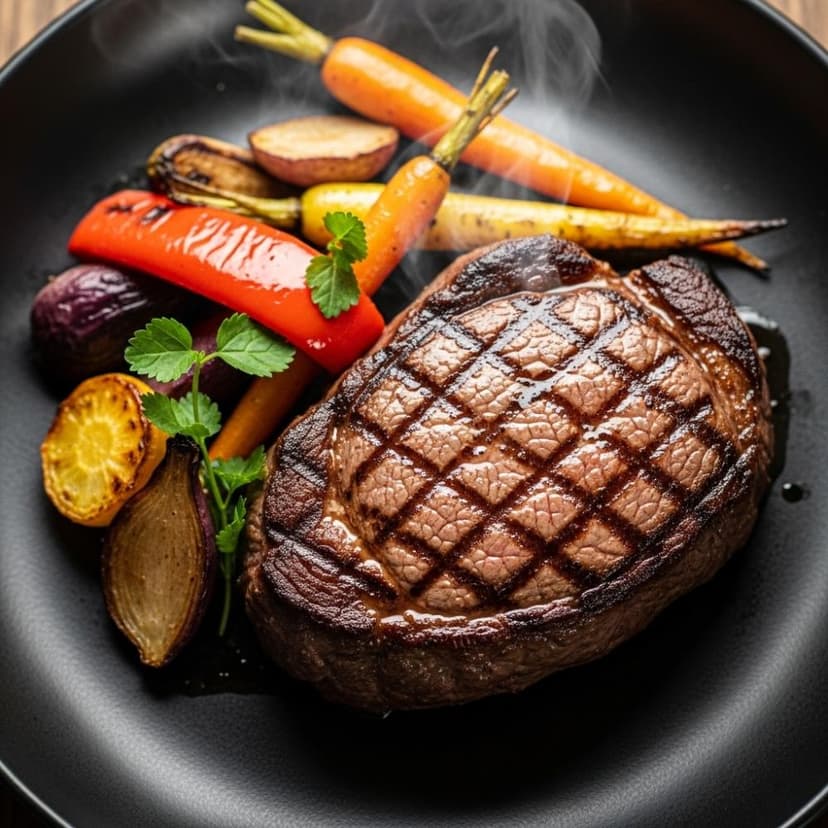
Grilled Steak with Roasted Vegetables
A flavorful grilled steak paired with tender roasted vegetables, seasoned simply with herbs and spices. A hearty and wholesome meal for two.
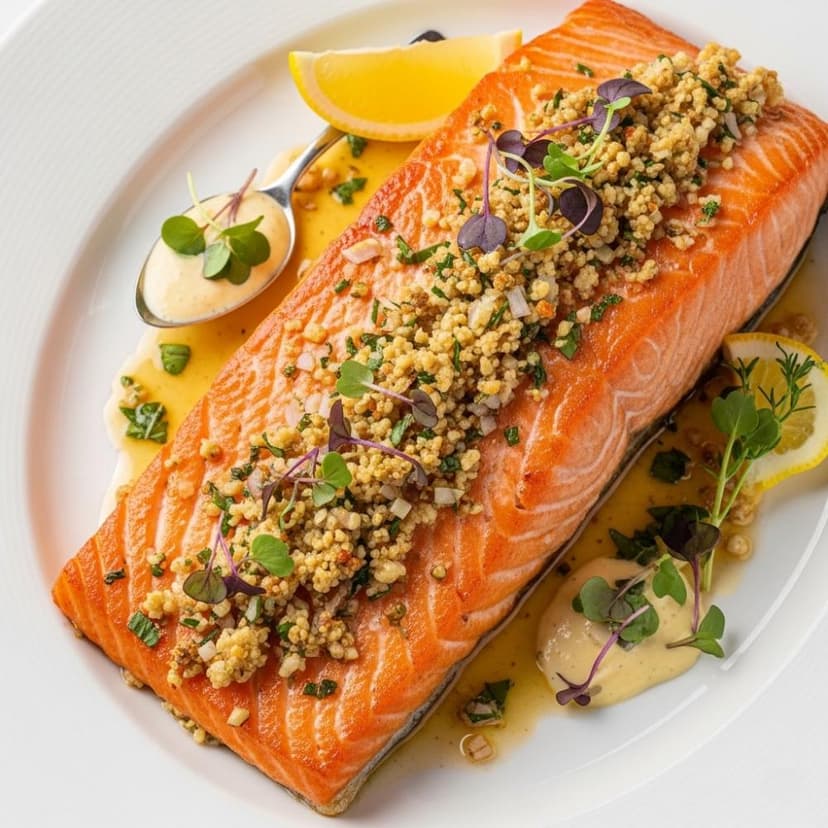
Simple Baked Salmon
Flaky salmon fillets baked to perfection with lemon and herbs. This easy and healthy recipe is ideal for a quick and satisfying meal for two.

Spinach and Feta Stuffed Chicken Breast
Tender chicken breasts pounded thin and filled with a savory mixture of fresh spinach, tangy feta cheese, and herbs, then baked until juicy and golden. An elegant and flavorful meal for two.
These three anchor a day's protein across different sources: a steak and a stuffed chicken breast at around 55 grams each - generous portions that sit above the per-meal minimum and can be split across two sittings if you are spreading intake more evenly - plus an omega-3-rich salmon fillet at about 35 grams that lands squarely in the 30 to 40 gram target band. Rotating red meat, poultry, and fish covers the full essential amino-acid spectrum while spreading the micronutrient load - iron and zinc from beef, selenium and vitamin D from salmon - something a single-source plan cannot do.
Stop auditing every gram. Set your protein target once and let the tool build meals that hit it - no logging required.
Random Recipe GeneratorFrequently Asked Questions
It is an automated tool that assembles complete, protein-dense meals to hit a daily protein target - typically 1.6 to 2.2 grams per kilogram of bodyweight - without hand-logging macros. It divides the target into per-meal doses of roughly 30 to 40 grams so each meal clears the leucine threshold that triggers muscle protein synthesis.
Meta-analyses converge on about 1.6 grams of protein per kilogram of bodyweight per day as the point where added protein stops improving muscle gain for most trainees, with some further benefit up to roughly 2.2 grams per kilogram during a hard building phase. Spreading that total across three to four meals matters as much as the number itself.
For most people, yes, because the limiting factor is adherence, not knowledge. Manual tracking is accurate but high-friction and tends to be abandoned, whereas a generator bakes the targets into the meals themselves, so hitting your macros no longer depends on daily willpower.
Aim for roughly 0.4 grams of protein per kilogram of bodyweight per meal, which is about 30 to 40 grams for most adults. That dose reliably clears the 2.5 to 3 gram leucine threshold needed to maximally stimulate muscle protein synthesis in a single sitting.
Can't decide what to make? Let our generator pick for you instantly.
Generate a Random Recipe →Tags:
Related Reading
Ready to Try These Recipes?
Browse our complete recipe collection for more cooking inspiration!