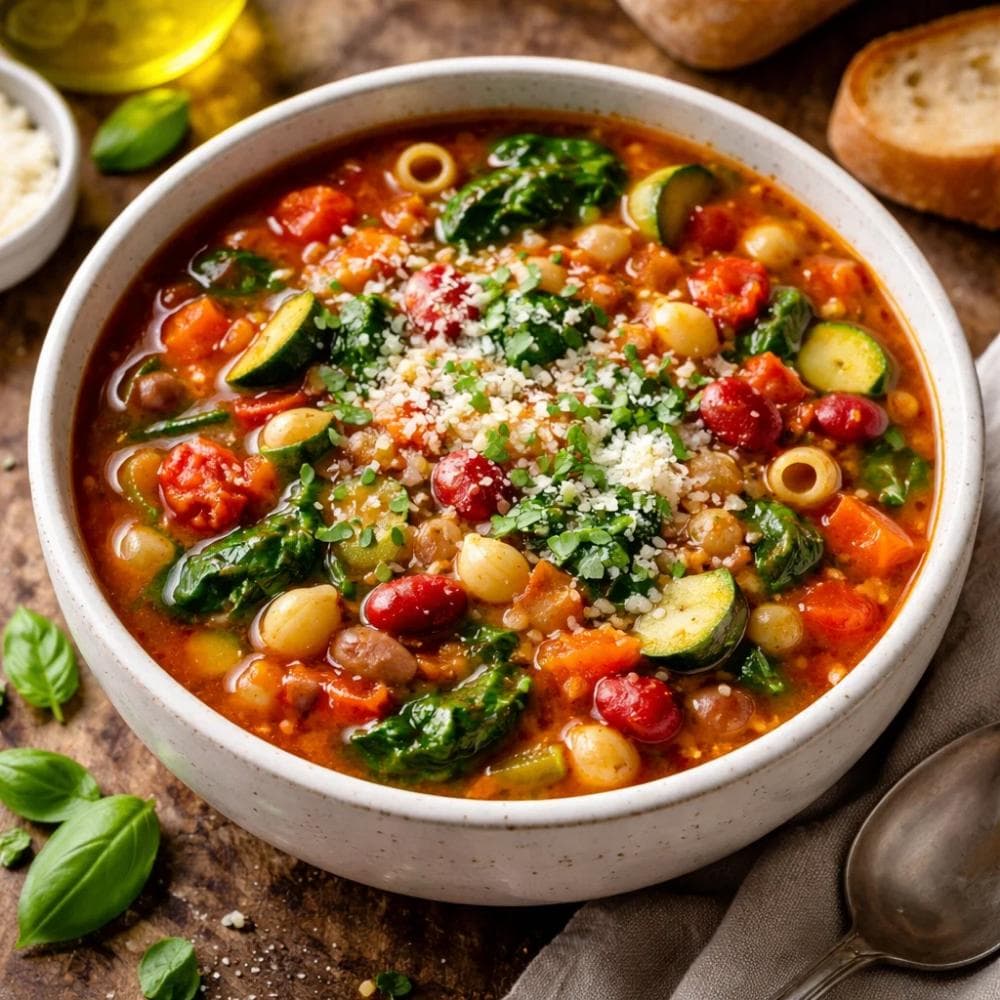
Moroccan Lamb Tagine with Preserved Lemon and Olives (Authentic Slow-Cooked Recipe)
Slow-braised lamb shoulder in a richly spiced Moroccan sauce with preserved lemon and green olives. Fall-apart tender, deeply aromatic, and the finest one-pot to come from North Africa.
The Quick Answer
Lamb tagine disappoints when the meat stays tough and chewy or the sauce turns thin and greasy. Holding the braise at the barest simmer long enough to melt the collagen, and reducing the sauce after the lamb is tender, give you fork-soft meat in a glossy, concentrated sauce.
Why is my lamb tagine still tough after cooking?
Lamb shoulder is a hard-working cut packed with collagen and connective tissue. That collagen only melts into soft gelatine when held at a low, steady temperature over time; rush it at a hard boil and the muscle fibres seize and squeeze out moisture, leaving stringy, dry meat before the collagen has had a chance to convert. The recipe asks for 90 minutes at the lowest possible simmer for exactly this reason. If your tagine is still chewy, it almost always needs more gentle time, not more heat. The bone-in pieces help here, releasing extra gelatine that thickens the sauce and gives the dish its silky body.
Why is my tagine sauce thin and greasy?
Browning the lamb and the canned tomatoes plus 300ml of stock create a lot of liquid, and the fatty shoulder renders more fat as it braises. If you serve straight from the braise, the sauce is loose and an oily layer floats on top. The fix is built into the method: once the lamb is tender, you add the preserved lemon and olives and simmer uncovered for 10 to 15 minutes so water evaporates and the sauce reduces to a clinging consistency. The 1 tablespoon of honey also helps the sauce thicken and gloss as it concentrates. Skim only the excess fat; stirring a little of the rendered fat back in carries the bloomed spices and adds richness.
Not sure what to cook next? Let the generator pick your next dish in one click.
Random Recipe GeneratorAbout This Recipe
What is this dish?
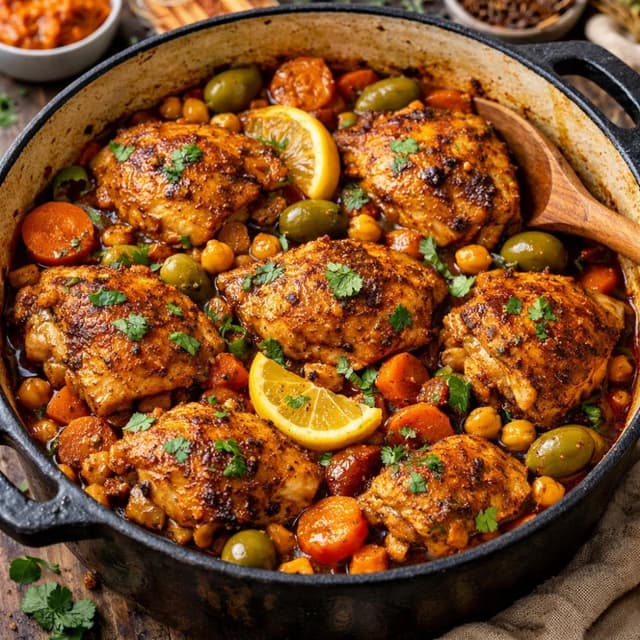
A Moroccan tagine is a slow-braised stew named after the conical clay pot it is traditionally cooked in. Lamb tagine with preserved lemon and olives is one of Morocco's most celebrated dishes — lamb slow-cooked with a blend of warming spices, salty preserved lemon, and briny green olives until the meat is fall-off-the-bone tender and surrounded by a deeply aromatic, slightly sweet and sour sauce. It is food from the North African cucina povera tradition, where tougher, cheaper cuts of meat are transformed through time, spice, and patience.
Why you'll love it
Lamb tagine is one of the most rewarding one-pot dishes you can make. The combination of spices, sweet honey, salty preserved lemon, and briny olives creates a depth of flavour that tastes complex but is built from straightforward techniques. Once the pot is on the hob, it needs almost no attention for 90 minutes — and the result is fall-apart lamb in a sauce so good you will want to mop every last drop with flatbread. It improves significantly overnight, making it perfect for make-ahead entertaining.
When to serve
Perfect for dinner parties and weekend cooking when you want something impressive that needs minimal last-minute effort. Suits the colder months particularly well — the warming spices and slow-cooked richness are deeply satisfying in autumn and winter. Excellent as a North African-themed dinner alongside couscous, harissa, and flatbread.
Quick tips
Brown the lamb in batches — do not rush it. Bloom the spices for a full 60–90 seconds. Keep the braise at a bare simmer, never a boil. Add preserved lemon and olives only in the final 15 minutes. Make the day before for best flavour.
Ingredient Highlights
Lamb Shoulder
The ideal cut for slow-braised tagine — rich in intramuscular fat and collagen that breaks down over 90 minutes of gentle cooking into silky, tender meat that leg or loin cannot replicate. Bone-in shoulder adds additional depth to the braising liquid.
Preserved Lemon
Whole lemons cured in salt and their own juice for weeks until the rind softens into a concentrated, salty, intensely lemony condiment. Only the rind is used. A small amount transforms the sauce with a distinctively Moroccan flavour that no fresh lemon can replicate.
Moroccan Spice Blend
This recipe builds a simplified ras el hanout — cumin, coriander, cinnamon, turmeric, and paprika — creating the warm, aromatic profile that defines Moroccan cooking. Blooming the spices in oil before adding liquid is essential for full flavour development.
Green Olives
Added near the end of cooking to retain their briny, slightly bitter character. They provide salt, a fresh olive oil flavour, and textural contrast to the tender lamb. Castelvetrano (buttery and mild) or Manzanilla (firm and briny) are both excellent choices.
Substitution Options
Substitute lamb with bone-in chicken thighs (reduce cooking time to 45–50 minutes) or chickpeas for a vegan version. Replace preserved lemon with lemon zest and extra lemon juice. Use Kalamata olives instead of green for stronger flavour. Add 50g of dried apricots or dates in the last 30 minutes for a sweet-savoury dimension. Use a pre-mixed ras el hanout spice blend (2 tablespoons) in place of the individual spices.
You'll likely need to buy
Likely in your pantry
Step-by-Step Instructions
Brown the lamb
Pat the lamb pieces completely dry with paper towels and season generously with salt and pepper. Heat the olive oil in a large heavy casserole or Dutch oven over medium-high heat until shimmering. Brown the lamb in batches — do not crowd the pot — for 3–4 minutes per side until deeply golden-brown on all sides. Remove and set aside. This step builds the meaty depth of the finished dish.
Chef's Tips
- ›Dry the lamb thoroughly — moisture prevents browning and causes steaming.
- ›Brown in batches — a crowded pot drops temperature and steams the meat.
Build the spiced base
In the same pot over medium heat, cook the sliced onion for 8–10 minutes until softened and beginning to turn golden. Add the garlic and fresh ginger, cook for 1 minute. Add all the ground spices — cumin, coriander, turmeric, cinnamon, paprika, and cayenne. Stir continuously for 60–90 seconds until the spices are fragrant and darkened slightly. This toasting step is essential for full spice development.
Chef's Tips
- ›Bloom the spices for a full 60–90 seconds — the raw spice flavour must cook out before adding liquid.
- ›The mixture should smell intensely fragrant and the spices should darken slightly on the onions.
Braise slowly
Return the browned lamb to the pot. Add the chopped tomatoes, stock, and honey. Stir well, scraping up any browned bits from the bottom. Bring to a boil, then reduce to the lowest possible simmer. Cover tightly and cook for 1 hour 30 minutes until the lamb is completely tender and falling from the bone. Stir every 30 minutes — add a splash of water if it looks dry.
Chef's Tips
- ›Low and slow is essential — rapid boiling makes lamb tough and stringy.
- ›Just a gentle bubble at the surface — never a vigorous boil.
Add preserved lemon and olives
Once the lamb is tender, stir in the preserved lemon rind and green olives. Taste before adding salt — the preserved lemon is very salty. Simmer uncovered for 10–15 minutes to reduce and concentrate the sauce. Skim any excess fat from the surface if needed.
Chef's Tips
- ›Preserved lemon adds significant salt — taste before seasoning further.
- ›Simmer uncovered to reduce and concentrate the sauce to a coating consistency.
Finish and serve
Scatter the fresh coriander over the tagine and finish with toasted flaked almonds. Serve directly from the pot with couscous or flatbread. Any rendered fat on the surface adds flavour — stir it back in rather than discarding.
Chef's Tips
- ›Add fresh coriander off the heat to preserve its fresh, aromatic flavour.
- ›Toast almonds in a dry pan for 2–3 minutes, stirring constantly, until golden.
Chef's Tips
Techniques that separate good from great
Bloom the spices for a full 60–90 seconds
Raw ground spices taste flat and slightly dusty. Cooking them in the oil and onion fat for 60–90 seconds activates their fat-soluble flavour compounds and eliminates the raw taste. The mixture should smell intensely fragrant and the spices should darken slightly. This step is non-negotiable.
Keep the braise at a bare simmer, never a boil
Braising over high heat causes the proteins in the lamb to tighten rather than relax. The connective tissue in lamb shoulder converts to gelatin only during long, gentle, moist heat. Vigorous boiling produces tough, dry, stringy meat regardless of the quality of the lamb.
Make the tagine the day before serving
Moroccan tagine improves significantly after 12–24 hours in the fridge. The spices continue to develop, the lamb absorbs the sauce more fully, and the fat congeals on the surface making it easy to skim off. Reheat gently and the dish will taste noticeably better.
Add preserved lemon and olives in the final 15 minutes only
Both are salt-cured and become excessively salty and bitter if cooked for the full 90-minute braise. Added at the end, they provide their briny, lemony flavour without dominating the dish.
Nutrition Facts
Per serving · Estimated values
* Estimated per serving based on a 2,000 calorie diet.
Equipment Needed
- Large heavy casserole or Dutch oven (or a traditional tagine with a heat diffuser)
- Tongs
- Wooden spoon
- Knife and cutting board
As an Amazon Associate we earn from qualifying purchases — at no extra cost to you.
Quick Tips
- Browning the lamb thoroughly is the most impactful step — the Maillard reaction creates the deep, meaty flavour that defines the finished dish.
- A traditional conical tagine produces the best results due to its unique steam circulation, but any heavy pot with a tight-fitting lid works well.
- The tagine improves significantly the next day as the spices meld — make it ahead whenever possible.
Recipe Variations
Different ways to make this dish your own
Chicken Tagine
Replace lamb with 8 bone-in chicken thighs (skin removed). Brown and braise as with the lamb but reduce cooking time to 40–45 minutes covered. Add preserved lemon and olives in the last 10 minutes. Lighter and quicker.
Vegetable and Chickpea Tagine
Replace the lamb with 2 cans of drained chickpeas, 1 large aubergine (cubed), 2 courgettes, and 200g of cherry tomatoes. Reduce braising time to 25–30 minutes. A completely vegan version that showcases the spice base.
Lamb Tagine with Prunes and Almonds
Add 150g of pitted prunes and an extra tablespoon of honey in the last 30 minutes. Finish with 50g of toasted blanched almonds. This sweeter, more elaborate version is traditionally served at Moroccan celebrations.
Lamb Tagine with Apricots
Add 100g of dried apricots in the last 30 minutes along with the preserved lemon, omitting the olives. The sweet, slightly caramelised apricots create a beautiful sweet-sour balance with the spiced lamb.
What to Serve With
Perfect pairings to complete the meal
With Couscous
The classic accompaniment — pour boiling stock over couscous (equal volumes), cover for 5 minutes, fluff with a fork, and finish with butter and salt. The couscous absorbs the tagine sauce beautifully.
With Moroccan Flatbread
Khobz or any flatbread used to scoop the tender lamb and mop up the spiced sauce. Bread is as important as the tagine at a traditional Moroccan table.
With Harissa on the Side
A small bowl of good-quality rose harissa adds heat, smokiness, and colour. Stir into individual portions to taste — it lifts the tagine dramatically.
With Fresh Mint Tea
Moroccans traditionally drink intensely sweet fresh mint tea after a tagine — the sweetness and fresh mint cleanse the palate and complement the warm spices. The ritual is as much a part of the experience as the food itself.
Storage & Reheating
Keep it fresh and plan ahead
Refrigerator
Store in an airtight container for up to 4 days. The tagine improves overnight as the flavours meld — reheat gently with a splash of water.
Freezer
Freeze for up to 3 months. Thaw overnight in the fridge. Reheat gently over low heat with 3–4 tablespoons of water, stirring occasionally.
Make-Ahead
Ideal for making 1–2 days ahead. Cool completely, refrigerate, and skim the solidified fat from the surface before reheating. The flavour improves significantly overnight.
Reheating
Reheat in a covered pot over low-medium heat for 15–20 minutes, adding a splash of water or stock to loosen. Scatter fresh coriander after reheating.
Cooking tonight?
Get a month of dinners like this — done for you
30 chef-tested dinners mapped to the month, plus 5 ready-to-shop grocery lists. One-time $8.99 — 30 dinners planned for you, zero nightly decisions.
See the 30-Day Plan →Got Leftovers?
Turn what you already have in your fridge into delicious meals. Our AI-powered generator creates personalized recipes from your ingredients.
Go Deeper
Master the Culinary Science
Every recipe is a doorway. Our 7 Mastery Guides give you the science, technique, and framework to understand why food works — not just how to follow steps.
AI-Powered
Have Ingredients? Generate a Recipe.
Tell our AI what's in your fridge and get a custom recipe with image in seconds. No waste, no boredom.
Try the AI Recipe Generator →Browse more like this:
You Might Also Like
Discover more delicious recipes similar to what you're cooking