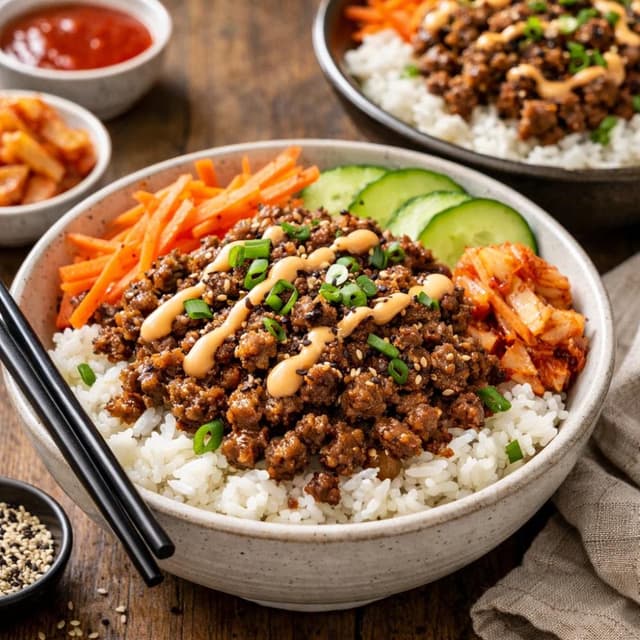
Bibimbap (Authentic Korean Rice Bowl with Vegetables, Egg and Gochujang)
Korea's most iconic dish — a bowl of steamed rice topped with individually seasoned vegetables, a fried or raw egg, gochujang chilli paste, and sesame oil. Mix everything together before eating for the full experience.
The Quick Answer
Bibimbap clumps and goes watery when hot, freshly-steamed short-grain rice smears under the gochujang and when blanched spinach and bean sprouts carry their blanching water into the bowl. Cool the rice so the grains stay separate, and squeeze every blanched vegetable hard so the sauce coats instead of dilutes.
Why does my gochujang sauce smear the rice into a paste?
Short-grain rice is dominated by amylopectin, the branched starch that gelatinizes into a tacky gel while hot. Straight from the pot, those swollen grains are soft enough that the act of mixing in thick gochujang and sesame oil crushes their surface, releasing free starch that glues everything into a smear. Spreading the rice to vent steam for a few minutes lets the grain surface cool and firm so it survives the vigorous mix bibimbap demands. The gochujang here is a paste, not a thin sauce, so it needs structurally intact grains to cling to; on soft hot rice it has nothing to grip and just thins the whole bowl into a sticky mush.
Why do my bibimbap vegetables release water into the bowl?
Blanching the spinach and bean sprouts floods their cells and surfaces with water; if it stays, mixing wrings it out and dilutes the gochujang, sesame oil, and runny yolk into a flavourless slick. Spinach collapses to a fraction of its bulk yet stays fully saturated, so hand-wringing it after blanching matters far more than it looks. The stir-fried courgette, carrot, and shiitake need genuinely high heat for their two-to-four-minute cook: hot enough to flash off surface moisture and brown, rather than a cool pan that stews them and leaks liquid. Each component going into the bowl as dry, seasoned, and concentrated is what keeps the assembled rice glossy rather than soupy.
Not sure what to cook next? Let the generator pick your next dish in one click.
Random Recipe GeneratorAbout This Recipe
What is this dish?
Bibimbap is Korea's most beloved and internationally recognised dish — a large bowl of steamed rice topped with individually seasoned and cooked vegetables, a fried or raw egg, and gochujang chilli sauce, mixed vigorously at the table before eating. The name literally means 'mixed rice'. Each vegetable is prepared separately to preserve its distinct character, then arranged in colourful sections over the rice for a presentation that is as visually striking as it is delicious. When mixed together, the gochujang sauce, sesame oil, and broken egg yolk coat every grain of rice and every piece of vegetable in a unified, deeply satisfying whole.
Why you'll love it
Bibimbap manages to be simultaneously healthy, filling, deeply flavourful, and beautiful. The gochujang sauce provides a complex, fermented heat that is addictive rather than simply burning, the sesame oil adds richness, and the variety of textures — soft rice, tender vegetables, crispy edges, runny egg — makes every mouthful interesting. It is also infinitely adaptable: use whatever vegetables you have, adjust the spice level to taste, and add protein as desired. The components can be prepared ahead and assembled in minutes.
When to serve
Bibimbap works as a weeknight dinner, a healthy lunch, or a centrepiece for a Korean-themed spread alongside kimchi, japchae, and miso soup. It is an excellent way to use up vegetables that need cooking, and the individual components can be meal-prepped in advance for quick weekday assembly.
Quick tips
Season each vegetable separately — do not mix them during cooking. Gochujang is non-negotiable. Keep egg yolks runny. Serve in the hottest bowls you have. Mix everything together before eating.
Ingredient Highlights
Gochujang
The soul of bibimbap — a thick, fermented Korean chilli paste with a complex, deeply savoury, slightly sweet, and moderately spicy character. Made from red chilli powder, glutinous rice, fermented soybeans, and salt, it has been an essential Korean condiment for centuries. It is distinct from other chilli sauces and cannot be substituted.
Short-Grain Rice
The correct rice for bibimbap — its higher starch content produces slightly sticky, cohesive grains that mix well with the sauce and hold together on the spoon. Japanese sushi rice is identical and works perfectly. Long-grain rice produces a drier, less cohesive result.
Sesame Oil
Used both in the vegetable seasonings and as a finishing drizzle, toasted sesame oil adds a nutty, aromatic richness that is fundamental to Korean cooking. Always use toasted (dark) sesame oil, not refined — the difference in flavour is dramatic.
Individually Seasoned Vegetables
The defining technique of bibimbap — each vegetable is cooked and seasoned separately with salt, sesame oil, and garlic. This ensures each component retains its own character and prevents the flavours from homogenising. The visual separation in the bowl reflects the distinct identity of each element.
Substitution Options
Replace shiitake mushrooms with any mushroom variety. Use any combination of vegetables — cucumber (raw, julienned), spinach, kale, pak choi, or peppers all work. Replace the fried egg with pan-fried tofu for a vegan version. Add 150g of thinly sliced beef (bulgogi) or chicken for a meat version. Use brown rice for additional fibre. Replace gochujang with a mixture of chilli flakes, miso paste, and soy sauce in an emergency — not authentic but workable.
You'll likely need to buy
Likely in your pantry
Step-by-Step Instructions
Make the bibimbap sauce
In a small bowl, stir together the gochujang, sesame oil, rice vinegar, sesame seeds, honey, and minced garlic until smooth. Taste and adjust — add more gochujang for heat, more honey for sweetness, or more vinegar for tang. Set aside. The sauce keeps refrigerated for up to 2 weeks.
Chef's Tips
- ›Gochujang varies in heat level between brands — taste before using and adjust the quantity.
- ›The sauce can be made days ahead and stored in the fridge.
Season and cook each vegetable separately
This is the defining technique of bibimbap — each vegetable is cooked and seasoned individually so every component retains its own distinct flavour and texture. Spinach: blanch in boiling salted water for 30 seconds, drain, squeeze dry, and season with 1/2 teaspoon sesame oil, a pinch of salt, and a little minced garlic. Carrot: stir-fry in a little oil over high heat for 2 minutes until slightly softened. Season with salt. Bean sprouts: blanch for 1 minute, drain, season with sesame oil and salt. Courgette: stir-fry in oil over high heat for 2–3 minutes. Mushrooms: stir-fry in oil with minced garlic for 3–4 minutes until golden.
Chef's Tips
- ›Cook each vegetable in the same pan, wiping between uses — this is efficient and traditional.
- ›Do not mix the vegetables together — keeping them separate is essential for the presentation and the eating experience.
Fry the eggs
Heat a little neutral oil in a small non-stick frying pan over medium heat. Crack in the eggs carefully and fry sunny-side up until the whites are just set but the yolks remain runny — about 3 minutes. Season lightly with salt. The runny yolk mixes through the rice when the bowl is stirred, acting as a rich sauce.
Chef's Tips
- ›A runny yolk is traditional and functional — it enriches the rice when mixed.
- ›For safety, you can cook the yolk through, but the dish is better with a runny yolk.
Assemble and serve
Divide the hot cooked rice between two bowls. Arrange the seasoned vegetables in neat separate sections around the rice — do not mix them. Place a fried egg on top of each bowl. Add 1–2 tablespoons of the gochujang sauce in the centre. Drizzle with sesame oil and scatter sesame seeds over the top. Serve immediately, with the instruction to mix everything together vigorously before eating.
Chef's Tips
- ›Arrange the vegetables in distinct colour sections for the classic bibimbap presentation — it is meant to be beautiful before mixing.
- ›The mixing is important — everything should be combined so each spoonful has rice, vegetables, sauce, and egg.
Chef's Tips
Techniques that separate good from great
Season each vegetable assertively and separately
Underseasoned bibimbap vegetables taste bland against the bold gochujang sauce. Each component should taste well-seasoned and flavourful on its own — a good pinch of salt, a drizzle of sesame oil, a little garlic. This individual preparation is what distinguishes proper bibimbap from rice mixed with vegetables.
Use the hottest bowls you own
Traditional bibimbap arrives at the table in a sizzling stone bowl that continues cooking the rice at the bottom. At home, heat oven-safe bowls in a 200°C oven for 10 minutes before assembling, or use a cast-iron pan over high heat. The warmth keeps the dish hot and can create some of the prized crispy rice effect.
Mix everything completely before eating
Bibimbap should be mixed vigorously so every grain of rice is coated with gochujang and sesame oil and every mouthful contains rice, sauce, egg, and vegetables. Many first-time diners eat it unm mixed out of admiration for the presentation — this is a mistake. The mixing is the dish.
Start the gochujang sauce conservatively and add more at the table
Gochujang sauce tolerance varies significantly. Start with 1 tablespoon per bowl and place extra sauce at the table for each person to adjust. The sauce on the table is a non-negotiable element of serving bibimbap properly.
Nutrition Facts
Per serving · Estimated values
* Estimated per serving based on a 2,000 calorie diet.
Equipment Needed
- Medium saucepan (for blanching)
- Frying pan or wok
- Small non-stick frying pan (for eggs)
- 2 large bowls (dolsot stone bowls if available)
- Knife and cutting board
As an Amazon Associate we earn from qualifying purchases — at no extra cost to you.
Quick Tips
- The individual preparation of each vegetable component is what makes bibimbap special — take the time to season each one properly.
- If you have a stone dolsot bowl, heat it directly on the hob until very hot before adding the rice — this creates the crispy toasted rice bottom (nurungji) that is considered the best part of the dish.
- Gochujang is the essential ingredient and has no substitute — find it at any Asian supermarket or online.
Recipe Variations
Different ways to make this dish your own
Dolsot Bibimbap (Stone Bowl)
Heat a cast-iron pan until very hot over high heat. Add a thin layer of sesame oil, then the cooked rice, pressing slightly. Add the vegetables and egg on top. The rice crisps and toasts on the bottom over the next 3–5 minutes, creating the prized nurungji crust. Scrape the crispy bottom into the bowl when mixing.
Bibimbap with Bulgogi Beef
Marinate 150g of thinly sliced ribeye in soy sauce, sesame oil, sugar, garlic, and ginger for 30 minutes. Stir-fry over high heat for 2–3 minutes. Add alongside the vegetables as one of the toppings.
Vegan Bibimbap
Replace the egg with a block of extra-firm tofu, pressed, cubed, and pan-fried in sesame oil with a splash of soy sauce until golden. Ensure the gochujang is vegan-certified. The dish loses nothing essential from the omission.
Kimchi Bibimbap
Add a generous portion of well-fermented kimchi (chopped roughly) as one of the vegetable toppings. The sour, fermented kimchi adds an entirely different dimension alongside the gochujang sauce.
What to Serve With
Perfect pairings to complete the meal
With Kimchi
The essential Korean accompaniment — a generous portion of well-fermented kimchi alongside provides fermented tang, crunch, and additional heat that complements the bibimbap perfectly.
With Doenjang Jjigae (Korean Soybean Paste Soup)
The classic complete Korean meal — doenjang jjigae (fermented soybean paste soup with tofu and vegetables) served alongside bibimbap. The savoury, slightly funky soup contrasts beautifully with the spiced rice bowl.
Extra Gochujang Sauce on the Side
Always serve extra gochujang sauce at the table in a small dish — diners can add more heat as desired. Bibimbap is a dish that each person seasons to their own preference.
With Japchae (Korean Glass Noodles)
Japchae — stir-fried sweet potato glass noodles with vegetables and sesame — makes an excellent side dish for a Korean-themed dinner alongside bibimbap.
Storage & Reheating
Keep it fresh and plan ahead
Refrigerator
Store the vegetable components and sauce separately in airtight containers for up to 3 days. Rice stores separately for up to 4 days. Assemble fresh bowls when ready to eat.
Freezer
Cooked rice freezes well for up to 1 month. The vegetable components are better fresh and are not recommended for freezing.
Make-Ahead
All vegetable components and the gochujang sauce can be prepared up to 2 days ahead and refrigerated. Cook the rice and fry the eggs fresh just before serving. This makes weeknight bibimbap achievable in under 10 minutes.
Reheating
Reheat rice in the microwave with a splash of water (30 seconds, covered). Reheat vegetables briefly in a hot pan. Fry a fresh egg — reheated fried eggs lose their texture.
Cooking tonight?
Get a month of dinners like this — done for you
30 chef-tested dinners mapped to the month, plus 5 ready-to-shop grocery lists. One-time $8.99 — 30 dinners planned for you, zero nightly decisions.
See the 30-Day Plan →Got Leftovers?
Turn what you already have in your fridge into delicious meals. Our AI-powered generator creates personalized recipes from your ingredients.
Go Deeper
Master the Culinary Science
Every recipe is a doorway. Our 7 Mastery Guides give you the science, technique, and framework to understand why food works — not just how to follow steps.
AI-Powered
Have Ingredients? Generate a Recipe.
Tell our AI what's in your fridge and get a custom recipe with image in seconds. No waste, no boredom.
Try the AI Recipe Generator →Browse more like this:
You Might Also Like
Discover more delicious recipes similar to what you're cooking