Rice Vinegar Substitute: 6 Swaps and Exact Ratios
Out of rice vinegar? Six substitutes with the exact ratio for each, which ones work in sushi rice, and the one swap that needs diluting first.

The Quick Answer
The best rice vinegar substitute is apple cider vinegar, used 1 to 1. It is close in acidity and only slightly fruitier. White wine vinegar and champagne vinegar also work 1 to 1 and are even more neutral. If all you have is distilled white vinegar, use 3 teaspoons of vinegar mixed with 1 teaspoon of water for every 4 teaspoons of rice vinegar, because it is noticeably harsher.
Why Rice Vinegar Is Easy to Replace
Can't decide what to make? Let our generator pick for you instantly.
Generate a Random Recipe →Rice vinegar is one of the gentlest vinegars in the kitchen. It sits at roughly 4 to 5 percent acidity, against 5 to 6 percent for most white and cider vinegars, and it carries a faint sweetness and a clean, almost floral finish rather than the sharp bite of distilled vinegar.
That gentleness is the entire character. Nothing about rice vinegar is difficult to imitate, which is why almost any mild vinegar will stand in with only a small adjustment. The mistakes people make are reaching for something far more acidic, or forgetting that seasoned rice vinegar is a completely different product.
That second point catches people out constantly. Seasoned rice vinegar already contains sugar and salt, so if your recipe calls for it and you substitute plain vinegar, the dish will taste flat and sharp. Add half a teaspoon of sugar and a pinch of salt per tablespoon and you have rebuilt it.
The 6 Best Rice Vinegar Substitutes
With the exact ratio for each
- 1. Apple cider vinegar. Use 1 to 1. The closest everyday match on both acidity and mildness. It brings a light fruitiness that disappears entirely in cooked dishes and is barely noticeable in dressings.
- 2. White wine vinegar. Use 1 to 1. Slightly more acidic and completely neutral in flavour, which makes it the best choice when you do not want any character at all from the vinegar.
- 3. Champagne vinegar. Use 1 to 1. The most delicate of the wine vinegars and arguably the closest in refinement, though it is the least likely to be in your cupboard.
- 4. Lemon juice. Use 1 to 1, and only in uncooked dishes. It is roughly as acidic but the citrus is unmistakable, so it works in dressings and slaws and is wrong for anything simmered.
- 5. Distilled white vinegar, diluted. Use 3 parts vinegar to 1 part water. Undiluted it is sharper and more aggressive than rice vinegar and will dominate a delicate dish, so the water is doing real work here.
- 6. Sherry vinegar. Use three quarters of the amount. Noticeably more assertive and nuttier, so it suits robust dishes and stir-fry sauces rather than anything subtle.
Professional Chef Note
If your recipe called for seasoned rice vinegar and you are substituting an unseasoned one, add half a teaspoon of sugar and a small pinch of salt for every tablespoon. This is the single most common cause of sushi rice that tastes sharp and lifeless, and it is entirely avoidable.
Which Substitute for Which Dish
Match the swap to the job
- Sushi rice: apple cider or white wine vinegar, plus sugar and salt if the recipe assumed seasoned rice vinegar. Avoid lemon juice, which reads as citrus rather than seasoning.
- Dipping sauces and dressings: any of the top three at 1 to 1, or lemon juice if the dressing already leans bright.
- Stir-fry sauces: apple cider vinegar or sherry vinegar. There is enough soy, garlic and ginger in play that a slightly stronger vinegar disappears.
- Quick pickles: white wine vinegar or diluted distilled vinegar. Here you want neutrality, because the flavour is coming from the aromatics.
- Marinades: apple cider vinegar. The fruitiness is an asset alongside pork and chicken.
- Delicate broths and dashi-based dishes: champagne or white wine vinegar only, and start with less than the recipe says.
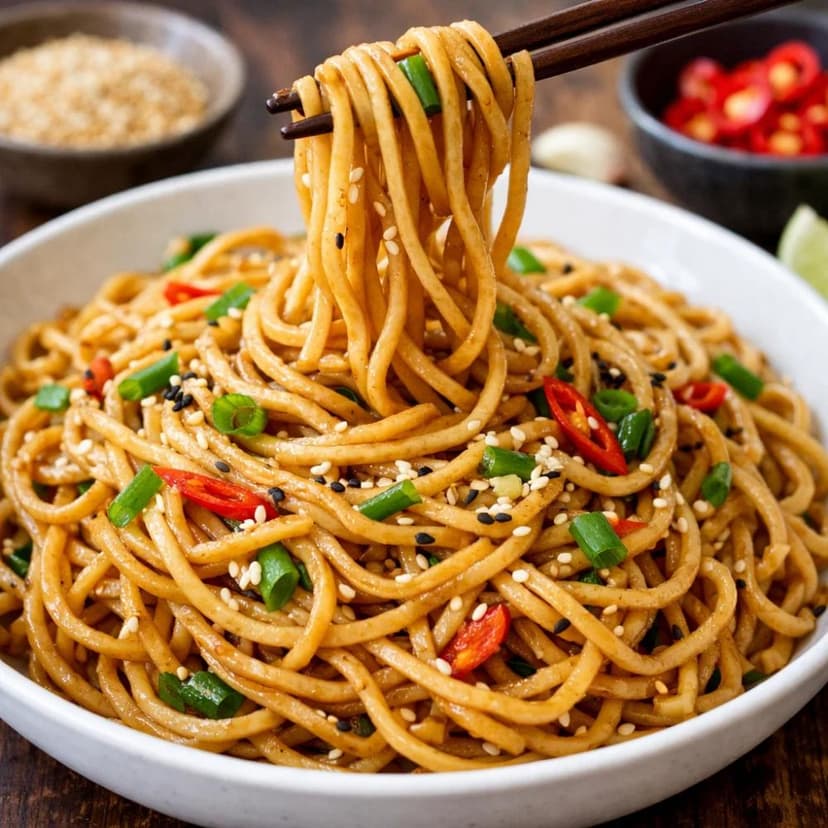
Sesame Noodles (Easy Asian-Inspired Recipe)
Chewy noodles tossed in a rich, nutty sesame sauce with garlic, ginger, soy sauce, and a touch of rice vinegar. Ready in 15 minutes and served at room temperature, making them ideal for meal prep, packed lunches, or a quick dinner. Topped with cucumber, spring onions, and sesame seeds for freshness and crunch.
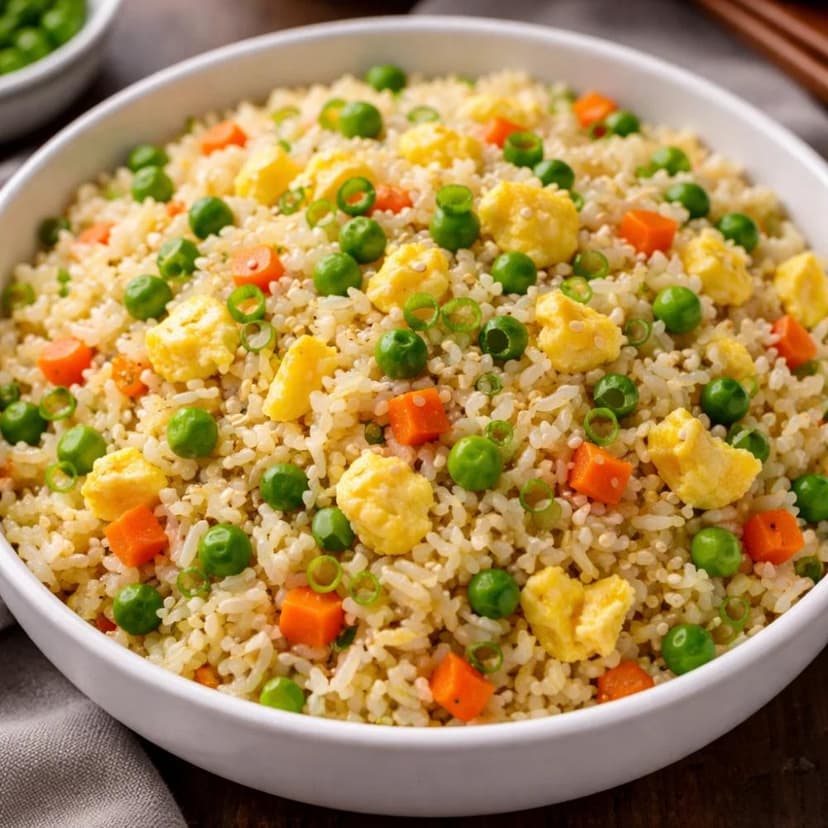
Simple Egg Fried Rice (Better Than Takeaway — 15-Minute Recipe)
Golden, smoky egg fried rice with perfectly separated grains, seasoned with soy sauce and sesame oil. Ready in 15 minutes using day-old rice — cheaper and tastier than any takeaway.
Both of these use vinegar as a background note rather than a headline, which makes them a fair test of a substitute. In the fried rice, a splash at the end lifts the whole pan and stops it tasting heavy.
The sesame noodles are the more revealing of the two, because the dressing is barely cooked. If your substitute is too sharp you will taste it immediately, which is exactly why the diluted white vinegar ratio matters here.
What Not to Use
Balsamic vinegar is the swap to avoid. It is dark, sweet, syrupy and assertive, and it will both discolour and overwhelm any dish that expected the clean neutrality of rice vinegar. There is no ratio that fixes this.
Malt vinegar is the other one to skip. Its strong, distinctly British character belongs on chips, not in a stir-fry sauce, and it clashes badly with soy and ginger.
Finally, do not substitute mirin for rice vinegar. They are often shelved together and the names sound related, but mirin is a sweet rice wine and contains almost no acidity. Using it in place of vinegar leaves the dish cloying and unbalanced.
Not sure what to make with what is actually in your cupboard? Let our generator work it out for you.
Cook With What You HaveFrequently Asked Questions
Apple cider vinegar used 1 to 1 is the best everyday substitute. It matches rice vinegar closely on acidity and mildness, and its light fruitiness cooks away almost entirely. White wine vinegar is equally good and slightly more neutral.
Yes, but dilute it first. Distilled white vinegar is sharper and more aggressive, so use 3 parts vinegar to 1 part water in place of the rice vinegar. Undiluted it will dominate a delicate dish such as sushi rice or a light dressing.
Yes, at a 1 to 1 ratio. If your recipe assumed seasoned rice vinegar, also add about half a teaspoon of sugar and a pinch of salt per tablespoon, since seasoned rice vinegar already contains both.
Yes, they are two names for the same product. Rice wine vinegar is vinegar made from fermented rice wine. It is not the same as rice wine itself, such as mirin or sake, which are drinks rather than vinegars and contain little acidity.
In uncooked dishes, yes, at a 1 to 1 ratio. Lemon juice has similar acidity but an unmistakable citrus flavour, so it suits dressings, slaws and dipping sauces. Avoid it in simmered dishes where the citrus would be out of place.
Seasoned rice vinegar has sugar and salt already added and is intended for sushi rice. Plain rice vinegar has neither. If you swap one for the other without adjusting, the dish will taste either flat and sharp or unexpectedly sweet and salty.
Can't decide what to make? Let our generator pick for you instantly.
Generate a Random Recipe →Tags:
Ready to Try These Recipes?
Browse our complete recipe collection for more cooking inspiration!